
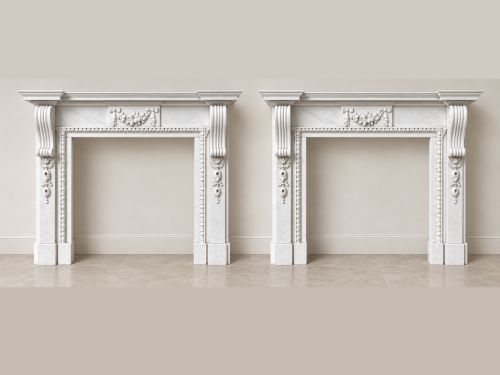


Classical White Fireplace
A classical white fireplace offers architectural purity, bringing carved marble and restrained neoclassical lines to a room.
Classical White Fireplace
A classical white fireplace comprises carved white marble surrounds and complementary neoclassical furnishings seen across this page. Buyers seeking a classical white fireplace will encounter Edwardian carved marble surrounds alongside Victorian and Regency objects sharing the same classical vocabulary.
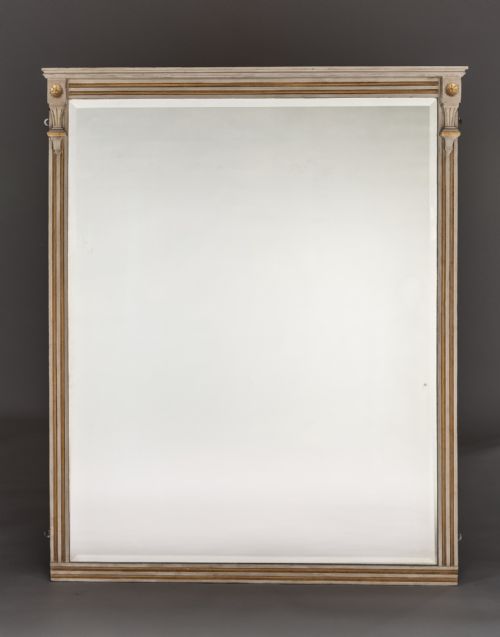
The selection extends beyond structural surrounds to include white marble mantel clocks, portico clocks, and gilt-framed overmantel mirrors designed to sit above the hearth.
How they were made
The architectural pieces utilise solid white marble shaped through hand carving to form classical columns, friezes, and mantel shelves. Wood and gesso serve as the base materials for the large overmantel mirrors, finished with paint, gold leaf, and parcel-gilt details.
Clock sets and decorative garnitures combine white marble with cast ormolu and gilt bronze mounts, reflecting French and English nineteenth-century metalworking techniques.
Listings feature white marble, gesso, gold leaf, and ormolu across Victorian, Edwardian, and Regency periods.
What varies in quality
Quality rests in the crispness of the marble carving and the depth of the sculptural relief on the surround or clock case. Softer chisel work or heavy over-painting on the gesso mirrors obscures the underlying form.
The integration of ormolu mounts and the preservation of original gilding separate standard production from pieces executed with greater skill.
Deniere and Cailleaux·James Ritchie and Son
The Classical White Fireplace Glossary
- Overmantel mirror
- A wide mirror designed to hang specifically on the wall directly above a fireplace mantel. These frames frequently display classical columns, gesso moulding, and gilt finishes.
- Ormolu
- Finely ground high-carat gold applied to a bronze base object through a mercury gilding process. This technique creates a rich metallic surface seen on nineteenth-century clock mounts.
- Gesso
- A plaster-like mixture applied to wood frames before gilding or painting. It provides a smooth surface that holds sharp, detailed neoclassical ornamentation.
- Portico clock
- A mantel clock structured like a miniature classical temple with supporting columns. These architectural timepieces often feature white marble and bronze components.
Classical White Fireplace: Frequently Asked Questions
How do I clean a white marble fireplace?
Use warm water and a soft cloth to gently wipe dust and soot from the marble surface. Avoid acidic cleaners or harsh chemicals that can etch the stone.
Dry the marble thoroughly with a clean towel to maintain its finish and prevent water marks.
Where should an overmantel mirror hang?
Hang the mirror centrally on the wall directly above the fireplace mantel shelf. This placement reflects light and balances the vertical weight of the hearth.
Ensure the wall fixings safely support the considerable weight of the wood and gesso frame.
How do I identify a Victorian marble clock?
Examine the dial and movement for nineteenth-century French or British manufacturing marks. The combination of white marble and gilt bronze mounts typically points to this era.
Look for architectural elements like porticoes and classical columns that mirror contemporary fireplace design.
Can I use an antique fireplace with a real fire?
Many antique marble surrounds accommodate modern gas or electric hearth inserts rather than open solid-fuel fires. Thermal stress from a high-heat open fire can crack historic marble.
Consult a specialist installer to adapt the internal opening safely for contemporary usage.