


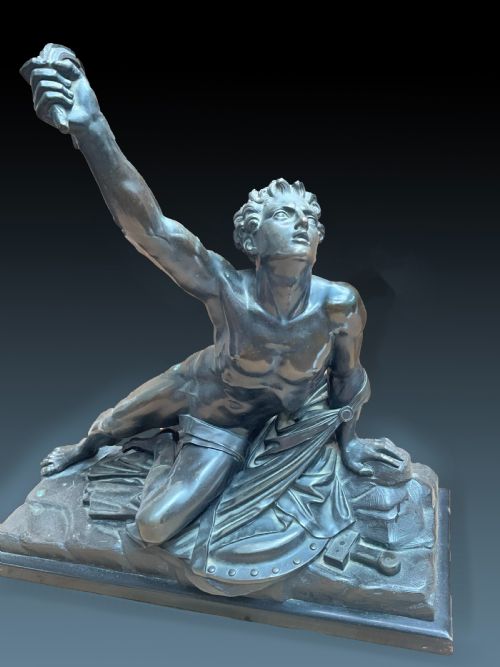



Classical Warrior Statues
Classical warrior statues bring the heroic figures of antiquity into the study through sculptural interpretations cast in bronze or moulded in spelter and porcelain.
Classical Warrior Statues
Classical warrior statues embody the dramatic figures of Greek and Roman history, mythology, and literature. When exploring classical warrior statues, expect to encounter depictions of ancient heroes, gladiators, and mythological deities rendered with academic precision.
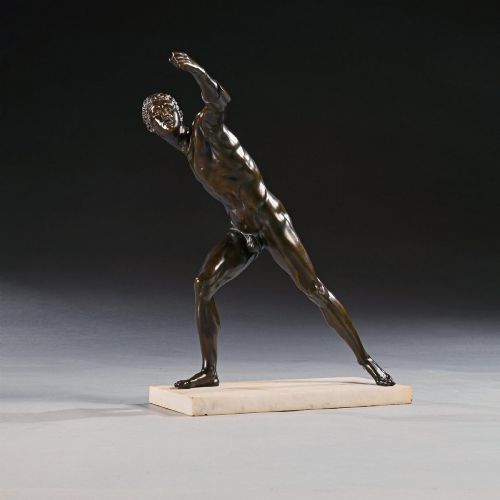
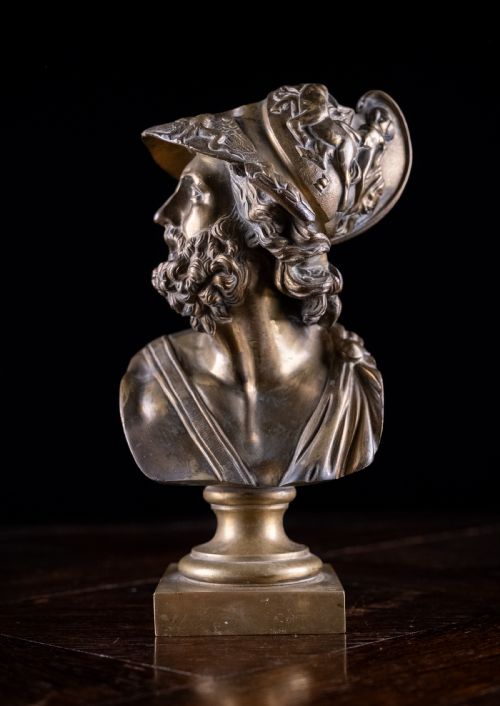
The selections available range from large-scale depictions of the Borghese Gladiator to Grand Tour souvenir busts of Spartan kings and Roman commanders. These pieces frequently draw upon Neoclassical, Renaissance Revival, and 19th Century French Academic styles.
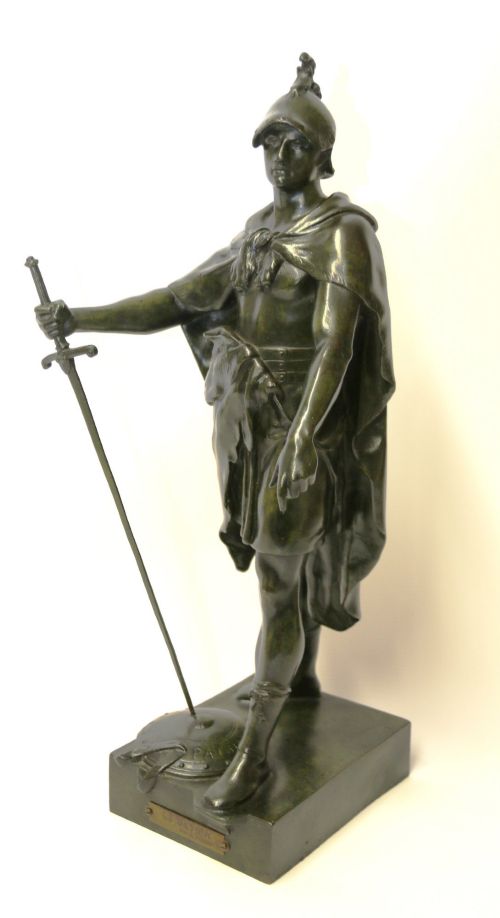
The forms span full-length standing and seated figures, mounted pairs, and individual busts cast or modelled during the nineteenth century. These sculptures reflect the period's fascination with classical antiquity and academic sculpture.
Materials and construction methods
Foundry-cast bronze remains the primary medium for these sculptures, often enhanced with rich patination or gilding to accentuate muscular definition and drapery. Spelter and zinc alloy appear as alternative metallic mediums utilised for decorative figures.
Ceramic interpretations utilise porcelain and Parian ware to capture the smooth contours of classical subjects. Artisans employed traditional casting, chasing, and moulding techniques characteristic of nineteenth-century European foundries and potteries.
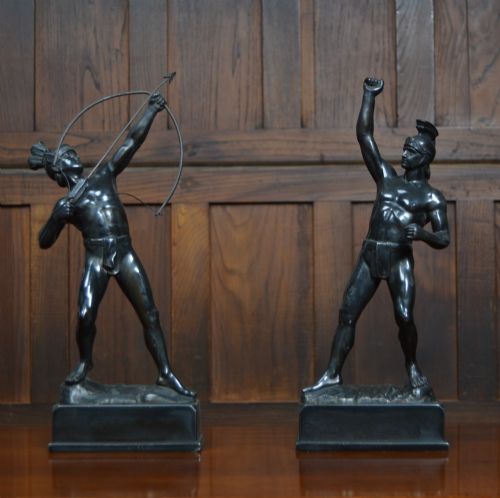
Ancient Roman commanders occasionally share cabinet space with Celtic warriors and mythological archers in nineteenth-century drawing rooms.
Determinants of quality
Quality rests upon the crispness of the chase work and the fidelity of the cast to the original model. Superior examples retain subtle surface textures, articulate muscle structure clearly, and exhibit a deep, stable patination.
The choice of medium alters the character of the piece, with heavy bronze casts offering greater durability and sharper detail than lighter spelter alternatives. The nuance achieved in facial expressions and armour ornamentation distinguishes master foundry output from commercial souvenir work.
Émile Louis Picault·Eugene Barillot·Raoul Francois Larche·Franz Iffland·Emile Laporte·Richard Aurili·Eden Antony Paul Noel
The Classical Warrior Statues Glossary
- Patinated bronze
- Bronze that has been treated with chemical solutions to produce a specific surface colour or tone. This finish protects the metal and highlights the sculptural details.
- Grand tour
- A cultural journey undertaken by wealthy young Europeans visiting classical sites in Italy and Greece. Souvenirs purchased on these travels included small-scale bronze reductions of famous ancient sculptures.
- Spelter
- A zinc alloy frequently used as a cost-effective substitute for bronze in nineteenth-century figure casting. It is softer than bronze and generally finished with a metallic paint or patination.
- Parian ware
- A type of fine biscuit porcelain developed in the nineteenth century to imitate carved marble. It is prized for its smooth, matte texture and ability to render intricate figure details.
- Neoclassical
- A style originating in the mid-eighteenth century that drew inspiration from the art and culture of classical Greece and Rome. It emphasises proportion, restraint, and heroic subject matter.
Classical Warrior Statues: Frequently Asked Questions
What periods do these sculptures date from?
The pieces originate predominantly from the nineteenth century, capturing the Victorian era's revivalist aesthetic.
Many adopt earlier classical and Renaissance subjects interpreted through nineteenth-century academic techniques.
How do I distinguish bronze from spelter?
Bronze is heavier, colder to the touch, and rings with a clear tone when tapped gently. Spelter is a softer zinc alloy that feels lighter and often shows grey metal beneath worn areas of its surface coating.
Examining the underside or discreet interior edges will usually reveal the underlying base metal.
What is a Grand Tour souvenir?
Grand Tour souvenirs were portable replicas of famous ancient sculptures purchased by travellers touring European cultural centres.
These reductions allowed collectors to display miniature versions of classical masterpieces in their private libraries and studies.
How should I care for a patinated bronze figure?
Dust the surface regularly with a soft, dry brush to prevent particle accumulation. Avoid using water, polishes, or chemical cleaners that can strip or alter the original patination.
Applying a microcrystalline wax occasionally helps protect the metal surface from atmospheric moisture.
Who are the figures typically represented?
The subjects include mythological heroes such as Ajax and Perseus, alongside historical commanders like Hannibal and Vercingetorix. Figures from classical literature and Roman gladiatorial combats also feature prominently.
These characters were selected for their symbolic association with strength, bravery, and classical virtue.