
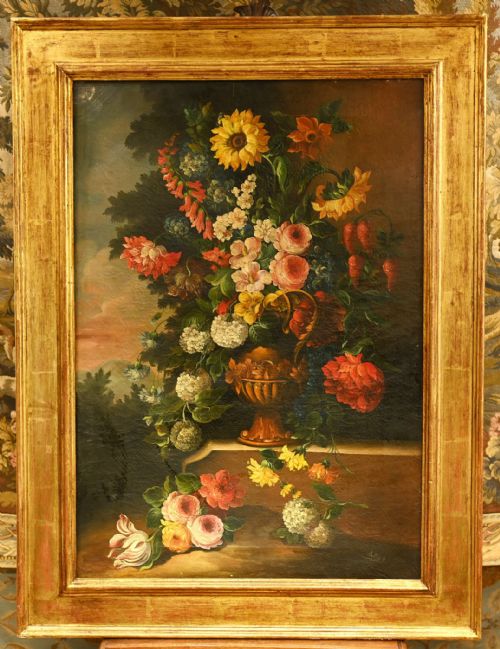


Classical Urn Flower Art
Classical urn flower art brings stately seventeenth-century floral arrangements and grand antiquity straight to your wall.
Classical Urn Flower Art
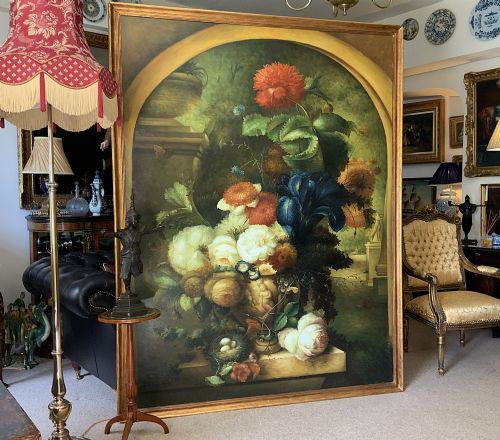
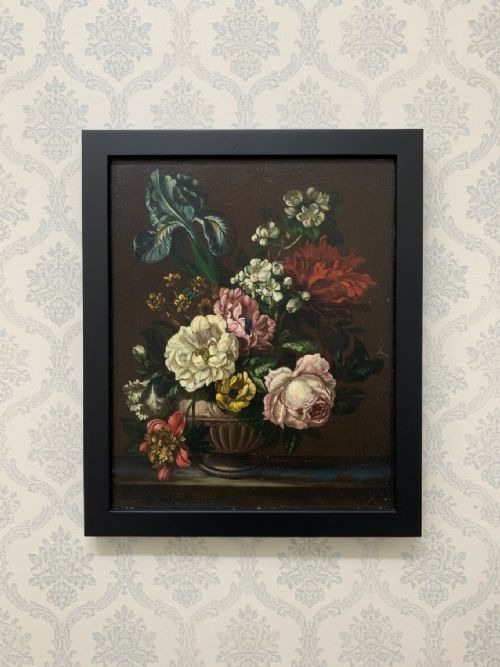
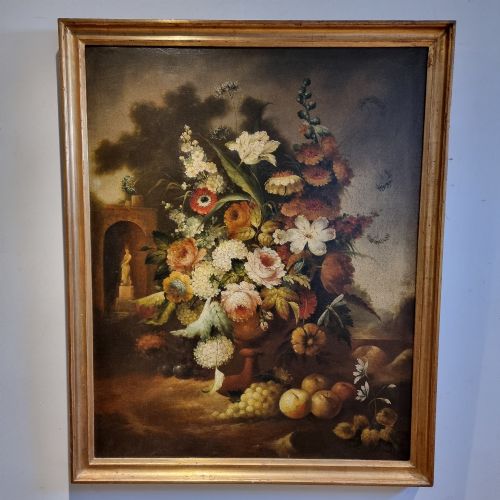
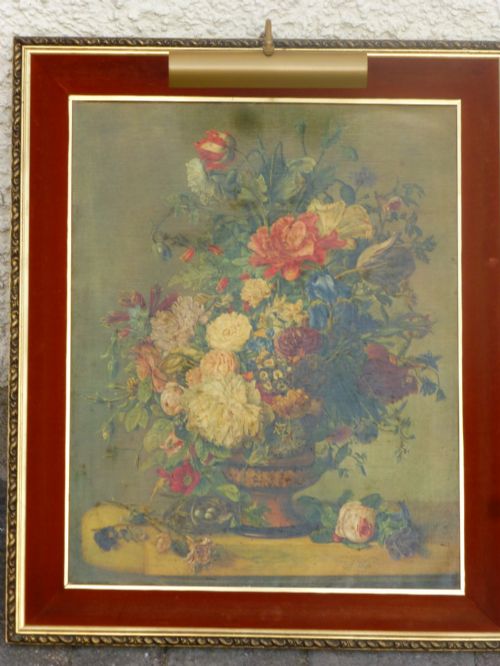
Classical urn flower art comprises oil paintings depicting lush floral arrangements housed within classical urn vessels. Buyers seeking this style find works ranging from the eighteenth century to the mid-twentieth century.
The selections on this page feature canvas and wood panel formats, often framed in timber or gilded wood. You will encounter Dutch Golden Age styles alongside Italian school compositions and later revivals.
Many of these oil paintings capture rich botanical subjects combined with traditional trompe l'oeil techniques. The prevailing forms lean heavily into eighteenth-century Dutch aesthetics and Flemish revival interpretations.
How they were made
These works are painted in oil paint on prepared canvas or timber panels. Artists built up their rich floral still life scenes through careful layering of pigment to achieve deep shadow and luminous petal textures.
Support structures rely on traditional wood panels and canvas stretching frames, frequently housed within timber frames or gilded wood mouldings. Oleograph printing techniques also appear in later twentieth-century iterations.
The structural framing often utilises carved wood and gilt detailing to complement the classical subject matter. Painters balanced meticulous botanical accuracy with dramatic chiaroscuro lighting effects.
Listings span from 1800 to 1960, utilising canvas, wood panels, oil paint, and gilded wood frames in Dutch and Italian styles.
What varies in quality
Quality in these oil paintings rests upon the depth of the brushwork and the structural integrity of the canvas or wood panel. Finer examples display confident handling of light across petals and urn surfaces.
The articulation of the classical urn and the botanical detail separate ambitious compositions from simpler decorative works. Frame craftsmanship also plays a role, with carved gilded wood adding substantial presence over plain timber surrounds.
The Classical Urn Flower Art Glossary
- Oil paint
- A slow-drying medium consisting of pigments suspended in a drying oil, typically linseed. This allowed artists to achieve remarkable blending and luminosity in floral petals.
- Panel
- A rigid wooden support used by painters instead of stretched canvas. Panels provide a stable, flat surface for detailed brushwork.
- Trompe l'oeil
- An art technique involving extremely realistic imagery that creates the optical illusion that the depicted objects exist in three dimensions. It often plays with perspective and depth.
- Giltwood
- Wood that has been treated with a thin layer of gold leaf or gold paint. It frequently surrounds classical paintings to enhance their visual weight.
Classical Urn Flower Art: Frequently Asked Questions
What periods do these paintings come from?
The works span from the eighteenth century through to the mid-twentieth century. Many pieces adopt earlier Dutch Golden Age aesthetics.
You will also find later revivals and twentieth-century interpretations operating within the classical tradition.
How should I hang these artworks?
These oil paintings suit traditional or transitional interior spaces, particularly above mantelpieces or in formal reception rooms. Their rich floral palettes work well against dark or neutral walls.
Ensure they are kept away from direct sunlight and excessive humidity to protect the oil paint and wood supports.
What surfaces are these painted on?
Artists utilised both stretched canvas and solid wood panels for these compositions. Canvas offers a flexible, textured ground, while panels provide a rigid, smooth board surface.
Frames also vary from simple timber mouldings to ornate gilded wood designs.
How do I distinguish between periods?
Distinguishing periods involves examining the preparation of the canvas or wood panel, the framing style, and the handling of the oil paint. Eighteenth-century works often show authentic craquelure and aged timber supports.
Later twentieth-century pieces, including oleographs, display different mechanical textures and modern framing methods.