

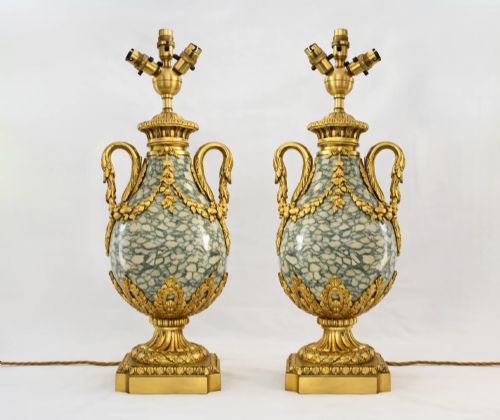


Classical Style Vases
These classical style vases bring ancient architectural grandeur and scholarly taste into a room through enduring bronze, marble and porcelain forms.
Classical Style Vases
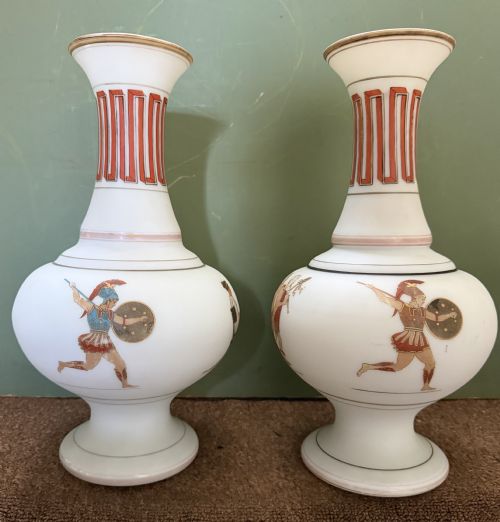
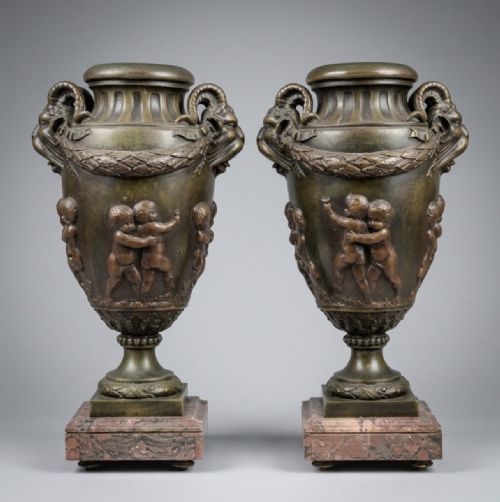
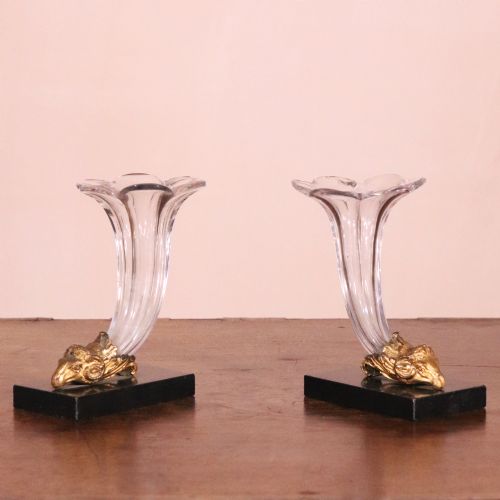
Classical style vases encompass decorative urns, lidded vessels and campana shapes drawn from antiquity and reinterpreted across the nineteenth and early twentieth centuries. These objects range from heavy Grand Tour bronzes to delicate porcelain garnitures and marble cassolettes.
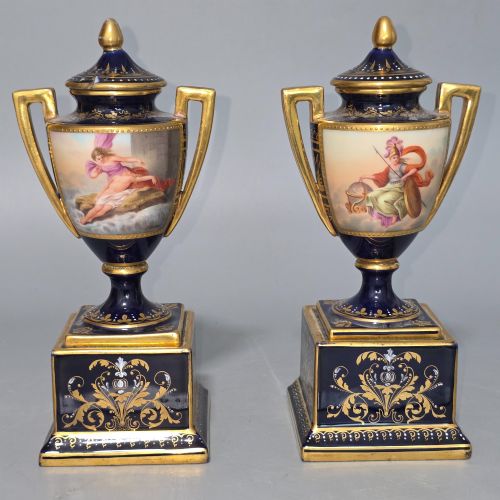
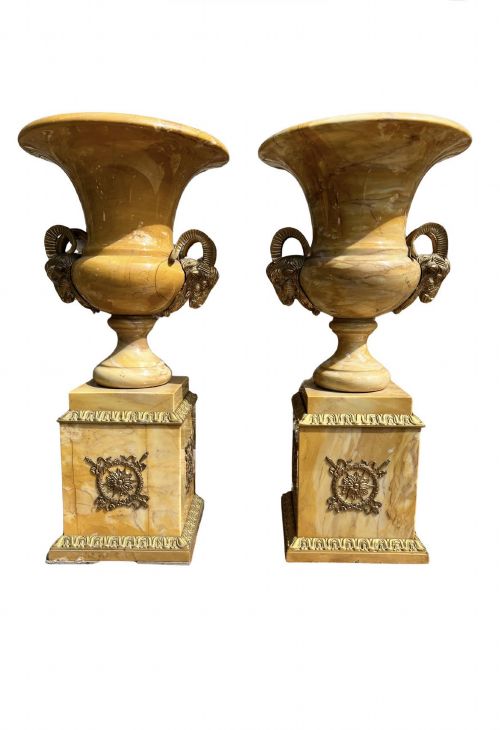
The selection on this page relies heavily on nineteenth-century European production, particularly French and Viennese pieces influenced by Empire, Neoclassical and Renaissance revivals. Buyers encounter everything from monumental bronze campana urns to painted porcelain amphorae.
Many examples stem from the Grand Tour tradition, where travellers brought home miniature bronzes and marble vases modelled on ancient Roman and Greek antiquities. Others function as decorative centrepieces, mantel garnitures or converted table lamps.
How they were made
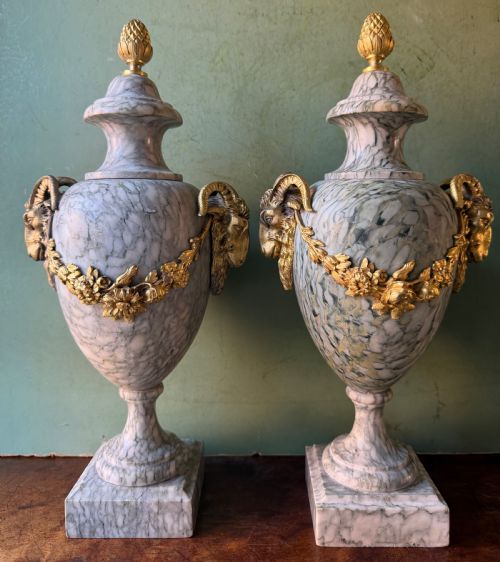
Metal vessels combine cast bronze or spelter with hand-chased ormolu mounts, brass details and gilt bronze finishes. Marble and stone bases provide structural weight, often utilising Italian Sienna or veined green and grey varieties.
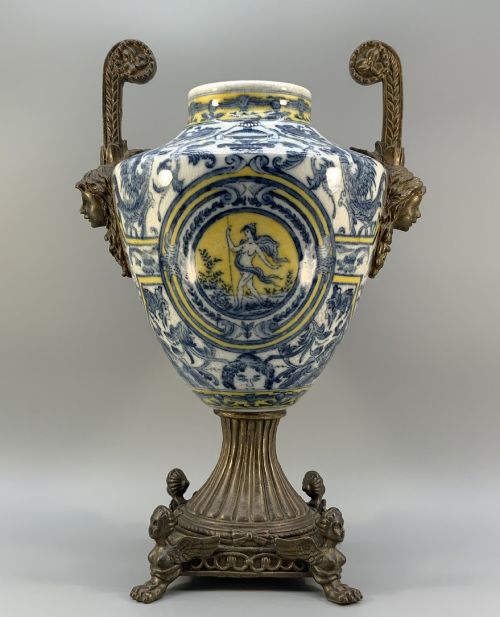
Ceramic examples rely on hard-paste porcelain, majolica and faience bodies decorated with hand-painted motifs, enamel work and gilding. Mounts are mechanically secured to stone and ceramic bodies using threaded metal rods and bolts.
Classical Style Vases Retail Price Guide 2026
Typical asking prices for classical style vases among the pieces listed under this phrase on Sellingantiques today, from the lower quarter to the upper quarter. They describe what is for sale here now, not the wider market.
Listings feature materials including porcelain, bronze, marble, ormolu, brass and gilt bronze across the nineteenth and early twentieth centuries.
What varies in quality
The definition of the cast separates superior metalwork from plain production, visible in the crispness of acanthus leaves, handles and classical figures. Fine ormolu retains its original mercury gilding or rich gold leaf, whereas lesser pieces display dull or poorly applied finishes.
Ceramic quality depends upon the precision of the hand-painting, the depth of the glaze and the complexity of the porcelain body. Superior pieces feature detailed figural scenes or delicate pate-sur-pate work rather than mass-produced transfer prints.
F Koller·Samuel Alcock·Minton·Sevres
The Classical Style Vases Glossary
- Campana
- A bell-shaped vessel with a flared rim, widely used for classical garden urns and mantel ornaments. The form derives directly from ancient terracotta and marble wine-mixing vessels.
- Cassolette
- A dual-purpose vase with a reversible lid that functions either as a closed urn or a perfume burner. The design often incorporates decorative bronze or ormolu mounts.
- Ormolu
- Finely ground high-carat gold applied to a bronze base using a mercury amalgamation technique. The method produces a warm, durable metallic lustre found on nineteenth-century mounts.
- Grand Tour
- A period of European travel undertaken by the elite to study classical antiquities and acquire portable art. It generated a market for small bronze copies of famous statues and vases.
- Garniture
- A set of three or more matching decorative objects designed to sit together on a mantelpiece or cabinet. Typically comprises a central clock or large urn flanked by smaller matching vases.
Classical Style Vases: Frequently Asked Questions
What is a campana vase?
A campana vase is shaped like an inverted bell with a distinct foot and flared rim. These vessels were modelled on ancient stone and terracotta archaeological finds.
In nineteenth-century interiors, they served as prominent decorative urns on mantelpieces, pedestals and garden terraces.
How do I identify Grand Tour bronzes?
Grand Tour bronzes typically represent famous classical sculptures, architecture or vases seen by travellers in Italy. They feature heavy cast construction with dark patination.
These pieces were made as portable souvenirs and decorative cabinet items during the nineteenth century.
What is a cassolette used for?
A cassolette is a lidded vase featuring a reversible top designed for burning perfumes or serving as a standard urn. The form allows the piece to change appearance depending on how the lid is displayed.
They are frequently mounted in ormolu and paired with marble bases for decorative display.
Where were porcelain garniture sets placed?
Porcelain garniture sets were arranged symmetrically across mantelpieces, sideboards and large furniture tops. A central clock or major urn was flanked by matching smaller vases or candelabra.
This balanced arrangement was a standard feature of nineteenth-century formal room decoration.