


Classical Silver Candelabra
Classical silver candelabra bring genuine proportion and ceremony to a dining table, uniting form and illumination through enduring metalwork.
Classical Silver Candelabra
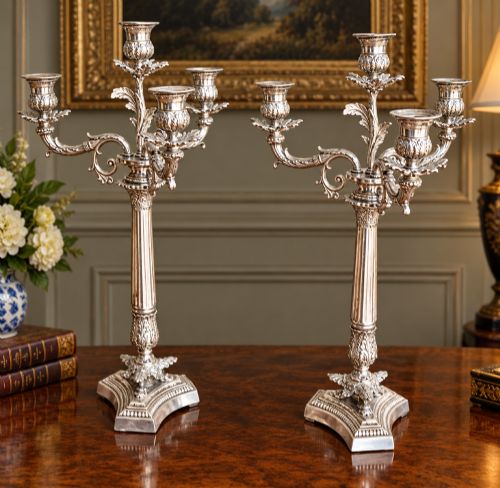
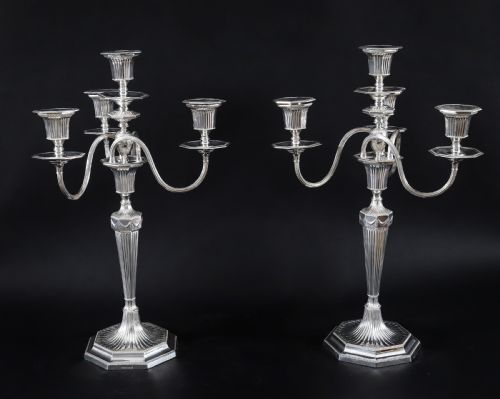
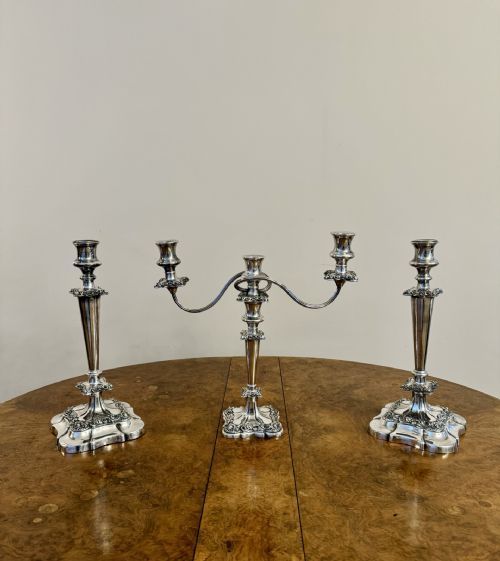
When you search for classical silver candelabra, you are looking at stately lighting fixtures designed to hold multiple tapers aloft for formal rooms. These objects span periods from the Georgian and George III eras through to the Victorian, Edwardian, and early twentieth-century decades.
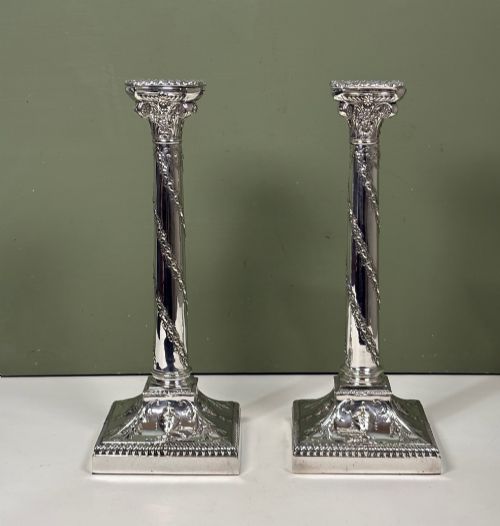
The versions you are most likely to encounter on this page are silver plated or Old Sheffield Plate pairs and suites. They draw heavily on neoclassical design principles, featuring balanced proportions and traditional forms.
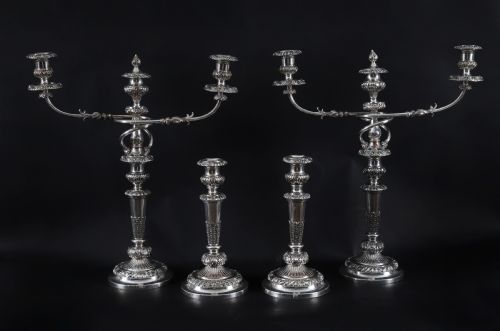
Alongside standard candelabra, the listings include convertible candlesticks with detachable branches, standard lamps, and substantial four-piece suites. Their origins reflect British manufacturing centres as well as continental European workshops.
How they were made
Makers utilised solid sterling silver for the most prestigious commissions, cast and chased by hand to achieve crisp architectural detail. Solid silver examples carry substantial weight and require robust internal reinforcement within their stems.
More accessible production relied upon Old Sheffield Plate, fusing a thin sheet of silver to a copper base, or later electroplating silver onto base metals such as copper and brass. These plated techniques allowed intricate neoclassical motifs like beadwork and acanthus leaves to be rendered affordably on a larger scale.
Materials range from solid sterling silver and Old Sheffield Plate to silvered metal, copper, and brass.
What varies in quality
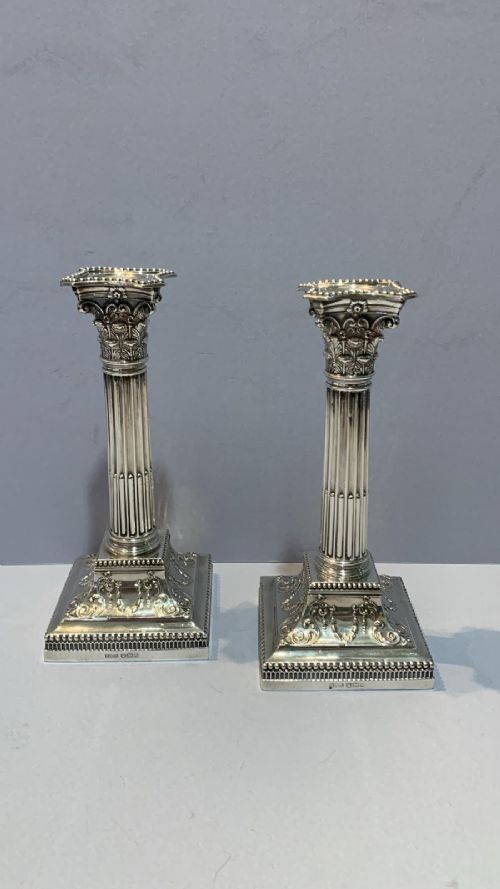
The distinction between ordinary and exceptional pieces rests on the crispness of the chasing and the integrity of the underlying metal. Superior examples retain sharp relief in their classical ornamentation, from urn finials to fluted columns, without smoothing from over-cleaning.
Weight and balance also define the tier of a piece, with top-range candelabra offering a heavy, stable stance and secure seating for their branch attachments. The preservation of original plating, particularly on Old Sheffield Plate where the copper core subtly shows through high points, marks a higher standard of survival.
Hawksworth Eyre·Elkington·Hunt And Roskell·Storr Mortimer And Hunt
The Classical Silver Candelabra Glossary
- Old Sheffield Plate
- A fused bilayer metal formed by heating a sheet of silver to a copper block before rolling them together. This precursor to electroplating produces a warm tone where the underlying copper occasionally telegraphs through.
- Neoclassical
- A style inspired by the classical architecture and art of ancient Greece and Rome. It prioritises symmetry, straight lines, urn motifs, and classical foliage.
- Chasing
- A metalsmithing technique where designs are hammered into the front surface of the metal using steel punches to sink the relief. This method creates the tactile ornamentation seen on high-end stems and drip pans.
- Candelabra
- A multi-branched lighting device designed to support several candles simultaneously from a central shaft. Many antique pairs include removable branch units that allow them to function as single candlesticks.
- Sterling silver
- An alloy consisting of silver and other metals, usually copper, standardised to guarantee purity. Solid sterling items carry hallmarks indicating their assay office, maker, and year of production.
Classical Silver Candelabra: Frequently Asked Questions
What is the difference between silver plate and Old Sheffield Plate?
Old Sheffield Plate uses a mechanical fusion method where silver is bonded to copper under high heat before rolling. Later silver plating relies on an electrical current to deposit a thin layer of silver over base metals like copper, brass, or unmarked white metal.
This technical distinction changes how the metal wears over centuries. Old Sheffield pieces often show warm flashes of copper on high friction points, while electroplated items may reveal base metal if the silver layer wears completely through.
How do I know if a candelabra is solid silver?
Solid sterling silver pieces carry official hallmarking stamps that identify the standard of purity, the assay office, and the active year of the maker. Plated items use alternative stamps, manufacturer marks, or show base metal underneath.
Weight provides another indicator, as solid sterling silver candelabra feel exceptionally heavy and often contain internal weighting resin or wooden cores to support their height. Plated brass or copper pieces generally lack official sterling assay marks entirely.
Can I use real candles in antique candelabra?
You can use standard taper candles provided they fit securely within the nozzle cup without leaning. Inserting a small adapter or paper shim ensures a straight burn and prevents hot wax from spilling onto the silver surface.
Extinguishing the candles before the flame drops too close to the metal protects the nozzles from heat damage. Cleaning cooled wax requires warm water rather than scraping tools to preserve the antique finish.
How do I clean antique silver candelabra?
Cleaning requires a soft cloth and a reputable silver cream formulated specifically for antique metalwork. Avoid abrasive pastes or harsh dipping solutions that strip away remaining plating and soften fine chasing detail.
Regular, gentle dusting helps prevent heavy tarnish accumulation and reduces the need for aggressive polishing. Storing them away from direct sunlight and damp environments keeps the metal stable between uses.
What does neoclassical design look like on these pieces?
Neoclassical design draws upon the architecture of antiquity, displaying orderly columns, urn shapes, bead reels, and symmetrical acanthus foliage. These motifs appear crisp and restrained rather than heavily scrolled or asymmetrical.
This aesthetic dominated Georgian and Victorian revival periods, offering a sense of architectural balance to formal dining settings. The clean lines help these pieces blend comfortably into traditional and contemporary interiors alike.