
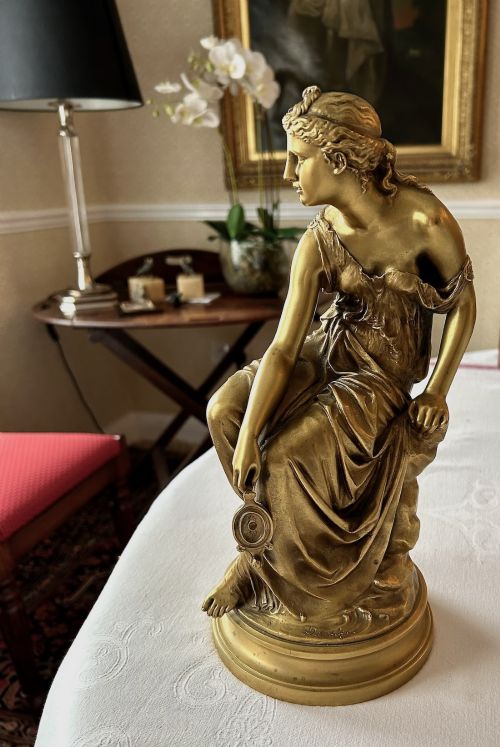
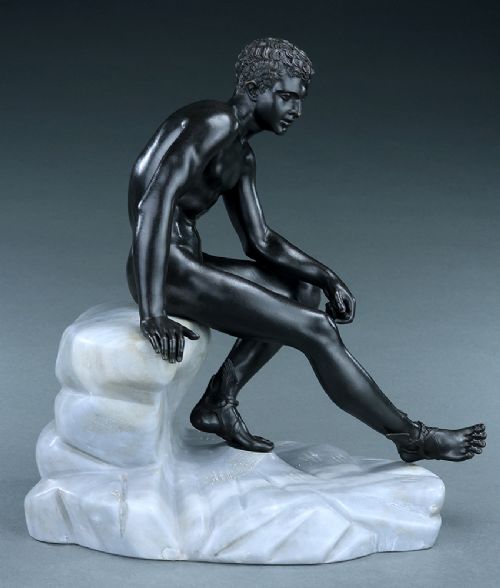
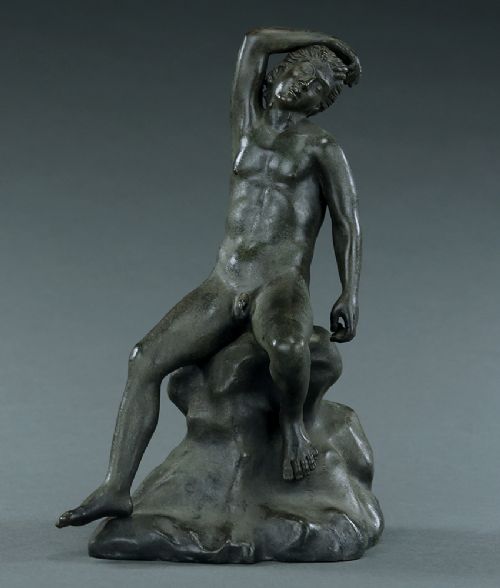
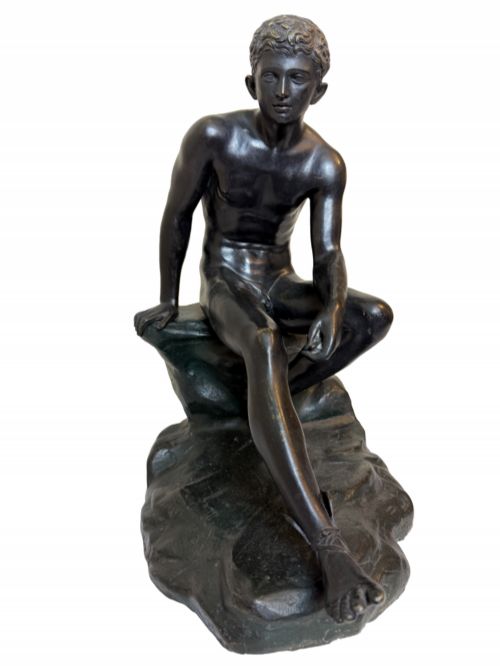


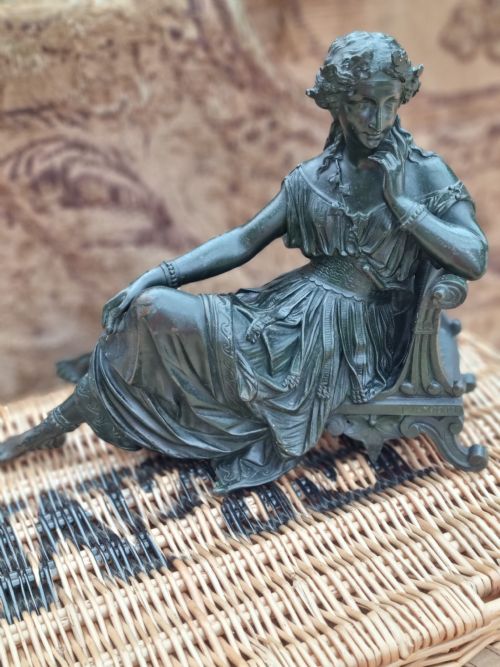


Classical Seated Bronze Figure
A classical seated bronze figure brings mythology and antiquity into a room, cast in metal and shaped by nineteenth-century European ateliers.
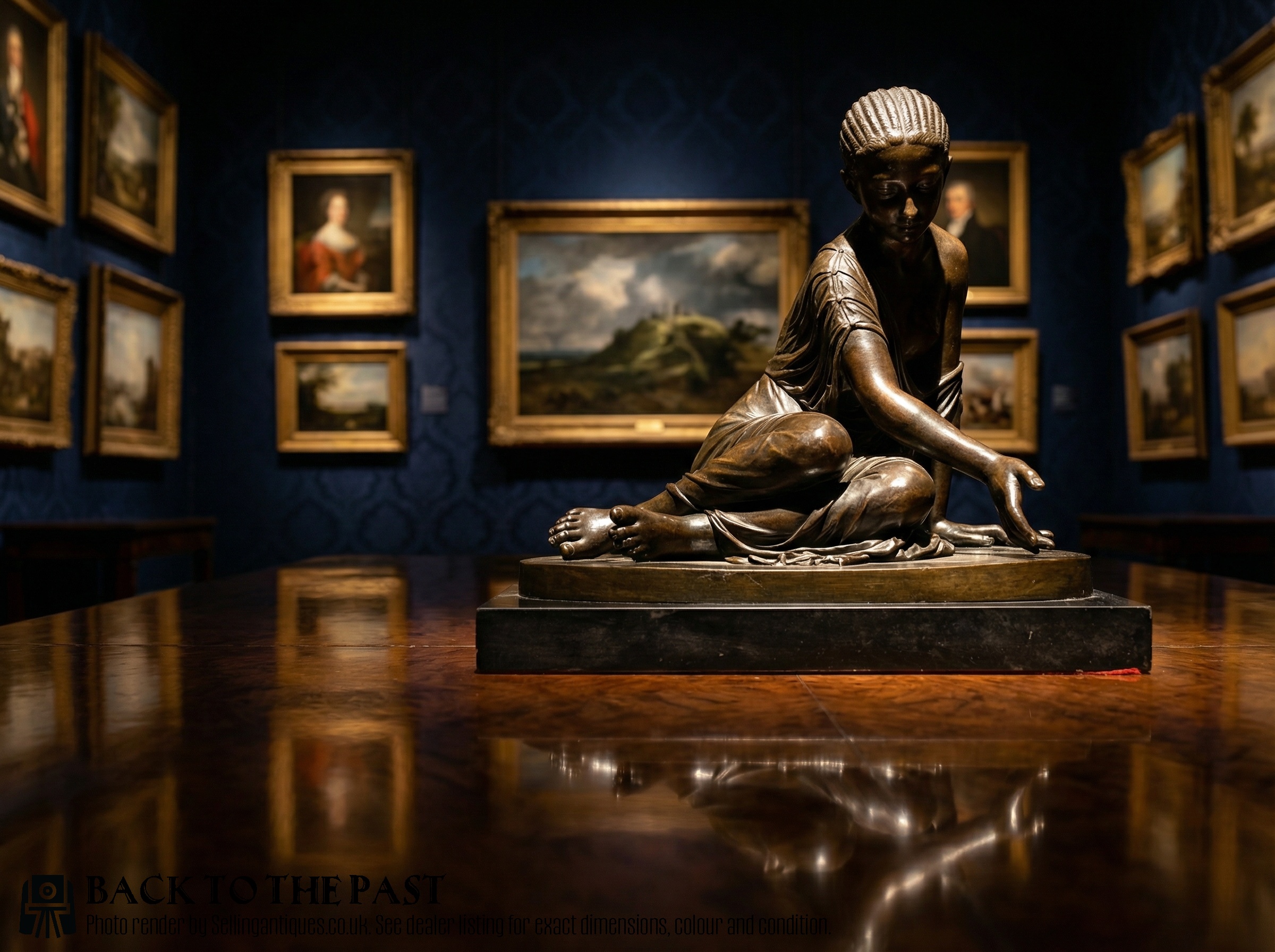
Classical Seated Bronze Figure
A classical seated bronze figure draws on antique sculpture, depicting deities, literary figures, and mythological subjects in repose. These works emerge predominantly from the nineteenth century, encompassing French academic casting and Italian Grand Tour souvenirs.
The most common formats on this page include figures resting on rocks, natural outcrops, or architectural bases, often paired with marble or ebonised wood plinths. Subjects range from deities such as Hermes, Demeter, and Diana to historical and allegorical personages like Hannibal and meditating scholars.
Materials and Technique
Foundries utilised traditional metal-casting methods to capture fine anatomical details and drapery in bronze. Finished pieces received various surface treatments, including dark patination, gilt highlights, and verdigris effects to simulate ancient patina.
Many sculptures incorporate secondary materials such as grey marble bases, brass accents, and inlaid wood supports to anchor the composition. These integral plinths provide both physical stability and a neoclassical display context.
Listings span the nineteenth century, featuring materials such as bronze, gilt bronze, patinated bronze, marble, and ebonised wood.
Distinguishing Quality
Quality rests in the crispness of the chase work and the subtlety of the surface patina, where master founders achieved lifelike skin textures and sharp folds in drapery. Casts taken directly from accomplished models retain sharper facial expressions and musculature.
Etienne-Henri Dumaige·Hector Lemaire·Zoffoli·Mercié·Pierre Hebert·Henri Plé
The Classical Seated Bronze Figure Glossary
- Grand Tour
- A cultural journey undertaken by European elites to collect antiquities and souvenirs. These bronzes served as portable mementos of classical sites.
- Patinated Bronze
- Metal treated with chemical solutions to produce a controlled surface colour. This process enhances contrast and protects the alloy.
- Neoclassical
- An artistic movement reviving the styles of ancient Greece and Rome. It prioritises proportion, classical subjects, and restraint.
- Verdigris
- A green patina formed naturally or chemically on copper and bronze. It mimics the appearance of long-buried ancient statuary.
Classical Seated Bronze Figure: Frequently Asked Questions
Where were these bronzes made?
The pieces originate primarily from French and Italian foundries active during the nineteenth century. Workshops in Paris and Rome produced them for local buyers and travelling collectors.
Italian pieces often connect directly to Grand Tour souvenir traditions, while French examples reflect academic salon standards.
How do I display a bronze figure?
Place the sculpture on a stable surface where light catches the patinated or gilt contours. Ensure the marble or wood base rests level to protect the weight distribution.
Keep them away from direct heat sources and moisture to preserve the metal finish and any integrated wooden elements.
What subjects are most common?
Mythological figures such as Hermes, Diana, and Demeter appear frequently, alongside classical literary and historical characters. Putti and allegorical figures seated on rocks also form a major part of the selection.
These subjects mirror the classical education and taste of nineteenth-century collectors.
What materials accompany the bronze?
Many examples incorporate grey marble plinths, brass mounts, or ebonised and inlaid wood bases. These materials provide structural support and frame the metalwork.
The combination of bronze and stone remains characteristic of Grand Tour and nineteenth-century academic sculpture.