
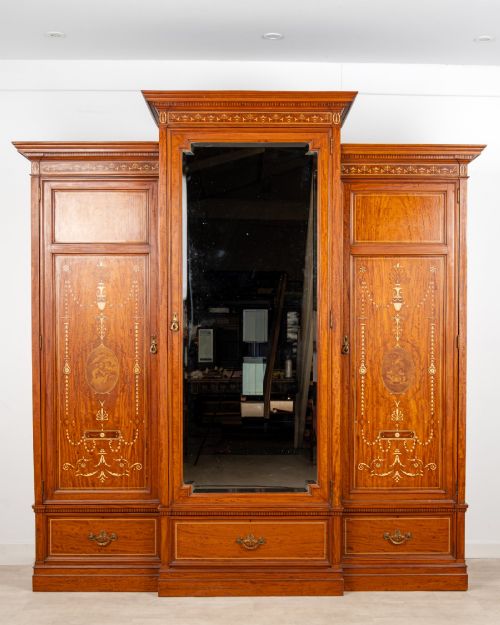
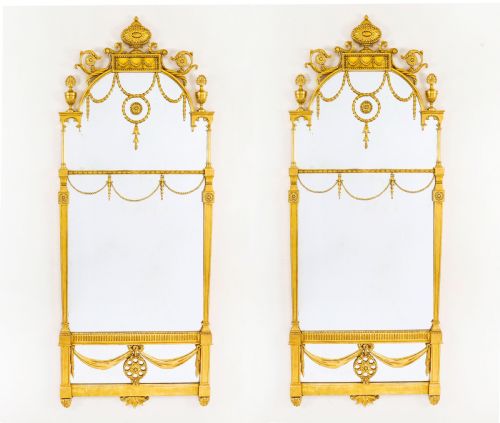


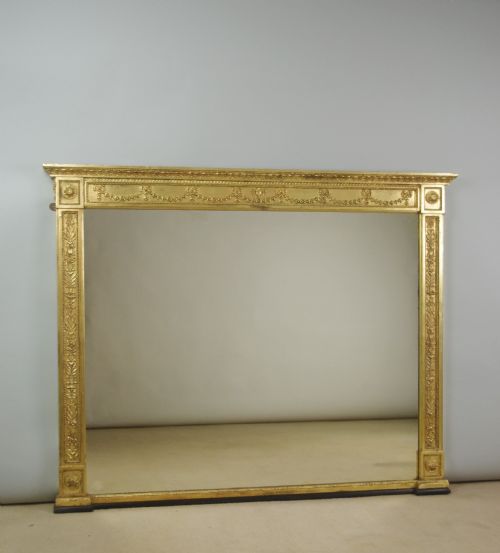

Classical Revival Mirror
A classical revival mirror brings architectural order and reflective depth to a room through centuries-old motifs.

Classical Revival Mirror
A classical revival mirror draws upon ancient Greek and Roman design principles, reinterpreted across the nineteenth and early twentieth centuries. When searching this phrase, a buyer encounters wall mirrors, grand overmantels, and cheval glasses that echo earlier aesthetic movements.
The most frequent versions on this page date from the Victorian era and the late nineteenth century, alongside Edwardian and Regency examples. These pieces utilise symmetrical proportions, urn motifs, and column details derived from neoclassical architecture.
Forms range from compact brass wall sconces to massive giltwood overmantels designed to sit above a fireplace. Each piece adapts classical vocabulary for domestic interiors across different decades.
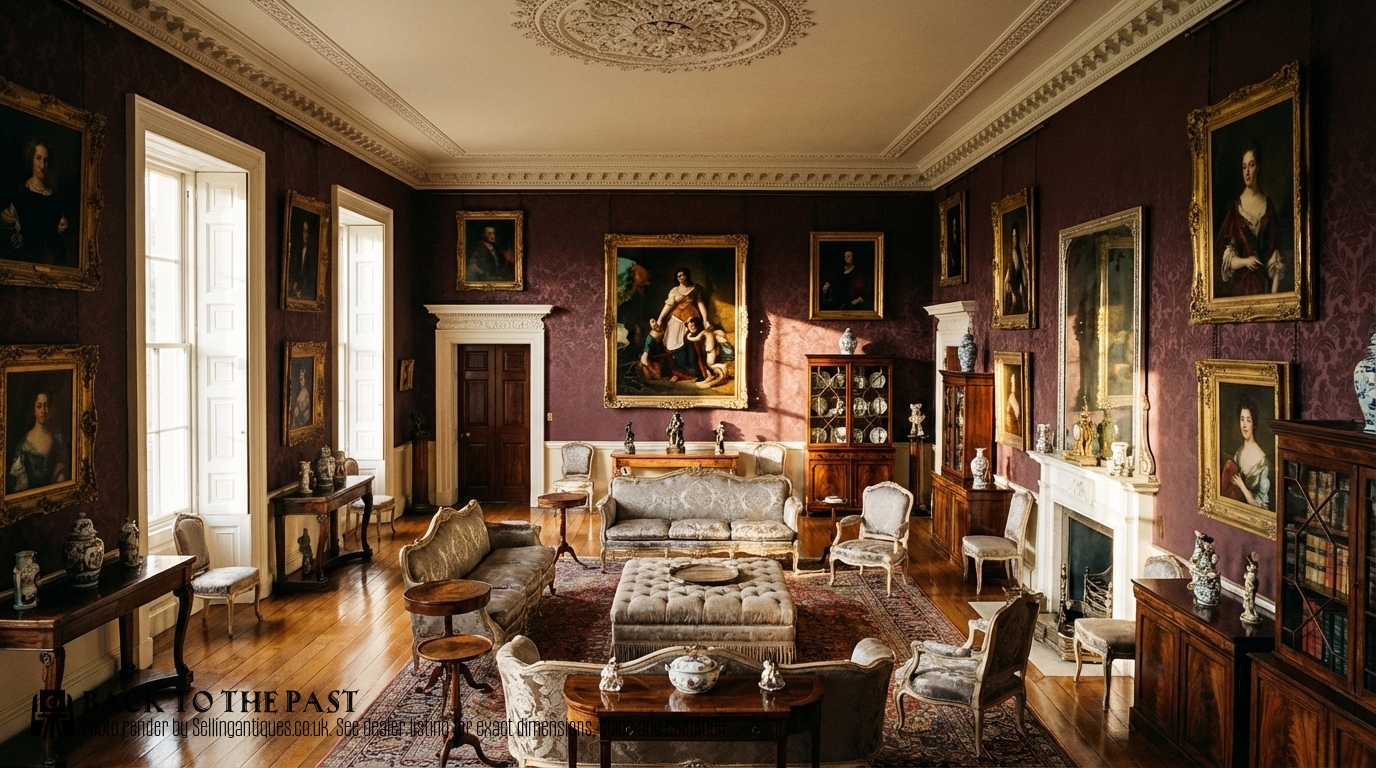
Materials and construction
Giltwood and gesso form the primary decorative surfaces of many pieces, often applied over a wooden core to build up raised relief ornaments. Craftsmen carved intricate details into wood or moulded composition material onto gesso grounds before applying gold leaf or paint.
Cast brass and painted wood appear frequently, providing alternative textures and finishes from bright metallic sheens to muted painted surfaces. Mirror glass is set within these frames, sometimes retaining historic silvering or foxing developed over time.
Classical Revival Mirror Retail Price Guide 2026
Typical asking prices for classical revival mirror among the pieces listed under this phrase on Sellingantiques today, from the lower quarter to the upper quarter. They describe what is for sale here now, not the wider market.
One recorded cheval mirror carries a past belonging to a nineteenth-century American general named Meigs.
Assessing quality and craftsmanship
The definition and depth of the carved or moulded ornamentation dictate the visual strength of the frame. Superior examples display crisp architectural details in the gesso and clean joints in the underlying woodwork, whereas lesser pieces show softened or muddy relief work.
The quality of the gilding and the preservation of original surfaces separate standard items from finer works. Hand-applied gold leaf ages with a warmer tone than modern metallic paints, and the integrity of the original mirror plate adds substantial character.
The Classical Revival Mirror Glossary
- Gesso
- A plaster-like material applied to wood frames to create a smooth surface for gilding or painting. It is built up in layers and carved or stamped with decorative motifs.
- Giltwood
- Timber that has been coated with thin sheets of gold leaf. This technique provides a luminous finish that reflects candlelight and natural daylight.
- Overmantel
- A large mirror specifically proportioned to hang on the wall above a fireplace mantelpiece. These pieces often feature horizontal formats and elaborate architectural crests.
- Tabernacle frame
- A picture or mirror frame designed to resemble a classical shrine or temple front, featuring pilasters and a pediment. It draws directly on Renaissance and ancient architectural forms.
- Cheval mirror
- A freestanding full-length mirror suspended in a frame that allows it to tilt. These pieces often incorporate pivoting brass pins and sturdy supporting legs.
Classical Revival Mirror: Frequently Asked Questions
Where should I hang a classical revival mirror?
These pieces suit living rooms, hallways, and bedrooms, particularly above a fireplace mantel or a console table. Their architectural frames function as focal points that anchor surrounding furniture.
Ensure the wall construction supports the weight of heavier giltwood and gesso frames, using appropriate fixings to secure the piece safely.
How do I clean an antique mirror?
Dust the frame gently with a soft, dry brush to protect delicate gesso and gilding. Avoid commercial liquid cleaners on historic wooden surfaces.
Use a minimal amount of distilled water on a microfiber cloth for the glass itself, taking care not to let moisture seep behind the edge of the frame.
What is the difference between Regency and Victorian pieces?
Regency-era items lean toward leaner, crisper neoclassical lines influenced by ancient Roman discoveries. Victorian interpretations often present heavier, more exuberant ornamentation with deeper relief.
Examining the underlying construction methods and the style of the gesso helps clarify the distinct period of manufacture.
Do these mirrors have original glass?
Many retain their original mirror plates, which often display slight foxing, minor pitting, or wavy distortions. These signs of age confirm the historic nature of the glass.
Replacement glass does occur in pieces that have undergone restoration during their long lifespan.