


Classical Relief Artwork
Classical relief artwork encompasses these works of classical relief artwork, bringing historical architectural detail and mythological scenes directly into your interior.
Classical Relief Artwork
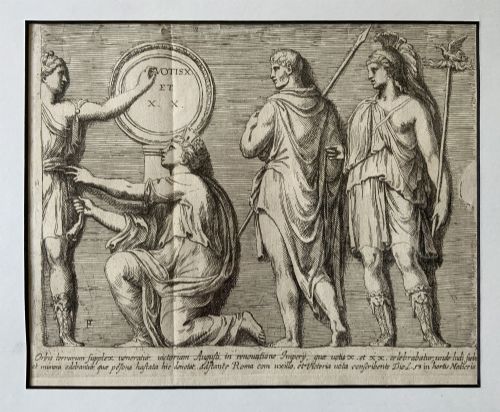
When you search for classical relief artwork, you encounter wall art, wall reliefs, and decorative plaques spanning the eighteenth and nineteenth centuries. These pieces capture neoclassical, Victorian classical revival, and Renaissance revival styles.
The selection on this page relies heavily on eighteenth-century engravings depicting the antiquities of Athens, alongside nineteenth-century framed prints, trompe l'oeil paintings, and bronzed copper panels. You will also find carved walnut wall hanging panels and pate sur pate tondo plaques.
Materials and construction methods
These works utilise traditional media such as ink and paper for engraved plates, alongside oil paint on canvas and wood for framed paintings. Engravers employed copper plates to produce detailed architectural and mythical imagery.
Three-dimensional pieces involve carved walnut and bronzed copper, whilst ceramic works employ specialised pate sur pate techniques. Frames frequently incorporate glass and gilt wood to protect and display the artworks.
Zephyros and various satyrs peer out from eighteenth century Athenian architectural plates, bringing ancient mythological mischief straight to your modern wall.
Judging the quality of the pieces
Quality rests upon the crispness of the impression in engravings and the depth of carving in wooden panels. Fine examples show meticulous control of line, whether in the depiction of Greek deities or architectural ruins.
The sophistication of the material finish, from the patination of bronzed copper to the gilding on wood frames, distinguishes finer decorative objects from simpler wall art.
The Classical Relief Artwork Glossary
- Neoclassical
- A style originating in the mid-eighteenth century inspired by the classical art and culture of ancient Greece and Rome.
- Engraving
- A printmaking technique where an artist carves an image onto a copper plate to hold ink for transfer to paper.
- Tondo
- A circular work of art, typically a painting or a relief plaque.
- Pate sur pate
- A ceramic technique where a relief decoration is built up using layers of liquid clay slip on a contrasting body.
Classical Relief Artwork: Frequently Asked Questions
What is classical relief artwork?
These pieces comprise wall art, engravings, plaques, and carved panels depicting mythological and architectural subjects from antiquity.
They reflect eighteenth and nineteenth century revivals of Greek and Roman aesthetic traditions.
How were these wall panels used?
Carved wooden panels and framed plaques served as decorative architectural adornments within traditional domestic interiors.
Engravings were often bound in volumes or framed individually for display in studies and libraries.
How do I date a piece?
Dating relies on observable material characteristics, framing styles, and the specific engraving techniques typical of the eighteenth and nineteenth centuries.
Stylistic markers such as neoclassical motifs provide clear indicators of the period of production.
How do I care for works on paper?
Works executed on paper and canvas require protection from direct sunlight to prevent fading of the ink and paint.
Keeping them in stable environmental conditions away from excessive moisture preserves both the paper and the original frames.