


Classical Regency Settee
A classical regency settee brings architectural proportion and scroll-end elegance to a room.
Classical Regency Settee
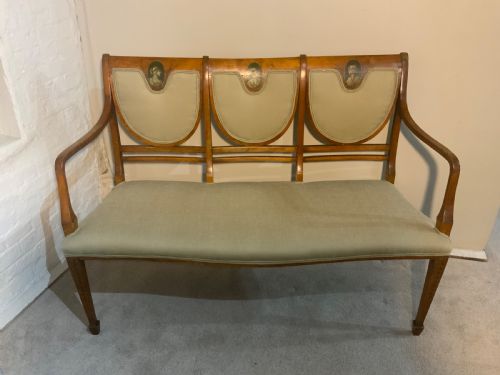
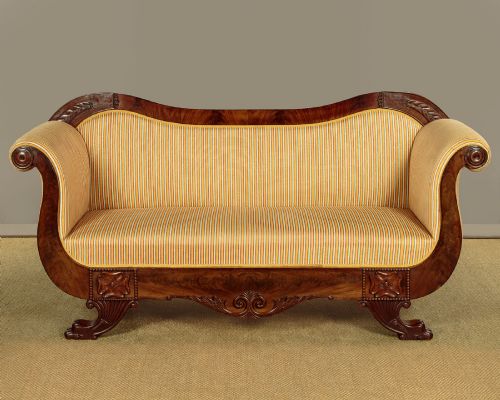
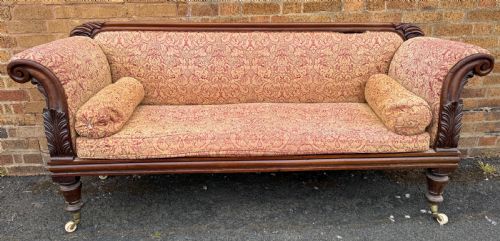
A classical regency settee is a seating form defined by the furniture styles of the early nineteenth century. These pieces appear primarily as sofas and settees, including scroll end couches and chair back settees.
The evidence on this page shows items spanning the Regency, William IV, and Neo-Classical styles. Buyers are most likely to encounter mahogany and simulated rosewood frameworks shaped with scroll ends.
Makers of the period drew inspiration from classical antiquity, resulting in balanced proportions and restrained ornament. Examples range from simple country house sofas to carved mahogany framed double scroll ended pieces.
What varies in quality
Quality in a classical regency settee rests upon the crispness of the carved woodwork and the timber selection. Finer examples display carefully figured mahogany or precise painted satinwood surfaces.
The architectural integrity of the scroll ends and the fluidity of the frame design separate standard pieces from superior examples. Attention to detail in the joinery dictates the longevity and visual weight of the settee.
Listings span the Regency, William IV, and Neo-Classical styles, featuring mahogany, satinwood, and simulated rosewood.
The Classical Regency Settee Glossary
- Scroll end
- A sweeping, outward-curving arm or terminal characteristic of nineteenth-century seating. This shape defines the silhouette of many sofas on this page.
- Satinwood
- A durable, yellowish-grey timber with a fine grain and natural sheen. It is used both in solid form and as a decorative veneer.
- Simulated rosewood
- A painted or stained finish applied to a secondary timber to imitate the dark grain of genuine rosewood. This technique was popular for fashionable furniture.
- Chair back settee
- A form of seating where the backrest resembles two or more joined chair backs. It represents an earlier design tradition carried into the nineteenth century.
Classical Regency Settee: Frequently Asked Questions
What is a classical regency settee?
A classical regency settee is a nineteenth-century seating form characterised by architectural lines, scroll ends, and classical restraint. These pieces serve as both decorative focal points and functional furniture.
They reflect the design vocabulary of the Regency and William IV periods, utilising timbers such as mahogany and satinwood.
How were these settees used originally?
These settees were placed in formal drawing rooms, libraries, and country house reception spaces for lounging and entertaining. Their generous proportions accommodated the elaborate dress of the period.
They were positioned to highlight the carved scroll ends and decorative timber frames within the room's layout.
How do I style a regency settee today?
A regency settee works well as a statement piece in a living room, hallway, or large bedroom. Pairing it with neutral walls allows the timber frame and scroll-end silhouette to stand out.
Traditional upholstery fabrics complement the historical character, while simpler textiles can anchor the piece in a modern interior.
How do I tell a Regency piece from a later copy?
Examining the timber, construction methods, and secondary woods helps determine the age of a settee. Authentic pieces display period joinery techniques and appropriate wear consistent with early nineteenth-century production.
Stylistic markers such as Neo-Classical carving details and simulated rosewood finishes also point towards the original era.