



Classical Painted Cabinet
A classical painted cabinet brings together fine timber and narrative brushwork to anchor a room with antique elegance.
Classical Painted Cabinet
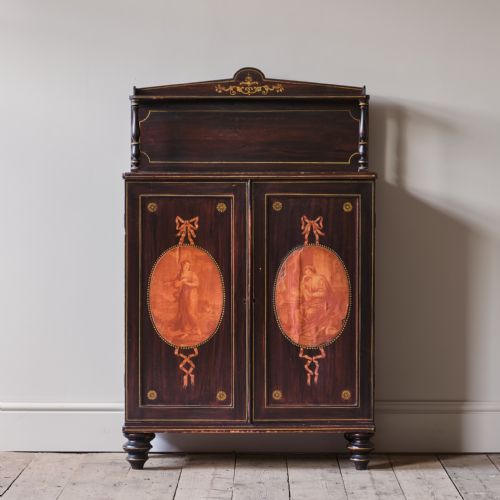
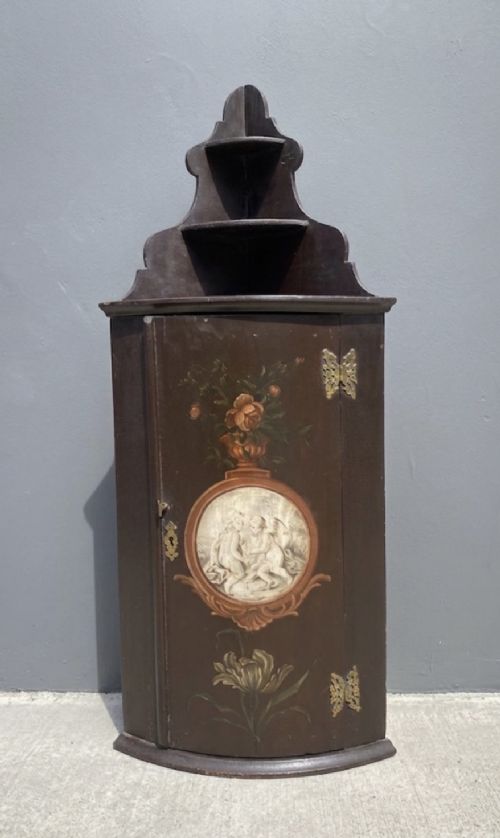
A classical painted cabinet comprises case furniture adorned with surface decoration drawn from classical mythology, architecture, or floral motifs. Buyers exploring this selection will encounter varied forms ranging from demi-lune commodes and side cabinets to corner cupboards, chiffoniers, and display pieces.
The periods represented stretch from the eighteenth century through the Regency era, Victorian epoch, and into the Edwardian years and the early twentieth century. Styles cluster heavily around the neoclassical, Sheraton revival, and grand regency idioms, frequently employing symmetrical proportions and restrained architectural lines.
Origin points span British workshops working in satinwood and mahogany alongside continental centres producing enamel or porcelain decorated pieces. Smaller items such as bedside cabinets and trays sit alongside substantial sideboards and architectural bookcases.
Materials and construction methods
Makers relied on satinwood, mahogany, and walnut as primary timbers, often applying paint directly to the wood or building up simulated grain effects such as rosewood. Surface decoration frequently incorporated hand-painted classical panels, floral swags, and figural scenes executed in enamels.
Gilding and gold leaf highlights accented painted borders, while brass hardware secured doors and drawers on pieces ranging from small table cabinets to large serpentine fronted sideboards. Porcelain plaques, chargers, and cabinet plates were frequently set directly into the timber framework.
Inlay work in contrasting veneers supported the painted decoration, particularly within Sheraton revival pieces that mirrored eighteenth-century cabinet-making techniques. Pine carcases formed the hidden structure for painted pine chiffoniers and corner cupboards.
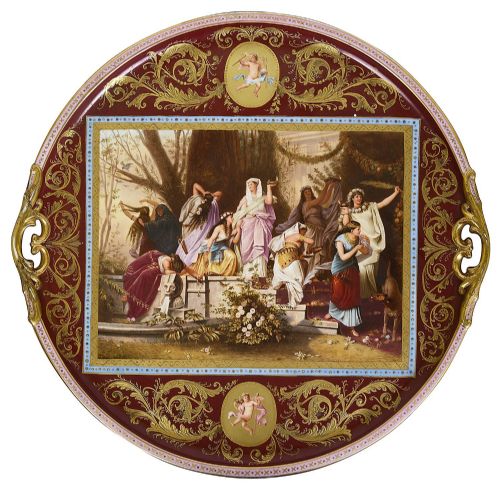
The archive and current selection feature multiple Vienna porcelain plates and chargers integrated into furniture or displayed alongside cabinets.
Distinctions in quality
Quality rests upon the execution and preservation of the painted surface, where finely rendered figural scenes by named or skilled hands elevate a piece far above simple decorative application. The crispness of the surrounding woodwork, whether satinwood or mahogany, dictates the structural integrity of the carcase.
Proportion and the restraint of neoclassical ornament govern visual success, separating masterwork revival pieces from heavier commercial output. The integration of porcelain plaques and enamel panels, particularly where genuine Royal Vienna work is present, marks the upper tier of the range.
Kaufman·S. Stanley·Sibl·Wagner
The Classical Painted Cabinet Glossary
- Demi-lune
- A half-moon shape common in commodes and side cabinets designed to sit flat against a wall.
- Satinwood
- A light-grained exotic timber prized for its smooth yellow lustre and favoured by eighteenth and nineteenth-century cabinet-makers.
- Chiffonier
- A low sideboard or cabinet equipped with drawers and shelves, developed during the Regency period.
- Neoclassical
- A style reviving classical Roman and Greek motifs, symmetry, and restraint during the eighteenth and nineteenth centuries.
- Charger
- A large decorative plate or dish, often mounted with painted mythological scenes rather than used for dining.
Classical Painted Cabinet: Frequently Asked Questions
What is a classical painted cabinet?
A classical painted cabinet is a piece of case furniture featuring surface artwork inspired by antiquity, mythology, or neoclassical design principles. These items utilise timber frames such as satinwood or mahogany to display hand-painted panels, motifs, or inserted porcelain plaques.
Craftsmen across the eighteenth, nineteenth, and early twentieth centuries produced these cabinets in forms ranging from small bedside units to large sideboards and corner cupboards. The resulting objects combine practical storage with decorative painted surfaces.
How were these cabinets used historically?
These cabinets served to store household goods, display porcelain collections, or hold stationery and valuables within refined domestic interiors. Their decorative surfaces allowed them to function as focal points in drawing rooms, boudoirs, and formal parlours.
Corner cupboards and chiffoniers provided specialised storage tailored to specific room layouts and changing social habits across the Georgian and Victorian periods. Display cabinets and porcelain-mounted pieces specifically showcased the wealth and cultivated taste of the owner.
How do I care for a painted antique cabinet?
Preserving these pieces requires protecting the painted surfaces from direct sunlight, which can fade pigments and degrade enamels over time. Stable indoor humidity prevents the timber carcase from expanding or contracting, protecting the painted panels from stress.
Cleaning should involve only a soft, dry cloth without modern chemical polishes that might damage aged varnish or paint layers. Gentle handling of doors, drawers, and glazed panels ensures the structural longevity of the antique woodwork.
How can I tell the period of a painted cabinet?
Dating relies on examining the underlying timber construction, joinery methods, and the specific characteristics of the painted decoration. Eighteenth-century and Regency pieces often display hand-cut joinery and simpler structural timbers beneath the paint, while Victorian and Edwardian revival items may incorporate machine-sawn elements.
stylistic shifts, such as the heavy gilding of the mid-nineteenth century or the lighter satinwood revivals of the Edwardian era, help narrow the date of manufacture. Maker signatures, porcelain factory marks, and recorded artistic styles provide further chronological anchors.