


Classical Ormolu Side Lamp
These classical ormolu side lamps bring French Empire and Regency presence to a room, combining cast gilt bronze with marble or porcelain.
Classical Ormolu Side Lamp
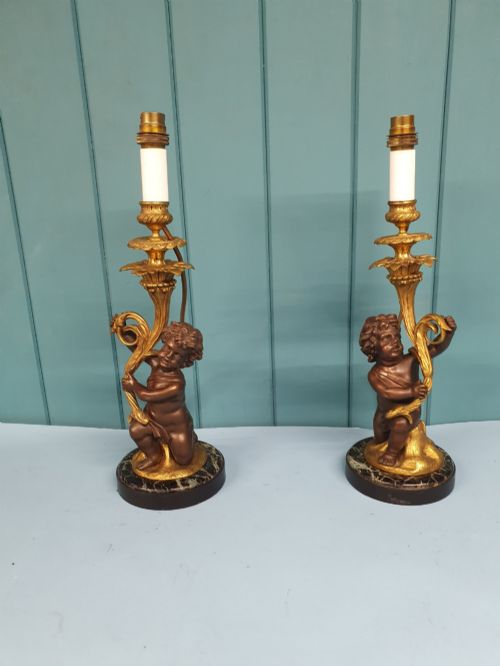
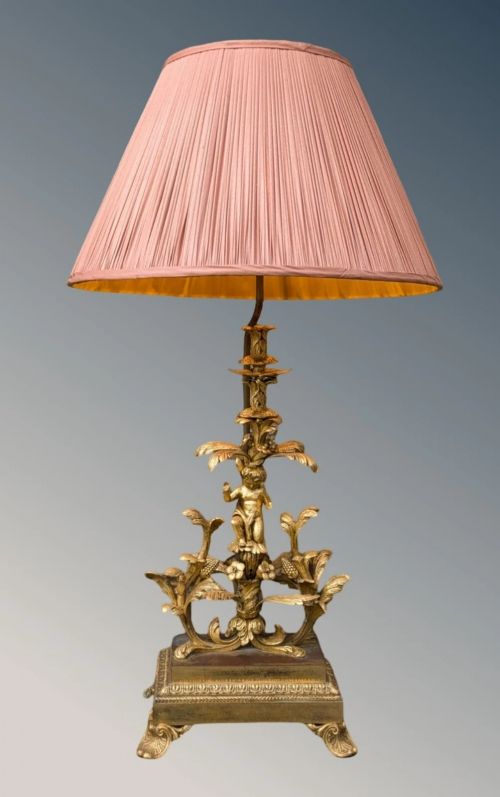
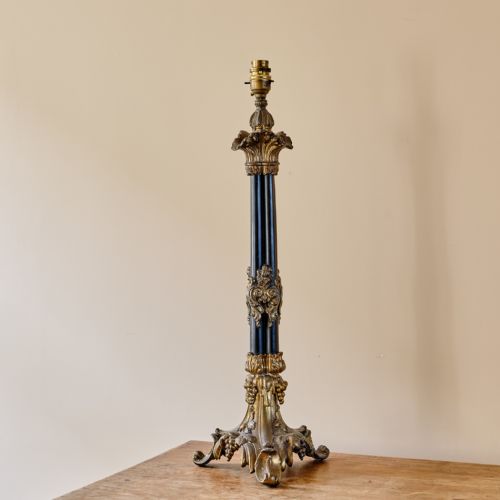
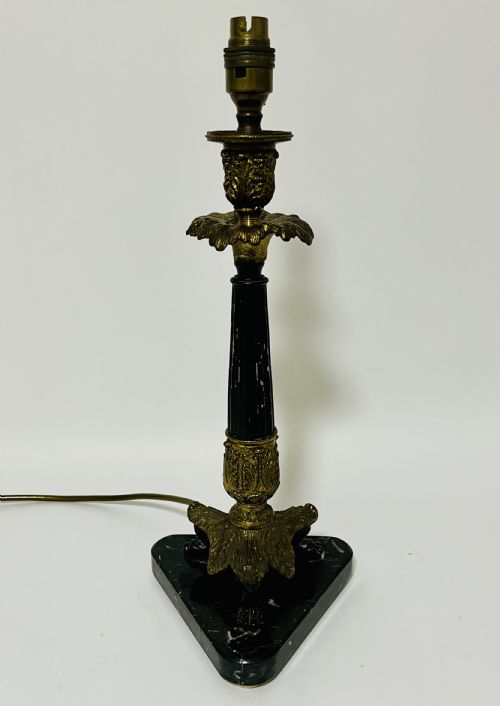
A classical ormolu side lamp combines gilded bronze metalwork with materials like marble, Siena marble, or Sevres style porcelain to form table lighting. These pieces take the form of table lamps, candlestick lamps, and cassolette lamps.
The aesthetic draws heavily from French Empire, Louis XVI, and Regency styles, featuring architectural mounts, cherubs, and classical figures. Buyers encounter pairs and single lamps spanning the nineteenth century up to nineteen-forty.
Makers and designers referenced include models after Jean-Demosthene Dugourc, bringing formal neoclassical proportion to domestic interiors. The forms bridge functional lighting and sculptural decorative arts.
Evaluating quality and execution
Quality rests in the crispness of the bronze chasing and the depth of the fire gilt, where hand-finished metalwork shows sharp definition in drapery, hair, and acanthus leaves. Heavy cast bases and dense natural marble signify superior construction over lighter pressed brass substitutes.
The integration of mount to stone distinguishes better examples, ensuring bezels and feet fit flush without excessive pinning or gaps. Matched pairs with consistent patination and original gilding retain stronger visual cohesion than married or heavily re-gilded components.
A nineteenth-century gilded bronze figure of a young girl blowing a kiss doubles as a working lamp.
Jean Demosthene Dugourc
The Classical Ormolu Side Lamp Glossary
- Ormolu
- Gilded bronze, produced by applying a gold and mercury amalgam to cast bronze and heating it until the mercury vaporised. This historic technique creates a dull, warm gold finish distinct from modern electroplate.
- Cassolette
- A decorative vessel shaped like a vase or urn, often adapted as a lamp in French interiors. They typically feature reversible lids that function as burners or solid finials.
- Gueridon
- A small round table, sometimes appearing alongside these lighting forms in period inventories. They provide a sturdy platform for displaying heavy bronze and marble lamps.
- Empire Style
- A neoclassical design movement originating in early nineteenth-century France. It draws on Roman, Greek, and Egyptian motifs, favouring symmetry, military trophies, and severe classical drapery.
- Siena Marble
- A yellow-gold ornamental marble featuring dark grey or purple breccia veins. It provides a dense, colourful base for ormolu mounts in nineteenth-century pieces.
Classical Ormolu Side Lamp: Frequently Asked Questions
What periods do these lamps date from?
The pieces span the nineteenth century through to nineteen-forty, with significant representation from the Regency and French Empire eras.
Stylistic revivals during the nineteen-hundreds and nineteen-twenties also reproduce these earlier classical forms.
Are these lamps sold as pairs?
Many listings feature matched pairs of candlestick and urn lamps intended for side tables or mantelpieces.
Single table lamps also appear, often taking the form of figural bronzes or porcelain vases.
What materials make up the bodies?
Gilt bronze and ormolu form the primary metalwork, frequently combined with white or Siena marble bases.
Some examples incorporate Sevres style hand-painted porcelain or fabric elements.
How do I identify French Empire style?
This style relies on strict symmetry, classical architectural proportions, and military or mythological motifs.
Ormolu mounts on these pieces often depict acanthus leaves, cherubs, and classical figures.