




French Brass Buffet Lamp
These French brass buffet lamp examples bring steady illumination and decorative presence to a room, drawn from periods spanning the nineteenth and early twentieth centuries.
French Brass Buffet Lamp
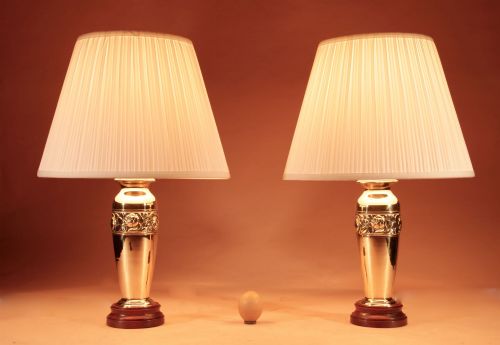
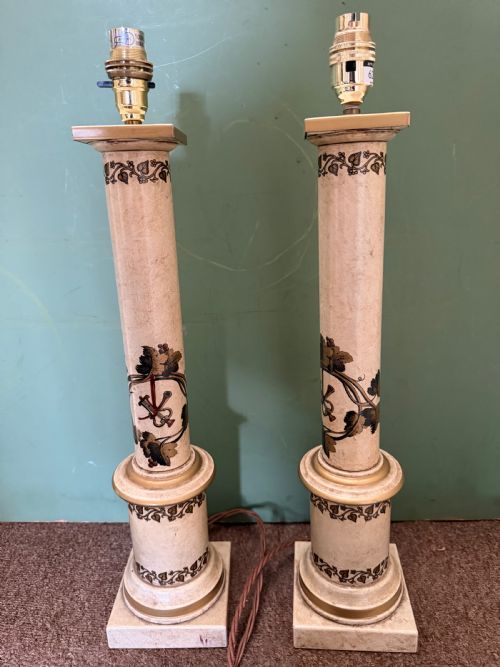
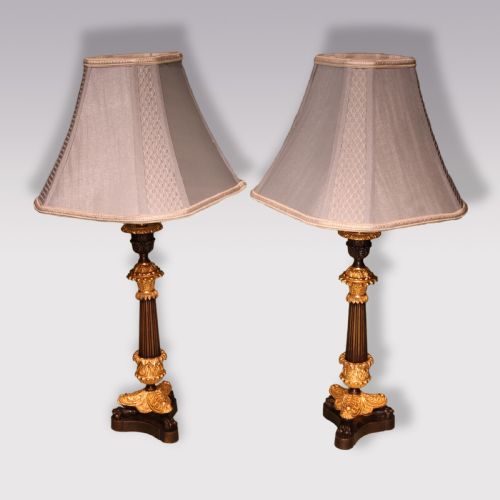
When you search for a french brass buffet lamp, you are looking at task and decorative lighting fashioned in France during the nineteenth and early twentieth centuries. The selection on this page centres on table lamps, column lamps, and converted candlesticks that utilise brass, ormolu, and bronze.
The forms span several distinct aesthetic movements, ranging from French Empire and Neoclassical designs to Louis XV style and Art Deco symmetry. Many pieces incorporate secondary materials such as marble, porcelain, and fabric shades to complete the silhouette.
You will encounter single lamps as well as matched pairs suitable for mantelpieces, sideboards, and buffets. These objects bridge the gap between functional household illumination and sculptural metalwork.
How they were made
The foundation of a french brass buffet lamp typically involves cast brass, bronze, or ormolu, often combined with hand-painted porcelain or carved marble bases. Metal components are cast and chased to achieve crisp architectural details and ornamental motifs.
Many items begin life as candlesticks or tole-peinte column lamps before later conversion to electrical table lamps. Surface decoration includes fire-gilding, hand-painted cobalt blue panels, and patinated bronze finishes.
Several heavy church candlesticks found a second career illuminating secular sideboards.
What varies in quality
The distinction between standard and superior pieces rests on the crispness of the metal chasing and the weight of the cast brass or ormolu. Finer examples display deeply articulated acanthus leaves, sharp casting lines, and substantial marble or porcelain plinths that anchor the proportions.
Integration of secondary elements also defines the tier of manufacture, such as hand-painted porcelain reserves, finely woven silk shades, or robust patination on the bronze components. The fidelity of historical revival styles, from Louis XV curves to Empire symmetry, dictates the overall character.
The French Brass Buffet Lamp Glossary
- Ormolu
- Gilded bronze produced by applying a mercury and gold amalgam to a bronze base and heating it. This technique creates a durable golden finish characteristic of fine French decorative arts.
- Tole-peinte
- Painted sheet metal used for column lamps and shades, often decorated with pastoral scenes or solid dark colours. It provides a contrasting matte texture against polished brass.
- Sevres style
- A decorative manner imitating the soft-paste porcelain produced by the Sevres royal manufactory in France. Pieces often feature cobalt blue or bleu celeste grounds with painted highlights.
- French Empire
- A neoclassical design style spanning the early nineteenth century marked by military motifs, classical symmetry, and heavy use of patinated bronze and ormolu.
- Giltwood
- Wood that has been coated with a thin layer of gold leaf or gesso. This finish appears on certain candelabra bases adapted into lighting.
French Brass Buffet Lamp: Frequently Asked Questions
Are these lamps converted from candlesticks?
Many examples on this page started as nineteenth-century brass candlesticks, column lamps, or church pieces before receiving electrical fittings at a later date.
This method of adaptation preserves the original metalwork while allowing the object to function safely as a modern table lamp.
How do I identify the period?
Dating relies on stylistic markers such as the heavy classical proportions of the nineteenth-century Empire pieces versus the geometric lines of 1920s Art Deco items.
Examination of the casting quality, screw threads, and wiring channels also helps establish the approximate age of the metal body.
Where should I place a buffet lamp?
These tall column and candlestick forms suit narrow surfaces such as sideboards, buffets, console tables, and mantelpieces where vertical presence matters.
Their slim profiles provide focused illumination without dominating the surface area of smaller furniture pieces.
What maintenance do brass lamps need?
Metal surfaces benefit from occasional dusting with a soft dry cloth to prevent the accumulation of grime in the chased recesses.
Avoiding abrasive cleaners protects the underlying patina and any original fire-gilding or bronze finishes present on the body.