


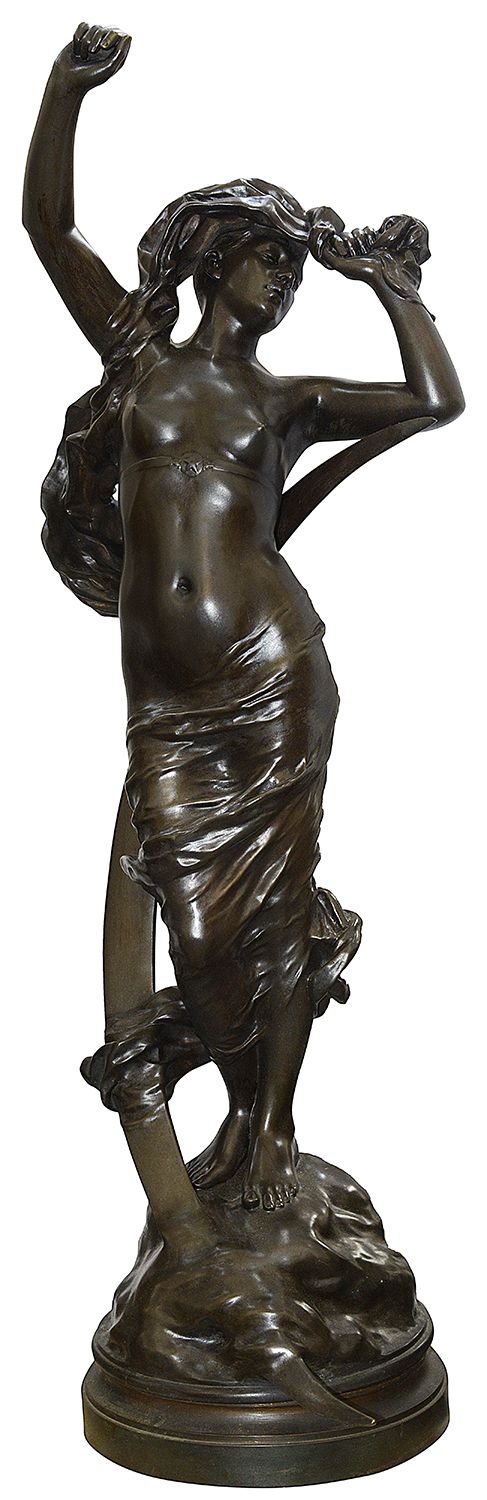


Classical Nymph Sculpture
A classical nymph sculpture brings mythological grace into a room through cast metal or carved stone.
Classical Nymph Sculpture
A classical nymph sculpture depicts female mythological figures, maidens, and dancers drawn from classical tradition. These pieces appear most frequently as nineteenth-century French works, capturing figures in motion or repose.
The selections on this page range from full-scale standing figures to dancing groups and figural vases. Formats span solitary female nudes, semi-nude maidens, and multi-figure compositions involving children or mythological companions.
Origins heavily favour French foundries and ateliers working in the nineteenth and early twentieth centuries. Makers and after-models frequently reference classical antiquity through a French neoclassical or rococo revival lens.
How they were made
Foundries produced the metal sculptures using the lost-wax or sand casting method to capture fine anatomical details and drapery. Finished metal works received various surface treatments including patination, silvering, or gilding to create distinct tonal effects.
Carved stone pieces rely on traditional masonry techniques applied to marble, shaping the stone to replicate classical forms. Terracotta works use moulded or hand-shaped clay, fired to achieve a solid reddish-brown ceramic body.
Several sculptures feature dancing maidens and piping figures caught mid-step, proving that bronze nymphs love a good party.
What varies in quality
The pedigree of the foundry or the signature of the sculptor influences the standing of a piece. Works produced by established Paris foundries or signed by recognised artists demonstrate superior mastery of proportion and material.
Auguste Moreau·S. Kinsburger·Clodion·Eugène Désiré Piron·Houdebine·Carrier·Antoine Coysevox·Barbedienne
The Classical Nymph Sculpture Glossary
- Patinated bronze
- Bronze treated with chemical solutions to produce a darkened or coloured surface layer. This finish protects the metal and accentuates sculptural contours.
- Terracotta
- Fired unglazed clay used for sculptural modeling. The porous material allows for direct hand-working by the artist before firing.
- Silvered bronze
- Bronze coated with a thin layer of silver or a silver alloy. This treatment gives the sculpture a bright, reflective metallic finish.
- Neoclassical
- A style inspired by the art and culture of ancient Greece and Rome. It emphasises balance, restraint, and classical mythological subjects.
Classical Nymph Sculpture: Frequently Asked Questions
What materials are used?
Pieces are primarily cast in bronze with various surface treatments such as patination, silvering, or gilt. Other materials include carved marble and moulded terracotta.
The metal works frequently utilise traditional French foundry techniques to achieve durable, detailed forms suitable for interior display.
How do I identify the period?
Dating relies on stylistic markers such as nineteenth-century French neoclassical or art nouveau influences. Foundry marks, signatures, and material patination also provide clear indications of age.
Most examples date from the nineteenth century through the early twentieth century, reflecting revivalist tastes of those decades.
Who made these sculptures?
Sculptures are often produced by notable nineteenth-century French artists and cast by established Paris foundries. Signatures on the base or body frequently attribute works to specific sculptors.
Some pieces are later castings created after well-known historical sculptors following classical models.
Where should I display them?
These sculptures suit tabletops, mantelpieces, or dedicated pedestals where the form and surface detail can be appreciated from multiple angles. Stable indoor environments away from excessive moisture preserve the metal patinas and stone surfaces.
Pairing them with period furniture enhances the classical interior aesthetic.