




Classical Marble Urn Pedestal
These pieces bring a classical marble urn pedestal into a room, blending sculptural presence with the refined weight of stone and metal.
Classical Marble Urn Pedestal
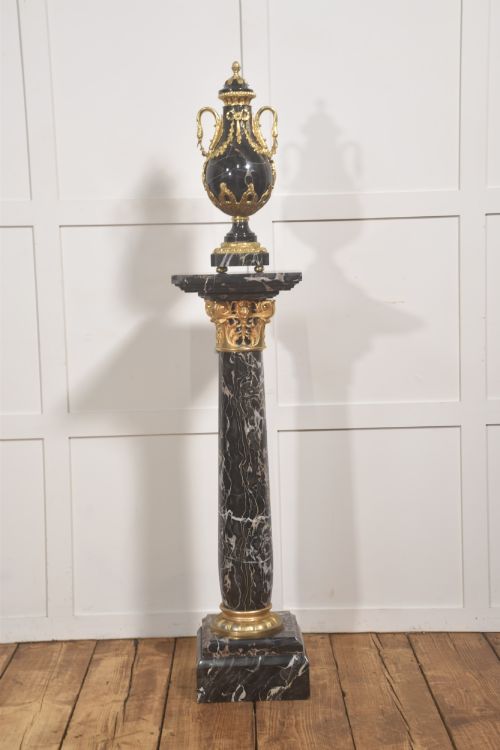
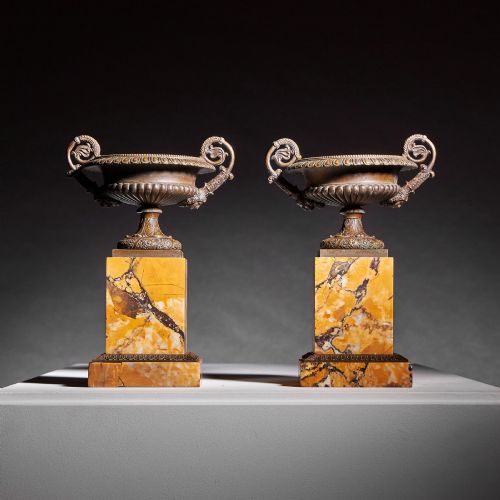
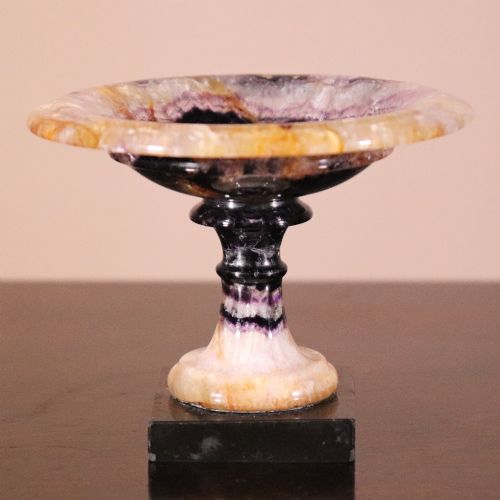
A classical marble urn pedestal brings together carved stone columns, shallow tazzas, and lidded urns designed to elevate sculptural objects. The pieces span the eighteenth, nineteenth, and early twentieth centuries, drawing heavily on neoclassical, Regency, and French Empire aesthetics.
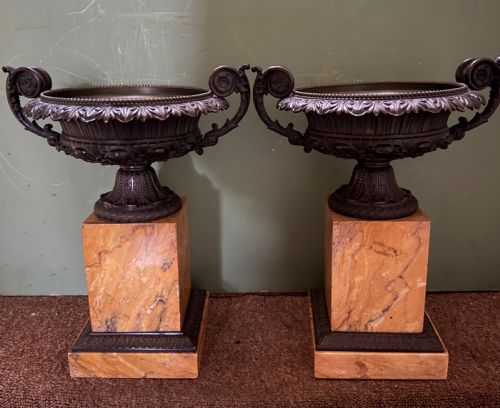
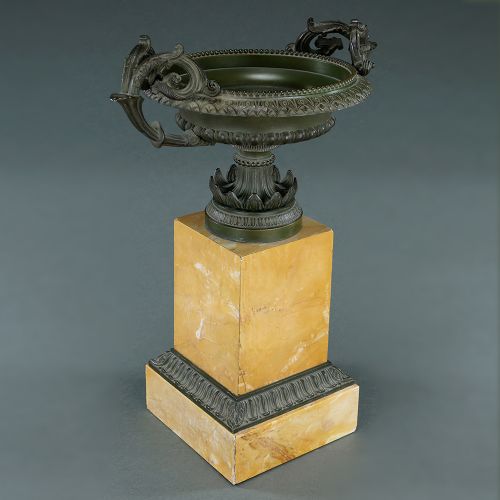
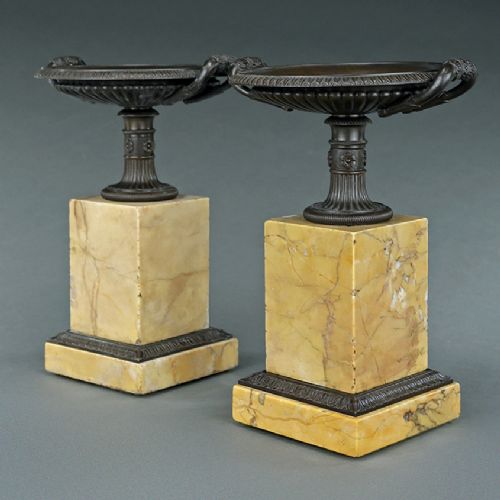
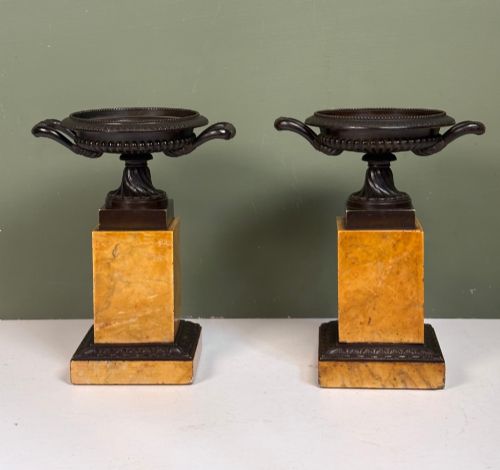
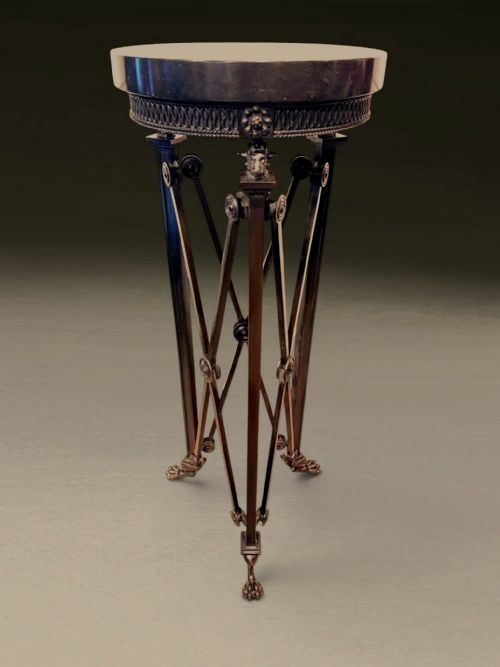
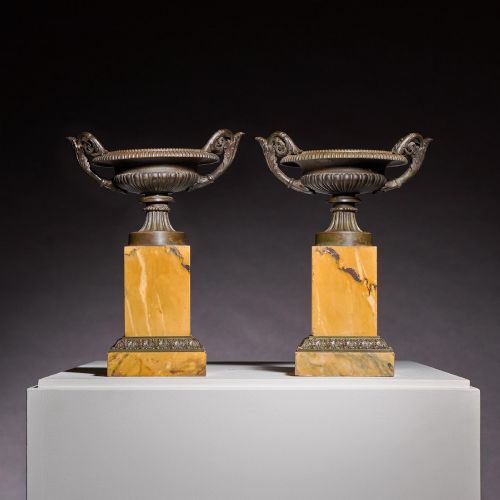
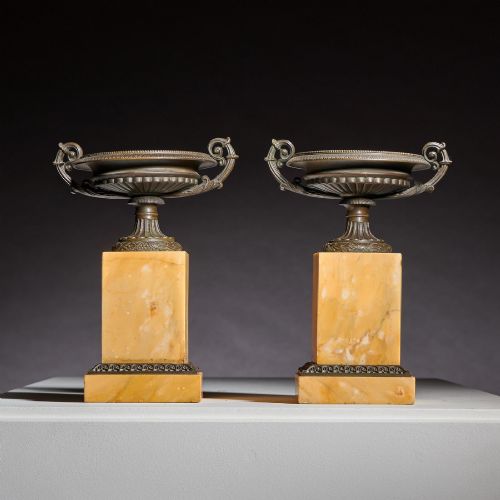
Visitors to this selection most frequently encounter nineteenth-century Grand Tour bronze and Siena marble tazzas, alongside black marble and alabaster urns on tailored plinths. These range from modest tabletop vessels to monumental architectural columns and torchere stands.
Originating largely from Italian and French workshops, the forms echo antique archaeological discoveries. They serve equally as standalone decorative objects or as functional risers for busts and smaller works of art.
How they were made
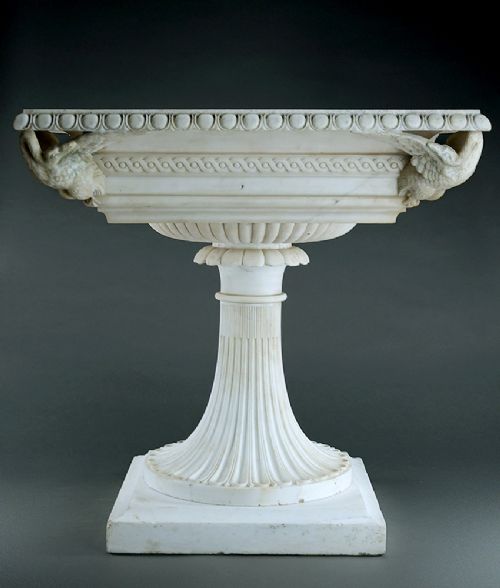
Makers shaped structural elements from white, black, green, and Siena marbles, often combining contrasting varieties to define plinths and columns. Artisans integrated cast bronze, ormolu, and gilt-metal mounts to accent the rims, handles, and bases of stone vessels.
Turned stone and hand-chiselled detailing give the marble components their architectural precision. Bronze elements utilised traditional lost-wax or sand-casting methods before receiving fine chasing and patination.
Classical Marble Urn Pedestal Retail Price Guide 2026
Typical asking prices for classical marble urn pedestal among the pieces listed under this phrase on Sellingantiques today, from the lower quarter to the upper quarter. They describe what is for sale here now, not the wider market.
Several pieces depict children pushing carts, proving that even nineteenth-century sculptors appreciated the comedic value of small helpers avoiding manual labour.
What varies in quality
The sophistication of the bronze casting and the crispness of the marble carving separate standard utility pieces from exceptional works. Finer examples display meticulous chasing on the metal mounts and rich, natural figuring within the stone.
Proportion and architectural balance dictate the visual success of the piece, with superior specimens maintaining harmonious scale between vessel and pedestal.
The Classical Marble Urn Pedestal Glossary
- Tazza
- A shallow saucer-shaped vessel or cup mounted on a stem and foot. These objects were frequently produced during the nineteenth century as Grand Tour souvenirs.
- Siena marble
- A distinctive yellow-gold Italian marble with dark grey and purple veining. It was highly prized by nineteenth-century makers for neoclassical display objects.
- Ormolu
- Gilding technique utilising ground metallic mercury applied to a bronze base. The process creates a warm, durable gold finish typical of French Empire and Regency mounts.
- Grand Tour
- A cultural journey undertaken by wealthy Europeans in the eighteenth and nineteenth centuries. Souvenirs included miniature bronzes and marble architectural models.
- Cassolette
- A decorative vase or urn featuring a reversible lid that functions either as a solid cover or a burner. They frequently incorporate classical bronze and marble components.
Classical Marble Urn Pedestal: Frequently Asked Questions
What is a classical marble urn pedestal used for?
These pieces function primarily as decorative focal points or architectural display stands within a room. They elevate sculptures, busts, or smaller art objects to optimal viewing heights.
Historically, they served to display antiquities and demonstrate classical taste within elite domestic interiors.
How do I identify a Grand Tour piece?
Grand Tour items typically date from the nineteenth century and replicate famous ancient Roman or Greek monuments. They combine patinated bronze with coloured marbles such as Siena or Rosso.
These pieces were produced in Italy and France as souvenirs for travellers completing traditional European educational journeys.
What materials are common in these stands?
The primary structure relies on stones including white, black, green, and Siena marbles, alongside alabaster and mahogany. Metal components utilise cast bronze, ormolu, silvered bronze, and gilt-metal.
Makers frequently paired multiple stone varieties to create striking contrasts on plinths and columns.
How should I style these in a modern interior?
These objects provide architectural structure when placed in hallways, living spaces, or studies. They operate effectively as standalone sculptures or paired as flanking columns.
Keep surrounding furniture simple to allow the carved stone surfaces and patinated bronze details to command visual attention.