



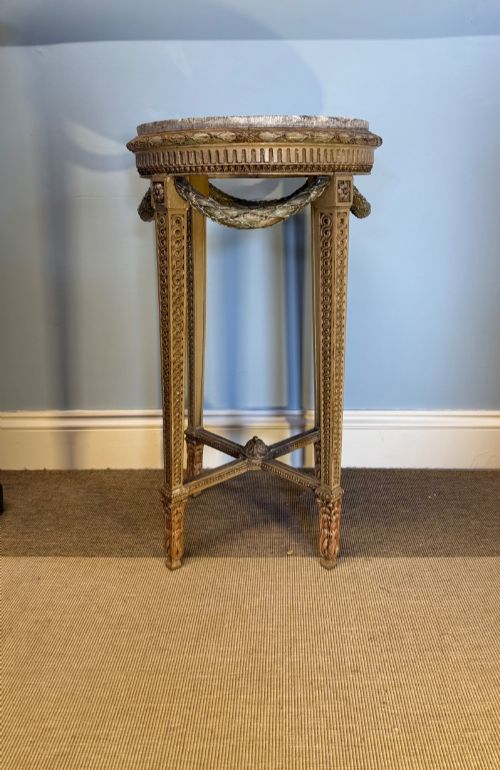
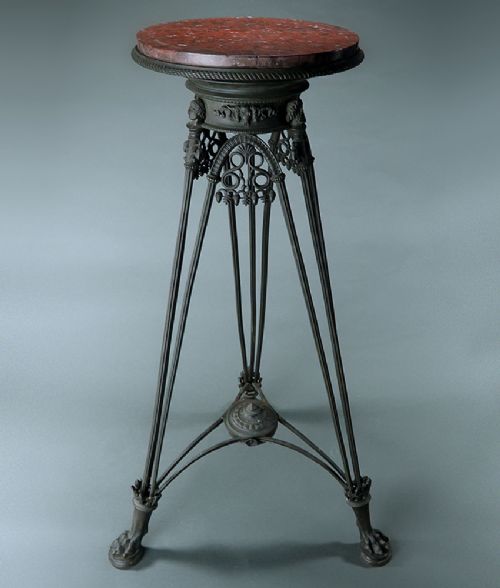


French Marble Display Pedestal
These French marble display pedestals lift sculpture and plants into the light, bringing classical dignity and rich stone into a room.
French Marble Display Pedestal
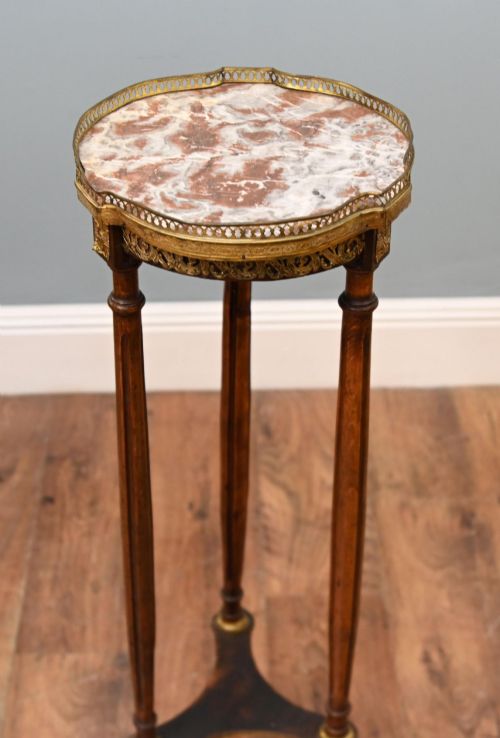
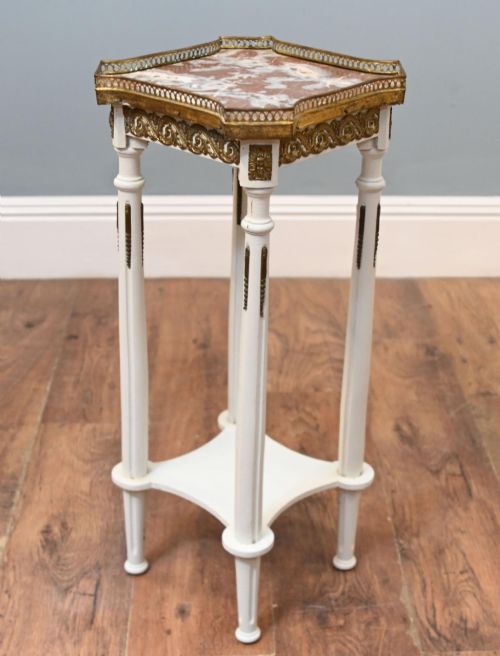
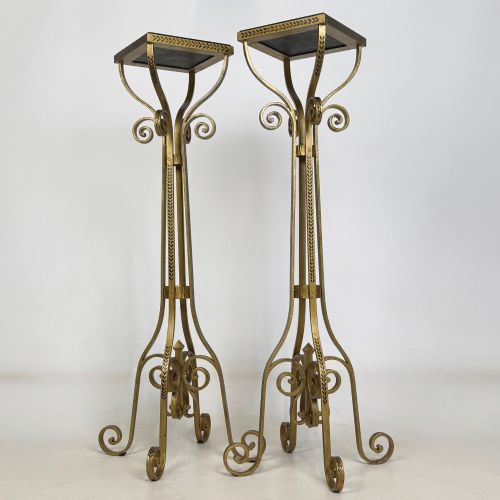
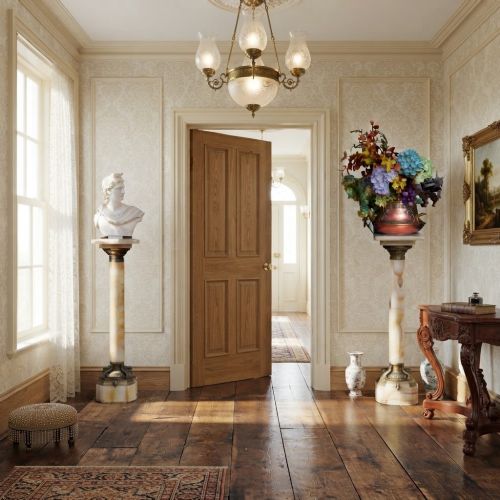
A french marble display pedestal serves as an elevated platform for urns, bronzes, and potted plants, lifting decorative objects to eye level. The forms on this page include tall columns, plant stands, plinths, and occasional pedestal tables designed to command a corner or centre space.
Most examples date from the nineteenth century, spanning Victorian, Edwardian, and Belle Epoque periods, alongside earlier eighteenth-century survivors. You will frequently encounter tall cylindrical columns and square stands fashioned from rich stones like onyx, verde antico, and rouge marble.
Stylistic influences draw heavily from the neoclassical, Louis XVI, and French Empire repertoires. Makers employed carved wood, gilt bronze, and ormolu mounts to frame the cool, heavy stone tops and shafts.
Materials and construction methods
The primary structural weight relies on natural stones including marble, onyx, and serpentine, shaped into smooth columns or flat tabletops. These stone shafts are frequently paired with timber carcasses in mahogany, walnut, kingwood, or burr elm.
Metal enrichment defines the French aesthetic, utilising cast bronze, brass, ormolu collars, and gilt-metal mounts to accent capitals and bases. Chiseled detailing and hand-painted finishes add surface texture to the structural wood and metal elements.
French Marble Display Pedestal Retail Price Guide 2026
Typical asking prices for french marble display pedestal among the pieces listed under this phrase on Sellingantiques today, from the lower quarter to the upper quarter. They describe what is for sale here now, not the wider market.
Materials span natural onyx, green serpentine, and black marble, often united with brass, ormolu, and mahogany.
Distinctions in craftsmanship and materials
The grade of a piece rests heavily on the selection and figure of the stone, from plain black marble to richly patterned green serpentine and translucent onyx. Finer specimens display deeply variegated natural veining and flawless polish across the entire column.
Metalwork quality separates standard production from superior examples, visible in the sharpness of chased ormolu collars and heavy gilt-bronze mounts. Solid timber frames and intricate hand-carved wood details likewise indicate superior workshop origins compared to simpler constructed stands.
The French Marble Display Pedestal Glossary
- Ormolu
- Gilt bronze applied to furniture and decorative objects as mounts, collars, and feet. This technique was widely utilised by French makers to accent marble and wood.
- Guéridon
- A small round French table supported by a single central column or pedestal. These pieces often feature inset marble tops.
- Torchere
- A tall stand or pedestal originally designed to hold a torch or candelabrum. In later periods, they served as display columns for vases and plants.
- Neoclassical
- A style drawing inspiration from classical antiquity, featuring symmetrical lines, architectural columns, and restrained ornamentation. It dominates nineteenth-century French furniture design.
- Verde Antico
- A dark green serpentine breccia marble prized for its mottled appearance. It appears frequently in nineteenth-century French columns.
French Marble Display Pedestal: Frequently Asked Questions
What were French marble display pedestals used for originally?
These pieces functioned primarily as elevated stages within grand interiors, holding heavy bronze sculptures, decorative urns, and exotic indoor plants. By lifting objects off the floor, they directed attention to prized possessions and filled empty architectural corners.
In domestic settings, smaller pedestal tables and plant stands also served occasional surface duties. Their sturdy stone tops provided a durable, water-resistant area for botanical displays.
How do I identify a Louis XVI style pedestal?
Louis XVI style pieces rely on straight lines, classical proportions, and restrained geometric symmetry. Look for fluted columns, square bases, and crisp architectural detailing rather than the curving asymmetry of earlier Rococo designs.
They frequently incorporate gilt-bronze or ormolu collars that echo classical friezes. The stone tops are usually inset neatly within a precise brass or wood frame.
Can these pedestals support heavy stone or bronze sculptures?
Yes, the solid stone columns and heavy timber cores are engineered to bear substantial weight. Their wide bases provide a stable footprint designed to keep tall, top-heavy items secure.
However, placement matters on uneven historic flooring. Ensuring the base sits level prevents any wobble when displaying heavy bronze or marble art.
How do I clean and care for antique marble and onyx?
Dust surfaces regularly with a soft, dry cloth to prevent grit from scratching the polished stone. Avoid acidic cleaning solutions, vinegar, or harsh chemicals, which etch and ruin marble and onyx polishes.
For general upkeep, wipe gently with a damp cloth using mild, neutral soap, then dry immediately. Protecting the stone from standing water will preserve its natural sheen.