
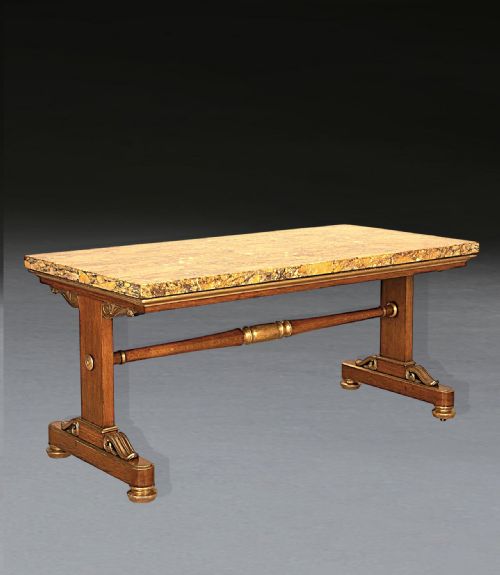
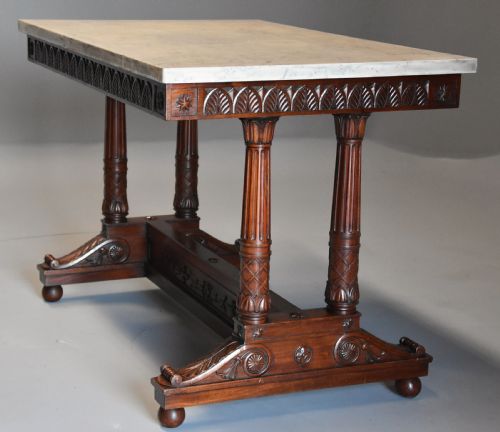

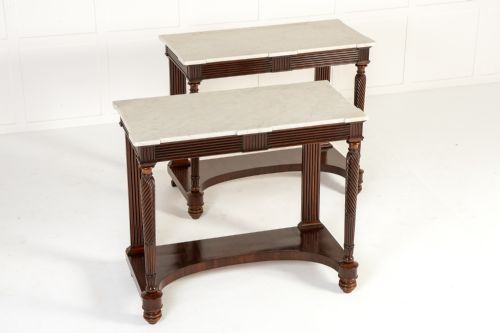


Classical Marble Top Table
A classical marble top table brings solid stone and disciplined proportions to a room, offering a surface built to last centuries.
Classical Marble Top Table
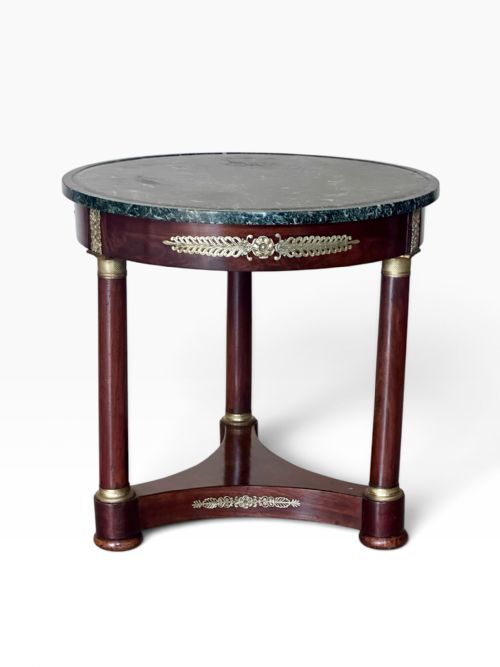
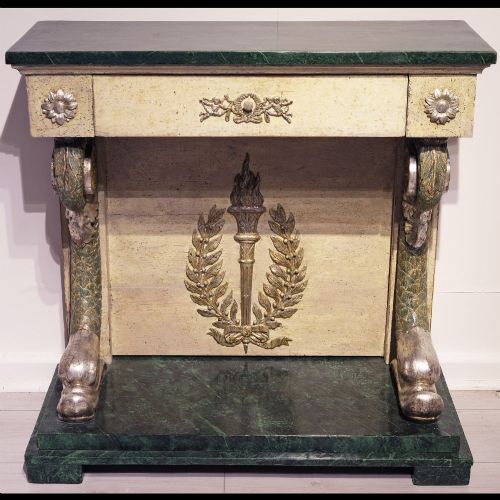
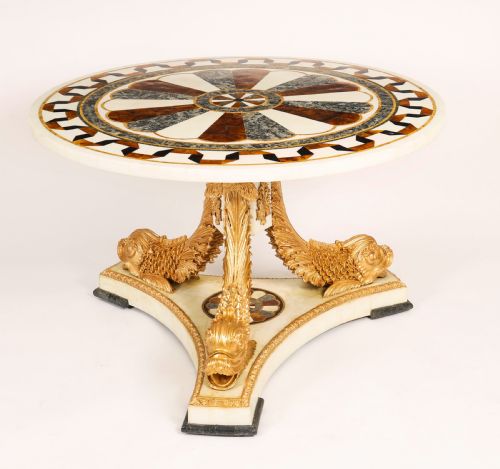
A classical marble top table spans several centuries of design, drawing on French Empire, Regency, and Italian Neoclassical vocabularies. When searching for a classical marble top table, buyers encounter console tables built for hallways, round gueridon centre tables, and occasional stands.
The materials and forms reflect grand European domestic architecture, particularly French and Italian workshops from the eighteenth and nineteenth centuries. Console tables designed to stand against walls frequently feature giltwood, painted wood, or flame mahogany supporting heavy marble slabs.
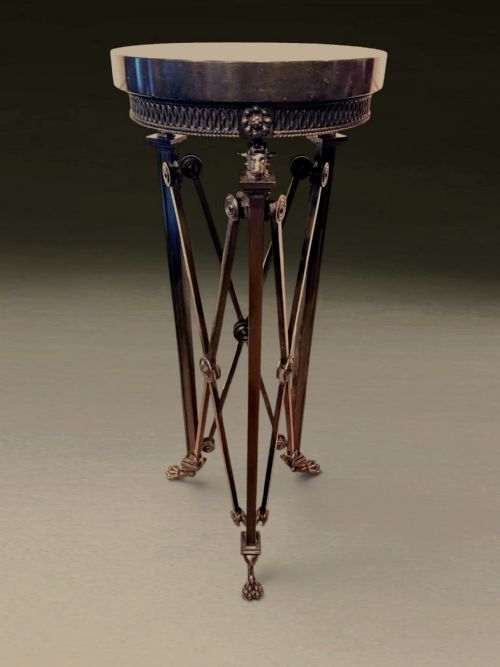
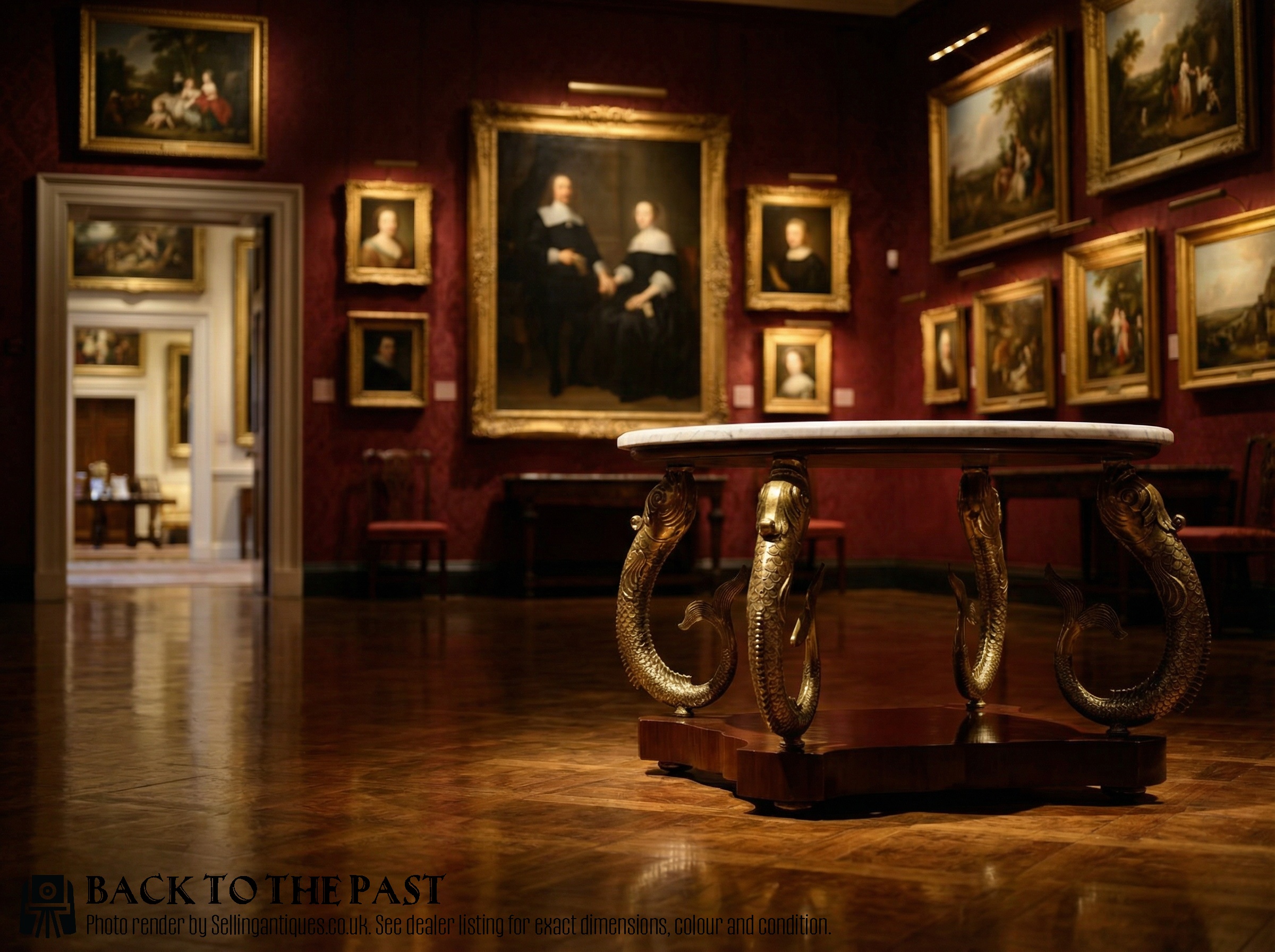
Round centre tables and gueridons appear frequently, often supported by columns, tripods, or carved mounts in bronze and ormolu. These pieces served practical uses in sitting rooms and salons, providing a cool, stable surface for lamps, clocks, and ornaments.
How they were made
Makers utilised dense native and exotic timbers such as mahogany, walnut, and oak as the foundational carcase and framing. These woods were often veneered with flame mahogany or kingwood, then polished to a deep lustre.
Carved details in gesso and wood received applications of gold leaf or paint, while metalwork mounts in brass, bronze, and ormolu were cast and chased to accentuate the architectural lines. Slabs of marble, including white varieties and decorative stones like Portoro and Siena, were cut and fitted to the timber tops.
Classical Marble Top Table Retail Price Guide 2026
Typical asking prices for classical marble top table among the pieces listed under this phrase on Sellingantiques today, from the lower quarter to the upper quarter. They describe what is for sale here now, not the wider market.
Listings feature woods such as mahogany, walnut, oak, and kingwood paired with white, Siena, and Portoro marble slabs across nineteenth-century periods.
What varies in quality
Quality rests in the precision of the carcase joinery and the depth of the carving on the wooden or giltwood frames. Superior pieces display crisp, hand-chased ormolu mounts and tightly figured flame mahogany veneers rather than simple painted pine.
The selection and thickness of the marble slab also dictate standard, with specialist stones like faux porphyry or Portoro marking out more ambitious workshops. Integrated design coherence between the stone top and the supporting base separates standard production from exceptional examples.
JACOB·James Ritchie and Son
The Classical Marble Top Table Glossary
- Gueridon
- A small round table, typically supported by a central pillar or tripod legs. These forms became popular in French interiors for holding lights and decorative objects.
- Console table
- A table designed to be fixed against a wall, frequently supported by ornamental brackets or legs at the front only. They often feature elaborate carving and heavy marble tops.
- Ormolu
- Gilded bronze ornamentation applied to furniture and clocks. The technique involves treating brass or bronze with an amalgam of gold.
- Trumeau
- A decorative wall mirror or panel placed between windows or above a fireplace. In furniture suites, console tables were occasionally paired with matching trumeau frames.
Classical Marble Top Table: Frequently Asked Questions
How were these tables used originally?
Console tables stood against drawing room walls to display decorative ornaments, candelabra, and clocks, anchoring large reception spaces.
Centre tables and gueridons occupied the middle of rooms, holding lamps and books while serving as functional surfaces for daily social gatherings.
Where should I place a marble top table?
Place console tables in hallways or living rooms against flat wall spaces where their architectural bases and stone surfaces can be appreciated safely.
Position round centre tables or gueridons in open rooms where foot traffic allows access from all sides of the piece.
How do I care for the stone top?
Clean the marble surface using a soft, damp cloth without harsh chemical detergents or acidic cleaning agents that etch polished stone.
Protect the natural material from staining by wiping up spills promptly and using coasters under glasses and ceramic vessels.
How do I distinguish regional styles?
French Empire pieces often showcase heavy flame mahogany, bronze mounts, and martial motifs, reflecting Napoleonic tastes and classical antiquity.
Italian neoclassical and Gustavian examples tend to favour painted and parcel-gilt wooden frames, lighter colour palettes, and restrained floral carving.