





Classical Marble Candlesticks
Classical marble candlesticks bring together cold stone and warm metal to anchor a room with nineteenth-century architectural dignity.
Classical Marble Candlesticks
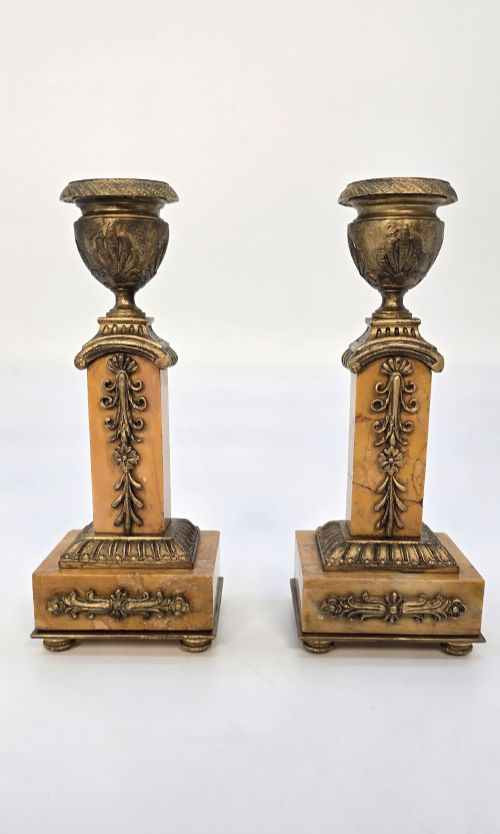
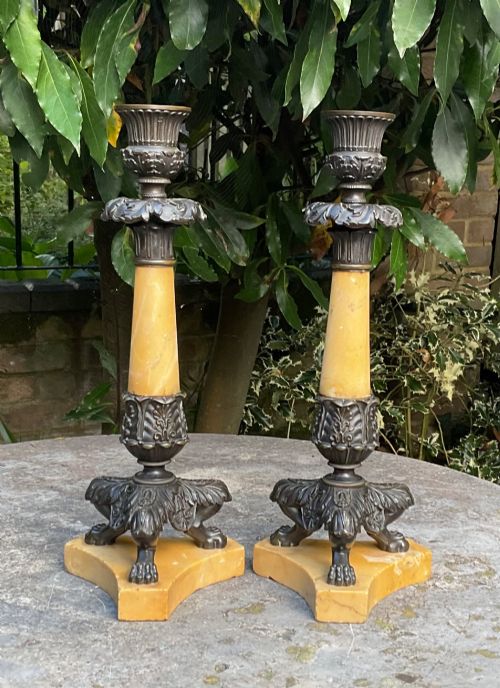
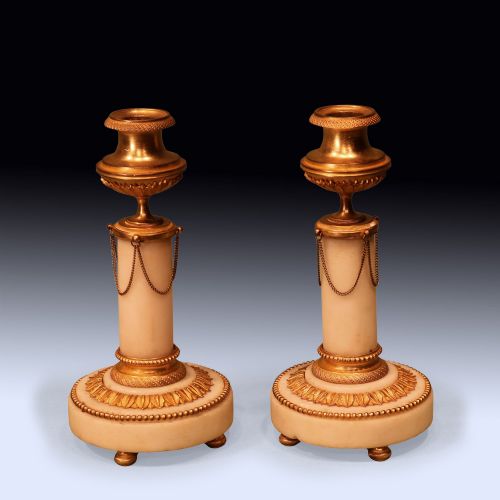
Classical marble candlesticks combine solid stone bases with metal figures and drip pans, taking forms that echo ancient architecture and mythology. When you search for classical marble candlesticks, you find pairs designed for mantelpieces and side tables during the nineteenth century.
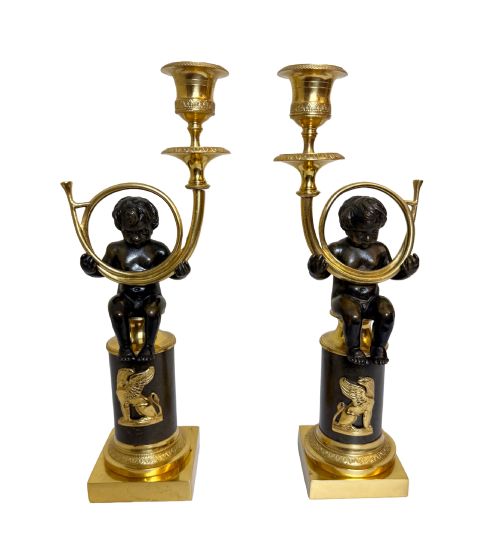
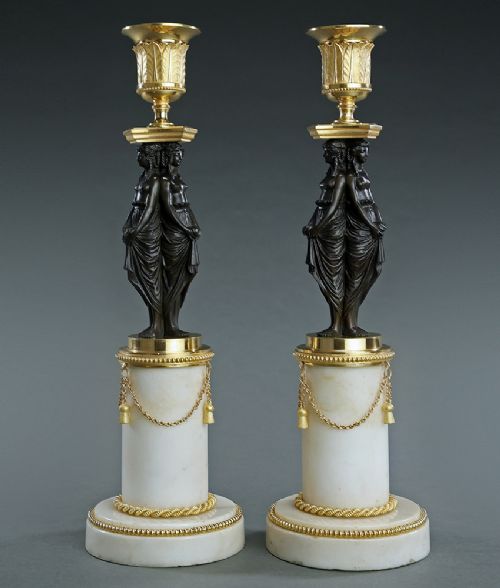
The pieces on this page lean heavily towards French Empire and Regency styles, alongside Victorian interpretations and Neoclassical revivals. You will frequently encounter figures such as cherubs, puttis, maidens, and caryatids supporting the candle sockets from white or Carrara marble plinths.
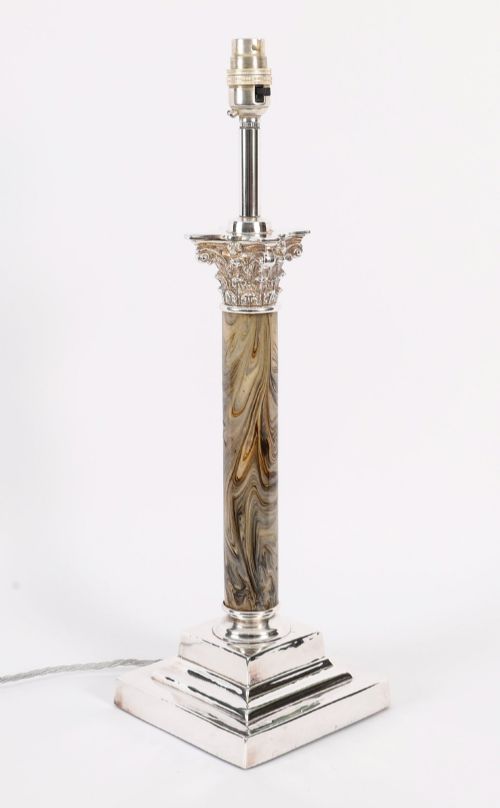
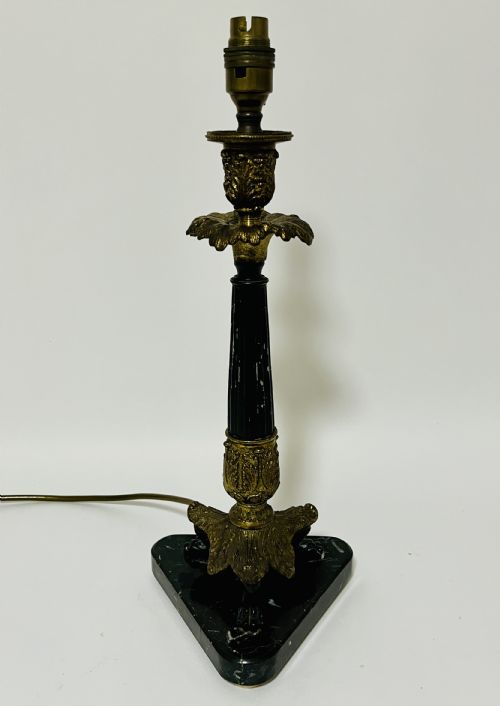
While primarily designed to hold wax candles, many examples have since been adapted into table lamps or larger multi-light candelabra. The core forms range from simple column bases to sculptural figural compositions cast in bronze and ormolu.
How they were made
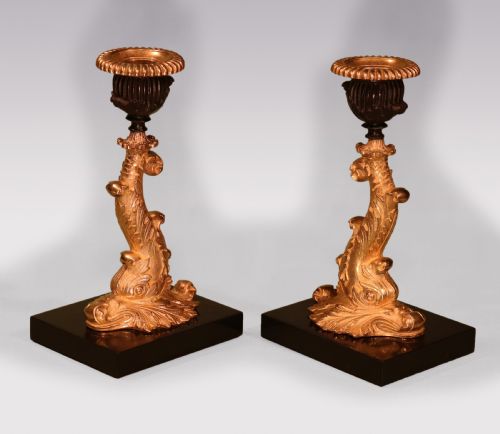
Makers shaped the stone bases by turning and cutting natural marble, often pairing white or Carrara varieties with contrasting dark bronze or patinated surfaces. The metal elements were produced through traditional casting methods, capturing fine details in limbs, drapery, and acanthus leaves.
Gilding was applied using ormolu or parcel-gilt techniques to give the bronze components a rich, golden lustre that contrasted sharply with the cold stone. Brass and silver-plated elements also appear among the later Victorian interpretations on the page.
Classical Marble Candlesticks Retail Price Guide 2026
Typical asking prices for classical marble candlesticks among the pieces listed under this phrase on Sellingantiques today, from the lower quarter to the upper quarter. They describe what is for sale here now, not the wider market.
Listings feature items spanning the nineteenth century, including Regency, Victorian, and French Empire periods.
What varies in quality
The selection of the marble itself also dictates the grade, with dense, uniform stone bases holding their edges better than softer or heavily veined alternatives. Furthermore, the weight and thickness of the ormolu mounts distinguish high workshop output from mass-produced commercial foundry work.
Thomas Hope
The Classical Marble Candlesticks Glossary
- Ormolu
- A technique of applying finely ground high-carat gold to an bronze object using a mercury amalgam. This creates a durable, warm golden finish characteristic of French decorative arts.
- Carrara marble
- A type of white or blue-grey marble quarried in the city of Carrara in Tuscany. It is prized for its fine, even grain and subtle veining.
- Caryatid
- A sculpted female figure serving as an architectural support taking the place of a column or a pillar. They frequently appear supporting the upper tiers of these lighting pieces.
- Patinated bronze
- Bronze that has been treated chemically to produce a specific surface colour or aged finish. This process darkens the metal to highlight the sculptural contours beneath.
- Grand Tour
- A traditional trip of Europe undertaken by upper-class European young men of sufficient means. Many decorative objects and souvenirs were brought home during these journeys.
Classical Marble Candlesticks: Frequently Asked Questions
Are these candlesticks wired for electricity?
Many surviving examples have been converted into table lamps over the decades to suit modern lighting needs.
Some retain their original dual-purpose sockets or can be easily converted back if preferred.
How do I clean marble bases?
Use a soft, dry cloth to remove dust from the stone surface without scratching the polish.
Avoid harsh chemical cleaners or abrasive pads that can permanently dull the marble or strip the adjacent metal gilding.
How can I tell a Regency piece from a Victorian one?
Regency pieces often display strict classical proportions and direct neoclassical motifs inspired by ancient Greece and Rome.
Victorian interpretations tend to be heavier, sometimes incorporating varied metals like brass or silver plate alongside the marble.