
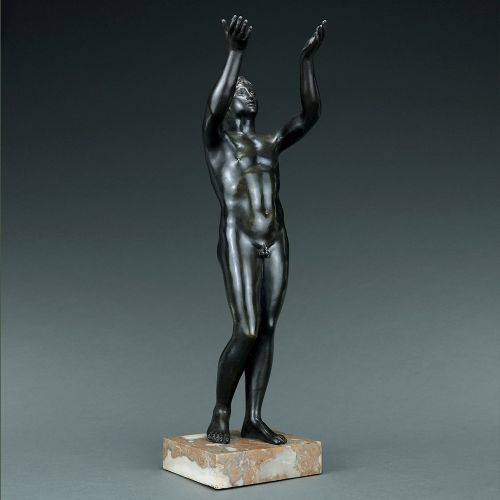
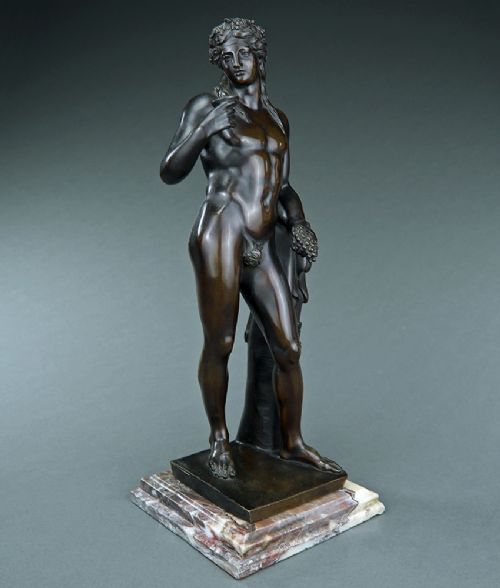
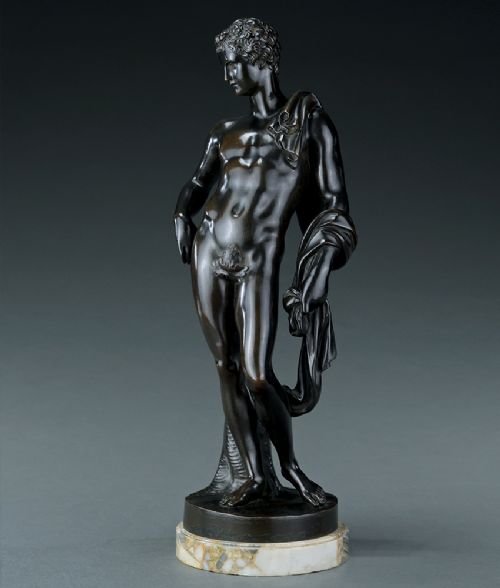
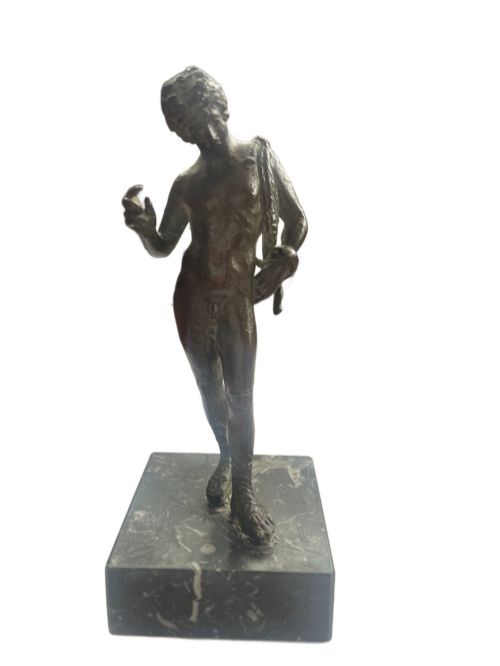
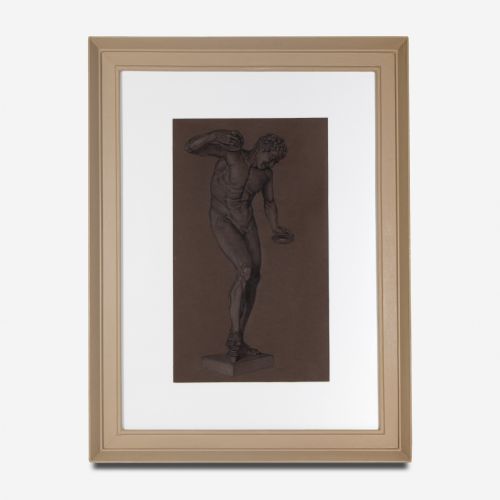


Classical Male Nude Statue
A classical male nude statue captures the idealised form of the human body, brought down through the centuries in bronze and marble for your home.
Classical Male Nude Statue
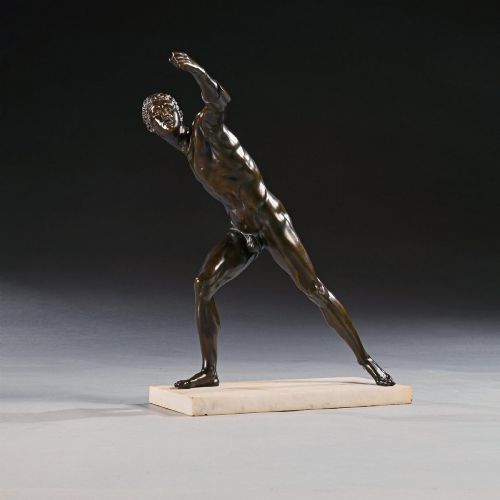
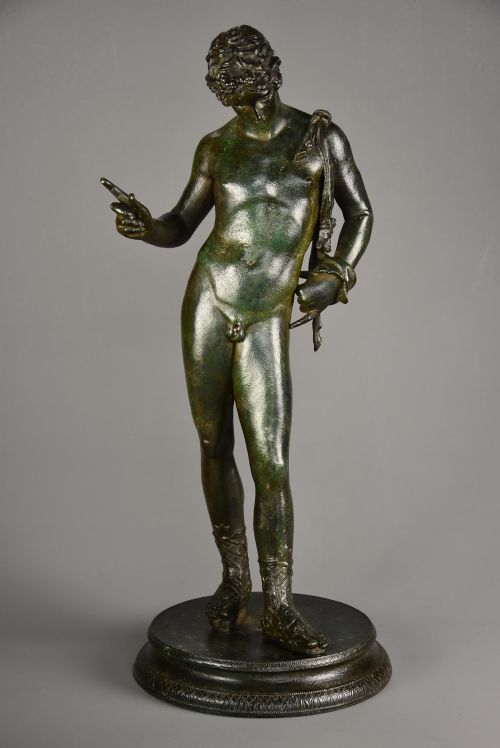
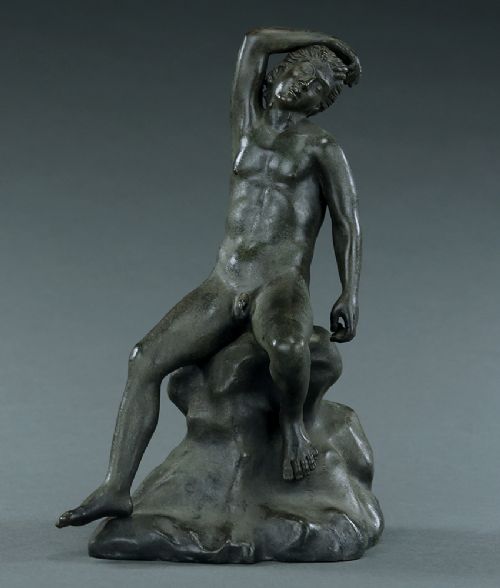
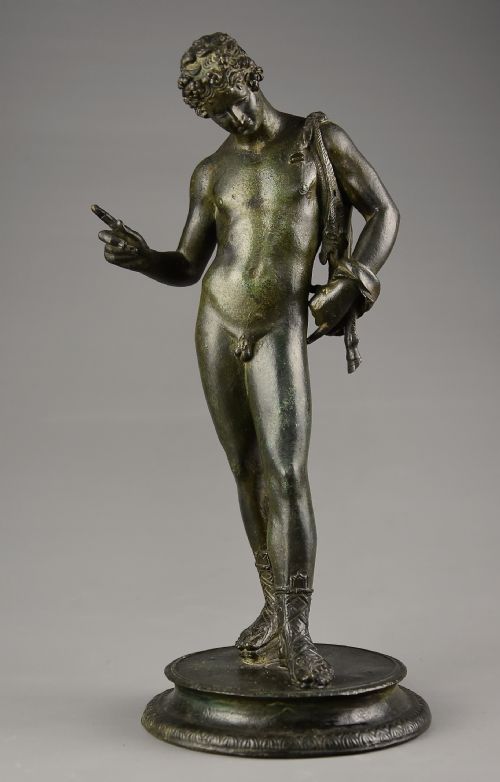
A classical male nude statue embodies the sculptural traditions of antiquity, reinterpreted during the nineteenth century through the Grand Tour and academic revivals. These pieces draw heavily on famous ancient prototypes such as Narcissus, the Borghese Gladiator, and the Discophoros.
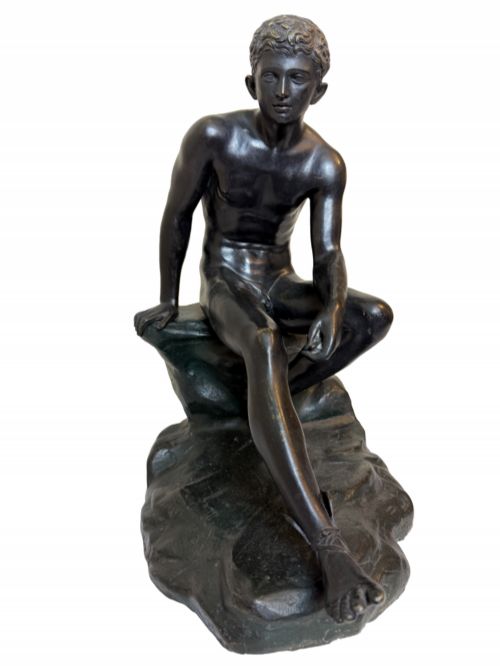
The version you are most likely to encounter here is a nineteenth-century Grand Tour bronze reduction, cast in Italy or France as a collector's souvenir of classical antiquity. Such figures frequently stand upon fossil marble bases or integrated bronze plinths.
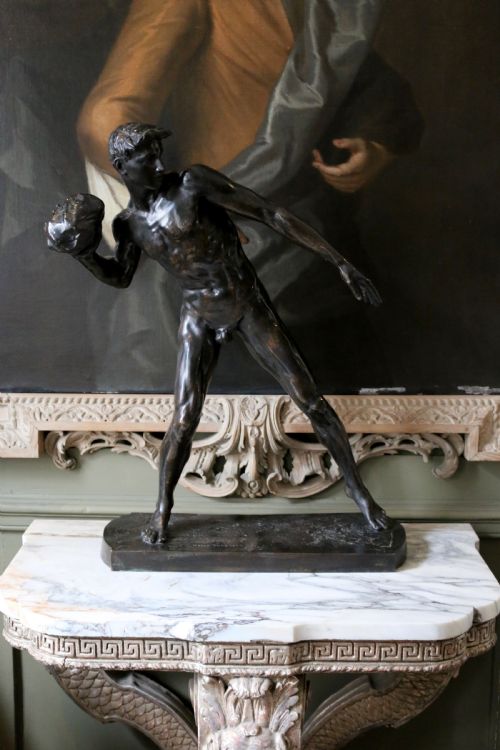
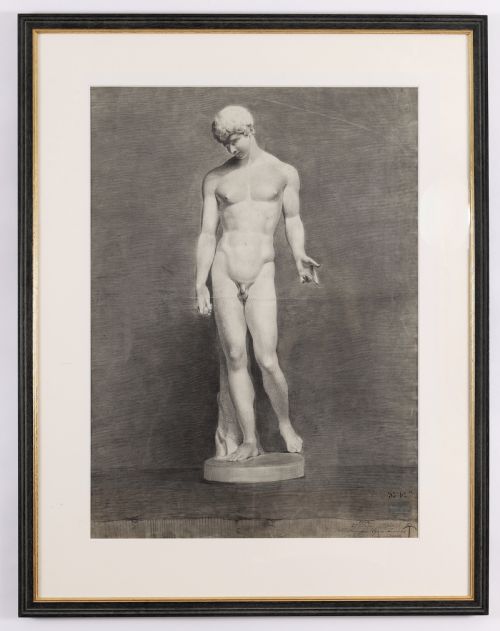
Beyond three-dimensional bronzes and marbles, the form also appears in framed works on paper, including charcoal drawings after classical statues. Sculptural subjects range from mythological figures like Dionysus, Bacchus, and Mercury to athletes, wrestlers, and warriors.
Materials and casting methods
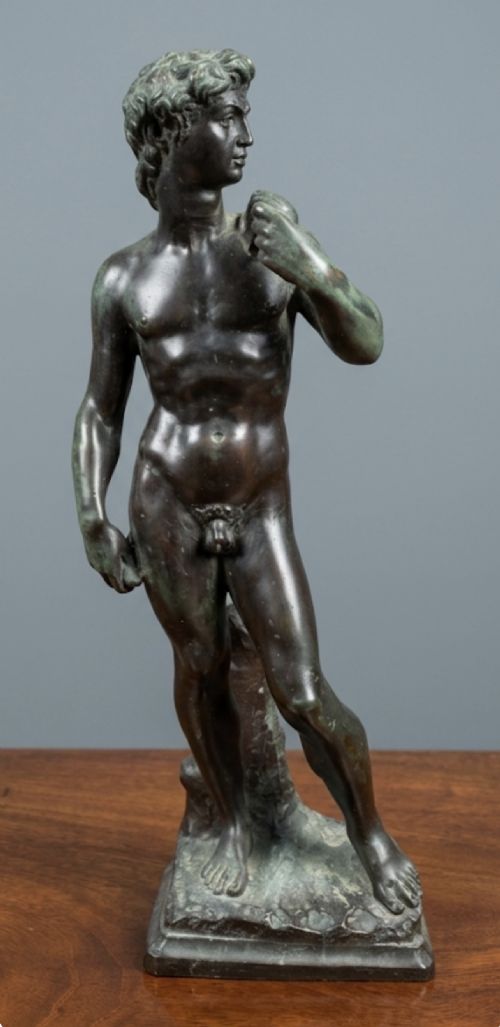
Metal sculptures rely on bronze, utilised either with a dark patination or a distinctive green verdigris finish to mimic excavated antiquities. Castings are often substantial in scale, requiring skilled foundry work to capture musculature and anatomical detail accurately.
Stonework relies on white marble and fossil marble, carved by hand to create statues and torsos. Less commonly, works utilise hard wood or terracotta for modeled figures.
Two-dimensional works employ charcoal and paper, framing academic studies of antique sculptures such as the Capitoline Antinous.
Listings feature nineteenth-century bronzes, marbles, and works on paper spanning Neoclassical, Art Deco, and Victorian New Sculpture styles.
Determinants of quality in sculptural castings
The depth and subtlety of the patination contribute significantly to a piece's visual impact, with nuanced green or dark tones ageing the metal convincingly. Inferior pieces often display flat, uniform paint rather than a chemical patina integrated into the bronze.
The integration of the base matters greatly, particularly in Grand Tour souvenirs where fossil marble or veined stone plinths complement the weight and period of the metal figure.
Hamo Thornycroft·Eugene Barillot·Franz Iffland·Michele Amodio
The Classical Male Nude Statue Glossary
- Grand Tour
- A traditional journey through Europe undertaken by upper-class European travellers to study classical art and architecture. Souvenirs purchased on these travels included small bronze sculptures of antique statues.
- Patination
- The chemical or natural colouring applied to the surface of bronze to alter its tone. Dark brown, black, and green verdigris patinas are common on nineteenth-century bronzes.
- Lost-wax casting
- A metal-casting method where a molten metal is poured into a mould that has been created by means of a wax model. This technique allows for intricate detail in figurative sculptures.
- Contrapposto
- An asymmetrical arrangement of the human figure where the line of the arms and shoulders contrasts with while balancing the hip and legs. This stance gives classical statues a natural, relaxed posture.
- Neoclassical
- A Western cultural movement in the decorative and visual arts drawing inspiration from the art and culture of classical antiquity. It dominated European sculpture and architecture during the eighteenth and nineteenth centuries.
Classical Male Nude Statue: Frequently Asked Questions
What is a Grand Tour bronze?
A Grand Tour bronze is a nineteenth-century miniature or reduction of a famous classical statue, cast in Italy or France for travellers touring European antiquities.
These pieces served as portable education and decorative art for private homes, capturing the aesthetic of ancient Rome and Greece.
How do I identify a subject like Narcissus?
Figures of Narcissus are typically depicted gazing downward with a soft, contemplative expression, often leaning against a tree stump or rock.
In classical mythology, he fell in love with his own reflection, a pose frequently replicated in ancient and nineteenth-century statuary.
Are these statues genuine antiquities?
Most pieces available here date from the nineteenth century, created as revivals or souvenirs after ancient prototypes rather than originating in the classical period itself.
Artists and foundries utilised historical models to produce skilled interpretations using contemporary casting and carving techniques.
How should I display a bronze figure?
Bronze statues benefit from stable indoor environments away from direct moisture and extreme temperature fluctuations to protect their patination.
Placing them on sturdy wooden furniture or dedicated marble pedestals allows the fine details of the musculature and base to be appreciated from multiple angles.