


Classical Mahogany Sideboard
A classical mahogany sideboard anchors a dining room with its rich grain, formal proportion and enduring utility.
Classical Mahogany Sideboard
When searching for a classical mahogany sideboard, buyers encounter substantial dining furniture originating primarily from the Georgian, Regency and nineteenth-century periods. These pieces serve to store linen, cutlery and dining paraphernalia while providing a commanding surface for display.
The versions most commonly met on this page span several distinct stylistic interpretations, including crisp Regency pedestal formats, serpentine Edwardian shapes and monumental George III designs. Alongside standard sideboards, the selection encompasses related serving tables, side cabinets and console tables sharing the same timber and classical vocabulary.
Originating from British and Irish workshops, these forms reflect the design tenets of classical antiquity filtered through eighteenth and nineteenth-century cabinetmaking traditions. They bridge the gap between architectural presence and domestic storage.
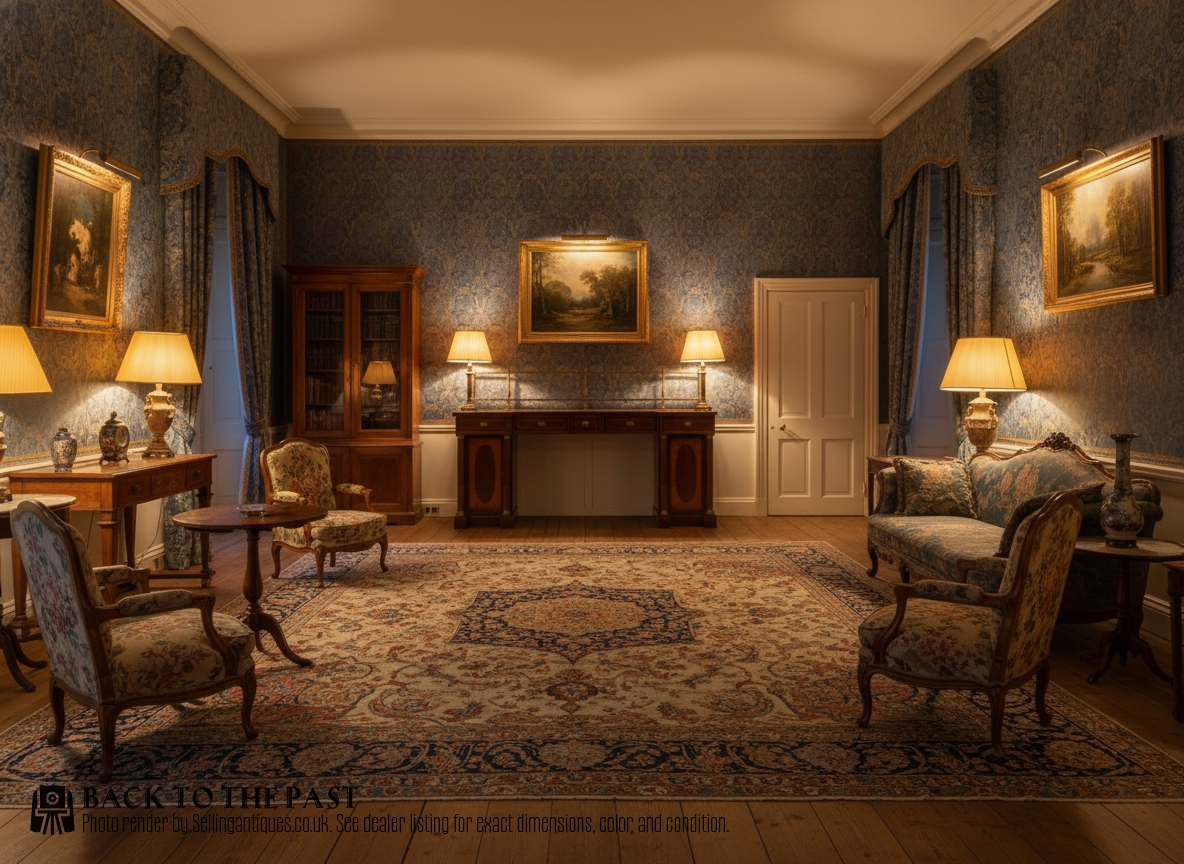
Materials and construction
Makers relied heavily upon mahogany, frequently selecting flame or figured veneers to cover primary surfaces with striking grain patterns. Secondary timbers like oak and pine provided structural stability for drawer linings and internal framing.
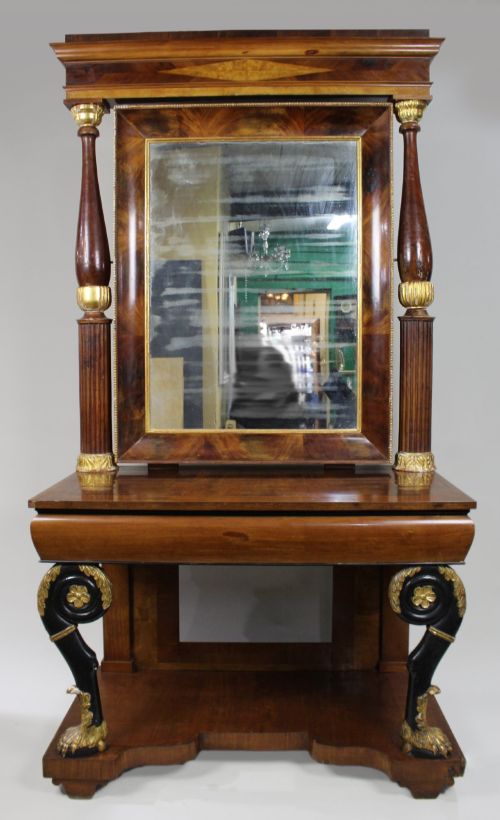
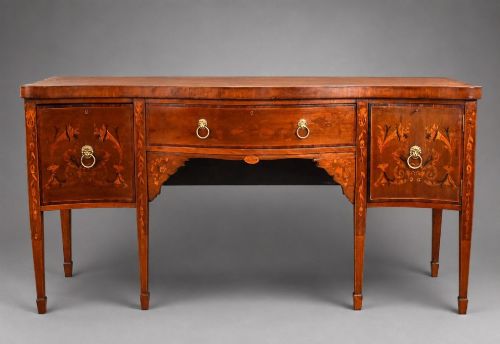
Decorative enrichment was achieved through contrasting stringing and inlay utilising boxwood, satinwood and parcel gilt highlights. Cast brass handles, paw feet and gallery rails frequently complemented the dark timber, alongside hand-carved classical motifs.
Construction involved solid joinery techniques such as dovetailed drawer boxes and mortise and tenon frames. Pedestal formats and drop-well configurations required precise engineering to support heavy loads without warping.
Listings feature mahogany, satinwood, boxwood, and brass materials across Georgian, Regency, and Edwardian periods.
Distinctions in quality
The hierarchy of quality rests primarily upon the selection of timber and the dexterity of the cabinetmaker. Superior pieces exhibit book-matched flame mahogany veneers and intricate, flush inlay that demonstrates absolute precision.
Proportion and architectural balance set the finer examples apart from standard utility furniture. Refined pieces maintain crisp carving, well-chosen brass mounts and secondary framing executed in robust hardwoods rather than inferior softwoods.
Attribution to documented makers or prominent retail firms elevates a piece, reflecting an elevated standard of workshop execution. The integrity of the original surface finish and the retention of period hardware further influence the standing of any given example.
George Hepplewhite·Mack Williams and Gibton·Edwards and Roberts·Jean-Henri Riesener·Wilkinson London
The Classical Mahogany Sideboard Glossary
- Pedestal sideboard
- A form featuring distinct side cabinets or pedestals flanking a central serving area. This layout gained prominence during the Regency period.
- Serpentine
- A curved front shape characterised by a convex centre flanked by concave sweeps. It requires immense skill from the cabinetmaker to execute cleanly in solid timber and veneer.
- Drop-well
- A lowered central section within the top surface of a sideboard. This variation accommodates large serving platters and creates a distinct profile.
- Stringing
- Thin lines of contrasting timber inlaid into channels cut into the primary wood. It defines the borders of drawers and panels with geometric clarity.
Classical Mahogany Sideboard: Frequently Asked Questions
How do I date a mahogany sideboard?
Dating relies upon examining construction methods, timber selection and stylistic ornament. Georgian and Regency pieces display hand-cut dovetails and specific neoclassical motifs.
Later nineteenth-century and Edwardian examples often incorporate machine-sawn elements or revivals of earlier classical styles. Comparing hardware and secondary woods clarifies the era of manufacture.
Where should I place a sideboard?
These pieces traditionally anchor the dining room wall, positioned opposite a window or along the main circulation axis. Their generous proportions demand a room with sufficient depth to view the facade properly.
Beyond the dining room, grand hallways or spacious living areas accommodate console tables and side cabinets of similar form. Ensure the chosen wall space exceeds the overall width of the sideboard.
What is the difference between a sideboard and a serving table?
A sideboard typically incorporates integral storage drawers and cupboards beneath the main surface. It was designed to conceal tableware and dining accessories out of sight.
A serving table lacks enclosed cupboards, presenting an open architectural frame supported by legs or pedestals. It was utilised strictly for presenting dishes during grand meals.
How do I maintain mahogany furniture?
Maintain the wood by applying traditional beeswax periodically to nourish the grain and preserve the finish. Avoid placing the piece in direct sunlight or near heat sources to prevent timber splitting.
Dust regularly with a soft, dry cloth rather than modern chemical sprays. This gentle upkeep protects the historic polish and maintains the depth of the mahogany.