




Classical Mahogany Seating
Classical mahogany seating brings formal symmetry and rich cabinet timber into a room, offering enduring utility across armchairs, benches, and window seats.
Classical Mahogany Seating
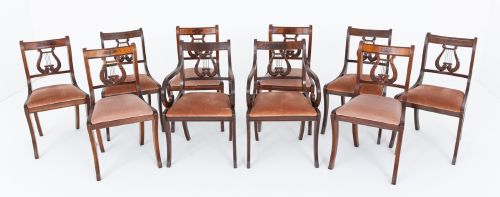
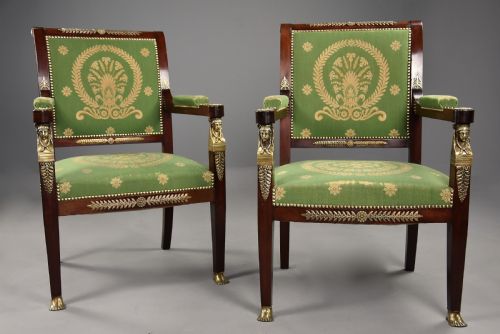
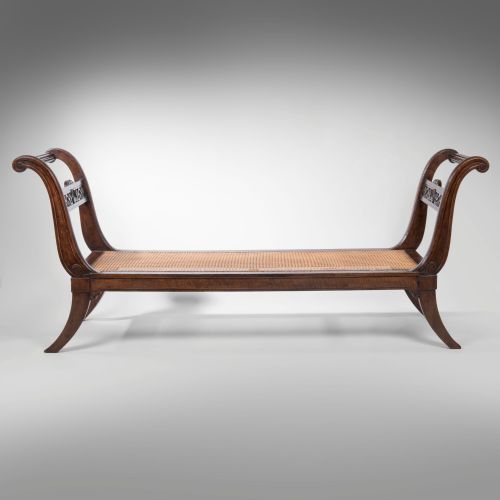
Classical mahogany seating encompasses a diverse range of formal furniture forms designed for reception rooms, hallways, and parlours. Buyers searching for classical mahogany seating encounter pieces spanning the Regency, Edwardian, and French Empire styles, alongside revival interpretations from the late nineteenth century. These include functional dining chairs, hall chairs, and daybeds, as well as decorative window seats and settees.
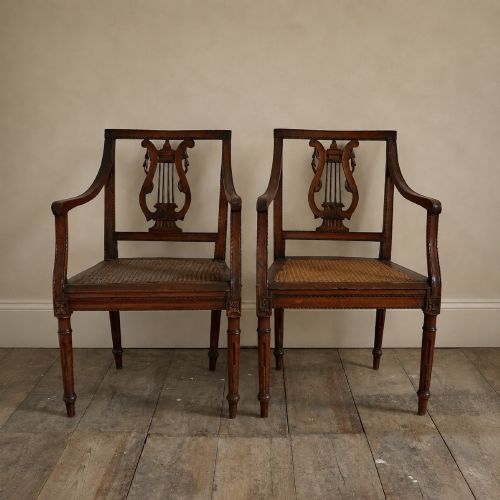
The items listed on this page showcase distinct silhouettes drawn from classical antiquity, featuring pelta backs, lyre motifs, and X-frame structures. Most examples originate from the nineteenth century or the early twentieth century, reflecting both genuine period manufacture and later stylistic revivals. Armchairs and open fauteuils dominate the selection, often retaining cane seats, upholstered pads, or inlaid boxwood details.
Materials and construction methods
Makers utilised dense, dark mahogany as the primary structural wood, frequently enhancing plain surfaces with delicate boxwood stringing or intricate carved details. Selected pieces incorporate contrasting giltwood highlights or incorporate brass mounts to emphasise their neoclassical lines.
Upholstery methods varied according to the specific form, utilising traditional stuffing beneath textiles such as velvet, tapestry, and patterned fabric. Where seats required lighter support, craftsmen wove cane tightly into wooden frames to create durable seating surfaces.
Classical Mahogany Seating Retail Price Guide 2026
Typical asking prices for classical mahogany seating among the pieces listed under this phrase on Sellingantiques today, from the lower quarter to the upper quarter. They describe what is for sale here now, not the wider market.
Mahogany appears across nineteenth-century and Edwardian pieces on this site, accompanied by alternative materials including cane, brass, and giltwood.
Distinctions in quality and execution
The standard of carving determines much of the distinction among these pieces, separating sharply defined classical motifs from softer, more generalized woodwork. Crisp execution in architectural details like reeding, scrolls, and pelta backs indicates superior cabinet-making.
Timber selection and structural integrity further differentiate the range, as well-figured grain and tight joinery ensure lasting stability. Original surface patination and intact structural elements hold greater appeal than heavily restored framing.
The Classical Mahogany Seating Glossary
- Fauteuil
- An open-framed upholstered armchair originating in France, typically featuring exposed wooden arms and a padded backrest.
- Pelta back
- A chair back designed in the shape of a classical Greek pelta shield, featuring a curved, crescent-like central splat.
- X-frame
- A structural furniture base formed by intersecting diagonal crossbars, frequently utilised in window seats, benches, and ceremonial chairs.
- Giltwood
- Timber that has been coated with a thin layer of gold leaf or gilt pigment to create a decorative metallic finish.
Classical Mahogany Seating: Frequently Asked Questions
Where should I place a window seat?
Window seats function well in larger hallways, at the foot of a bed, or positioned beneath deep bay windows where their low profiles do not obstruct natural light. They provide practical informal seating without dominating the surrounding floor space.
Their elongated proportions also make them suitable for narrow circulation areas or dressing rooms requiring a compact resting surface.
How do I care for antique mahogany timber?
Maintain mahogany surfaces by dusting regularly with a soft, dry cloth and avoiding placement near direct heat sources or strong sunlight, which can dry out the timber. Applying a traditional beeswax polish occasionally helps nourish the grain and preserve the surface sheen.
Harsh chemical cleaners should be strictly avoided as they strip the historic polish and damage the underlying patina.
What is the difference between an armchair and a fauteuil?
An armchair generally encompasses a broad category of seating with armrests, which may be fully upholstered or constructed with solid wooden supports. A fauteuil specifically denotes an open-armed French style chair with exposed carved wooden framing and upholstered arm pads.
Both forms served formal reception rooms during the nineteenth century and earlier revival periods.
Can I use cane seat chairs every day?
Cane seats possess natural flexibility and strength, making them suitable for daily use provided the woven mesh remains taut and undamaged. Distributing weight evenly and avoiding kneeling on the woven surface will prevent premature breakage.
If the cane shows signs of snapping or sagging, a professional restorer can re-weave the panel to restore its original support.