




Classical Iron Urn Planter
A classical iron urn planter brings formal symmetry and weight to a garden terrace, offering a sturdy vessel for seasonal planting.
Classical Iron Urn Planter
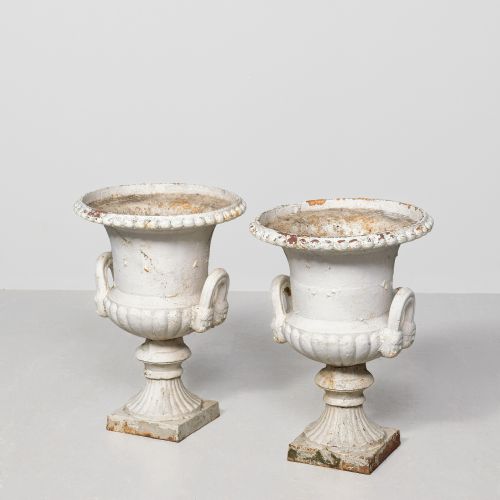
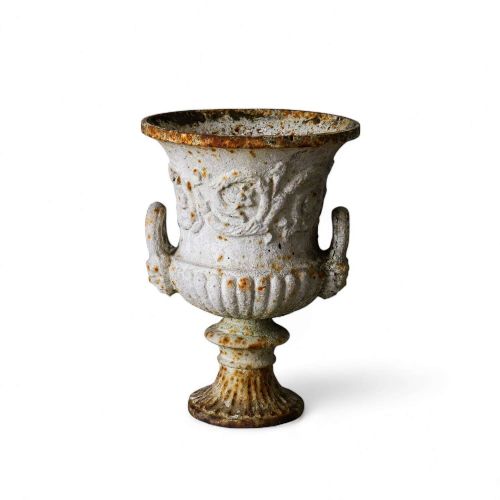
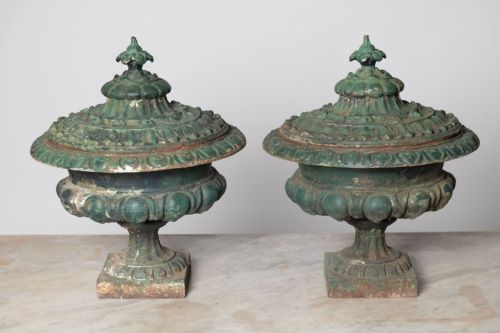
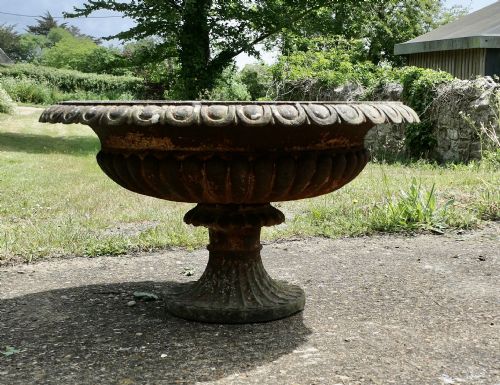
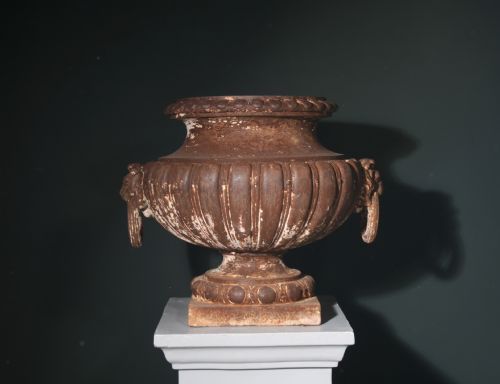
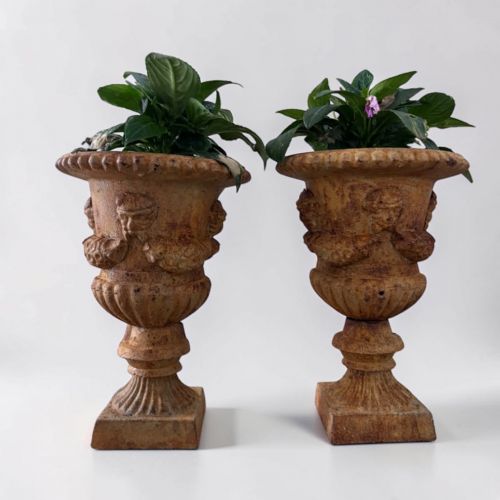
A classical iron urn planter is a heavy garden vessel designed in neoclassical or Victorian revival styles, typically taking the form of a campana or tazza shape. These pieces draw on ancient architectural motifs such as acanthus leaves and gadrooning to create a formal focal point outdoors.
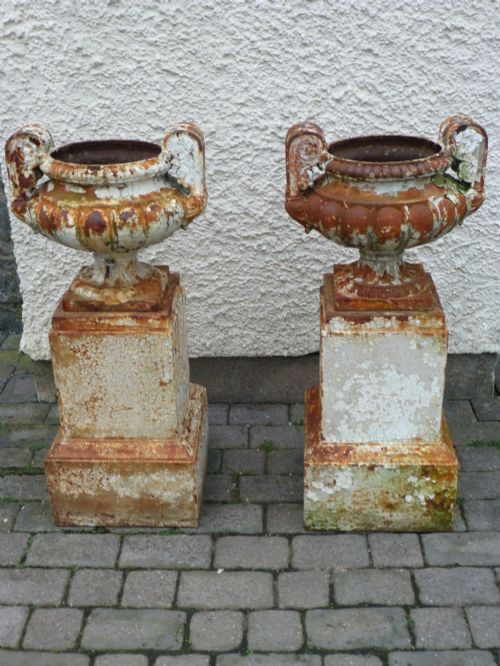
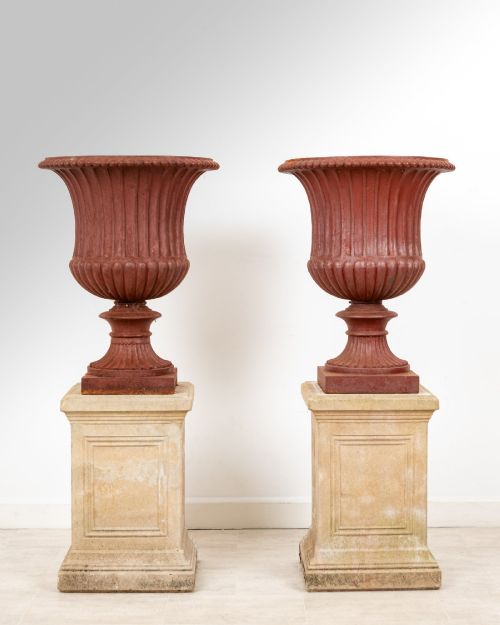
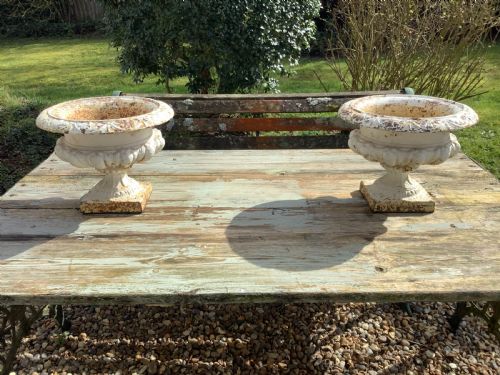
Most examples found here date from the nineteenth century, including Victorian and Regency periods, alongside pieces from the early twentieth century. They frequently appear as matched pairs, often standing upon dedicated plinth bases or stone pedestals.
Makers such as Falkirk Carron, Coalbrookdale, Andrew Handyside, and Val d'Osne feature among the foundry-marked items. The commonest versions are robust cast iron garden planters displaying weathered paint surfaces or original dark metal patination.
Manufacturing and Materials
Foundries produced these vessels by pouring molten metal into sand moulds, creating thick-walled iron castings capable of withstanding decades of outdoor exposure. Skilled pattern makers carved intricate details like fluting and foliate swags into the original wooden models before casting.
Surface finishes applied to the iron include historic oil paint and protective lead-based coatings that weather over time to reveal layers of texture. Certain examples incorporate stone pedestals or plinths to elevate the metal bowl above ground level.
Listings feature nineteenth-century cast iron urns alongside French neoclassical designs, Regency pieces, and early twentieth-century garden planters.
Quality and Distinction
The clarity of the cast ornamentation distinguishes standard production from superior foundry work, with sharper relief work indicating a finer initial mould. Crisp detailing on acanthus leaves and gadrooned rims shows the hand of a master pattern maker.
The presence of an original foundry mark or maker's stamp adds historical provenance and confirms the piece's origin. Surviving matching pairs complete with their original painted surfaces and matching plinth bases hold greater visual authority than single or matched-up components.
Falkirk Carron foundry·Coalbrookdale·Andrew Handyside·Val d'Osne Foundry
The Classical Iron Urn Planter Glossary
- Campana urn
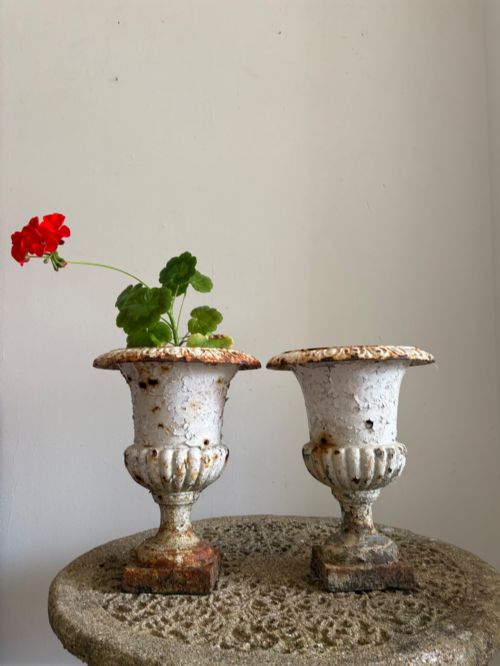
- A bell-shaped garden vessel with a flared rim and a tapering body, often mounted on a short stem and square foot. This form derives from ancient Roman pottery and metalwork.
- Tazza
- A shallow cup or basin mounted on a pedestal and foot, used in garden settings for trailing plants. The shallow bowl provides a wide rim suited to display cascading foliage.
- Gadrooning
- A decorative carved or cast motif consisting of convex curves or flutes in a series around the rim or body of an urn. This ornamental band catches the light and adds textural depth.
- Plinth base
- A heavy square block or pedestal that elevates an urn above ground level and adds architectural proportion. These supports are frequently cast from the same metal as the urn itself.
Classical Iron Urn Planter: Frequently Asked Questions
How heavy are cast iron urns?
These vessels possess substantial weight due to their thick iron construction, often requiring two people or mechanical equipment to move safely.
Their heavy mass ensures they remain stable on terraces and garden lawns without risk of tipping in high winds.
Can iron urns stay outside all winter?
Cast iron withstands frost and low temperatures well, provided the soil inside is kept clear or well-drained to prevent ice expansion against the metal walls.
Placing gravel at the base of the bowl ensures proper drainage during heavy winter rains.
How do I identify a Victorian urn?
Nineteenth-century examples typically display deep sand-cast textures, heavier walls, and classical motifs such as acanthus leaves or egg-and-dart borders.
Foundry marks or registration lozenges stamped into the iron provide definitive confirmation of age.
What plants suit a campana urn?
Trailing ivy, cascading geraniums, and small boxwood spheres contrast well against the wide rim and classical shape of a campana vessel.
The height of the urn lifts trailing foliage to eye level, creating a striking focal point.