




Campana Garden Planter
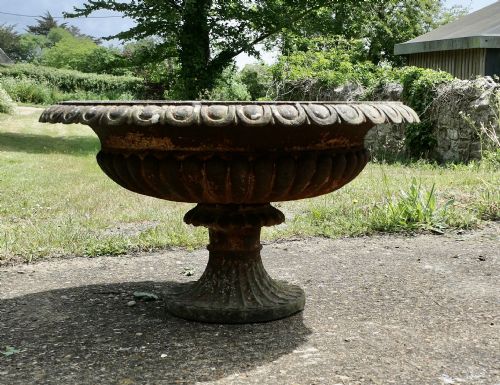
A campana garden planter brings classical form to outdoor spaces, shaped like an inverted bell with flared rims that suit formal terraces.
Campana Garden Planter
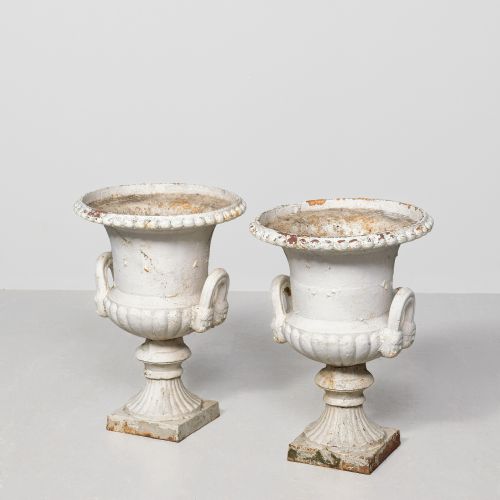
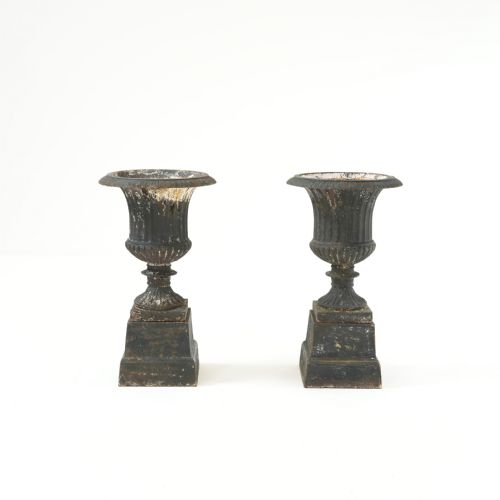
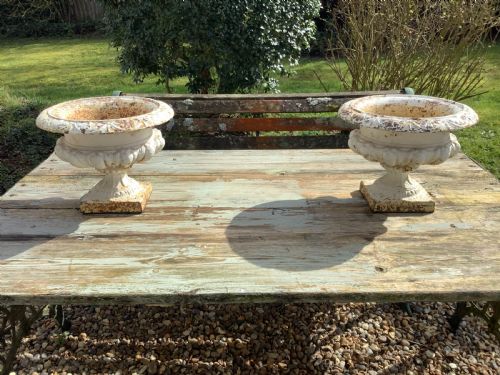
A campana garden planter takes the form of a classical bell-shaped vessel, designed for outdoor display on terraces, gardens, and plinths. The selection relies heavily on nineteenth-century examples, with Victorian and Regency eras well represented alongside early twentieth-century pieces.
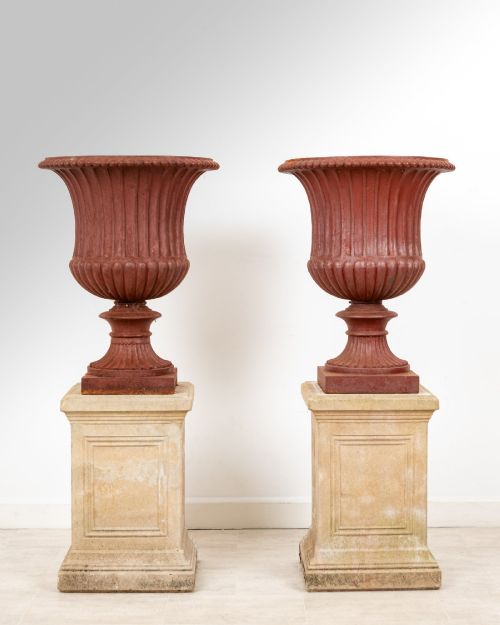
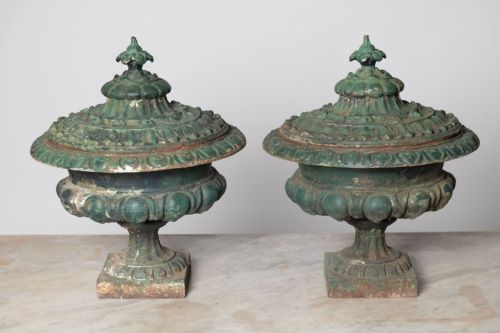
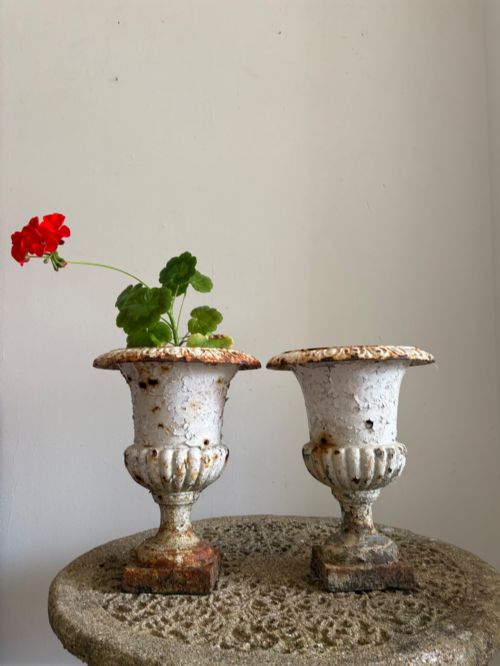
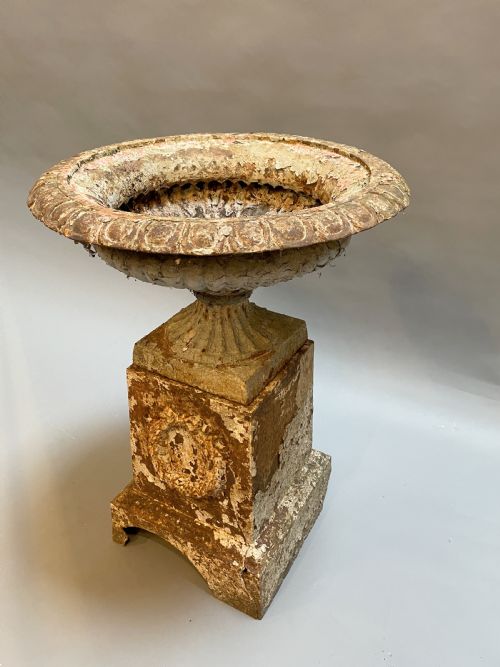
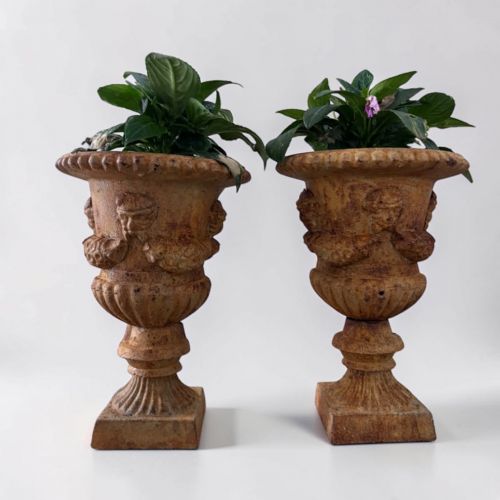
Most pieces seen here appear as pairs, frequently mounted on matching stone pedestals or iron plinths to elevate the display. Formats range from large terrace urns down to smaller table urns and shallow campana variations, reflecting diverse garden architectural needs.
Materials and construction methods
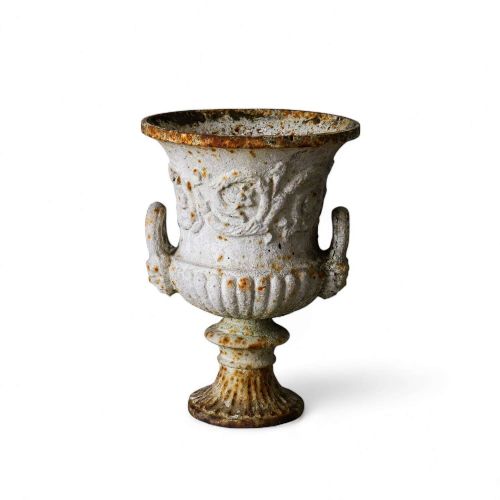
Cast iron serves as the primary medium for these vessels, frequently finished with original distressed paint or weathered surfaces developed over decades of outdoor exposure. Foundries utilised sand-casting techniques to shape the heavy metal into classical silhouettes with crisp detail.
Alternative materials include terracotta, limestone, and marble, with certain pieces featuring carved heads integrated into the handles. Reconstituted stone and plaster also appear, offering robust structural integrity for garden settings.
Listings feature cast iron prominently, alongside terracotta, limestone, and marble pieces spanning the nineteenth and early twentieth centuries.
Quality factors in campana garden planter selection
Quality rests in the crispness of the casting and the proportion of the classical profile, where sharp detailing around the rim and body distinguishes superior foundry work. The presence of original lids, matching pedestals, or untouched weathered surfaces adds considerable distinction to a pair.
Material choice and structural integrity dictate longevity, particularly with cast iron and stone vessels exposed to weathering. Maker attribution, such as works from established foundries like Andrew Handyside, elevates the historical interest of an individual piece.
Andrew Handyside
The Campana Garden Planter Glossary
- Plinth
- A heavy base or pedestal that supports an urn or planter. Raising the vessel off the ground protects the material and improves garden sightlines.
- Gadrooned
- Decorated with a series of convex vertical curves or flutes. This ornamental detail frequently encircles the lower body of classical urns.
- Terracotta
- Fired unglazed clay of a brownish-red colour. It remains a traditional medium for garden vessels and planters.
- Reconstituted stone
- A composite material made from crushed stone and cement binders. It replicates the appearance of natural stone for architectural garden ornaments.
Campana Garden Planter: Frequently Asked Questions
How do I care for a cast iron planter?
Cast iron garden vessels withstand outdoor elements well, developing a stable weathered surface over time. Regular inspection helps monitor paint retention and surface condition.
Keeping drainage holes clear prevents water accumulation during freezing weather, which protects the metal structure from stress.
Where should I place a campana urn?
These vessels suit formal terrace edges, garden pathways, and entrance porches where their classical silhouette creates a strong focal point. Pairing them with pedestals or plinths lifts the display and provides stability on ground surfaces.
Positioning them within sightlines from interior windows allows the classical form to be enjoyed throughout changing seasons.
How can I tell the period of an urn?
Dating relies on material characteristics, surface wear, and foundry techniques visible in the casting or carving. Nineteenth-century examples often display heavier iron construction and specific classical revival proportions.
Comparing structural details and mounting styles against documented pieces helps confirm the era of manufacture.
Can these planters stay outside in winter?
Most iron, stone, and terracotta pieces handle outdoor conditions if they are drained properly before freezing temperatures arrive. Elevating vessels on feet or plinths stops moisture from freezing underneath.
Protecting more porous materials with appropriate covers during severe winter weather extends their lifespan significantly.