



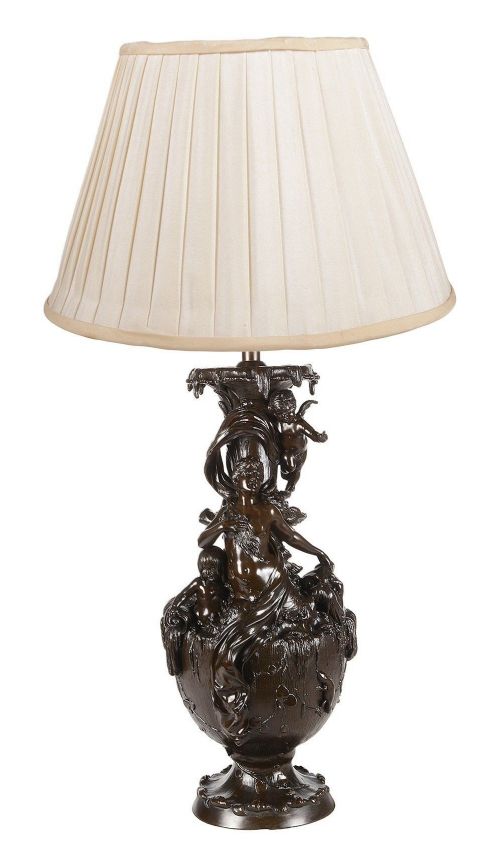

Classical Goddess Bronze
These classical goddess bronze figures and lamps bring the sculptural grace of antiquity into nineteenth-century interiors.
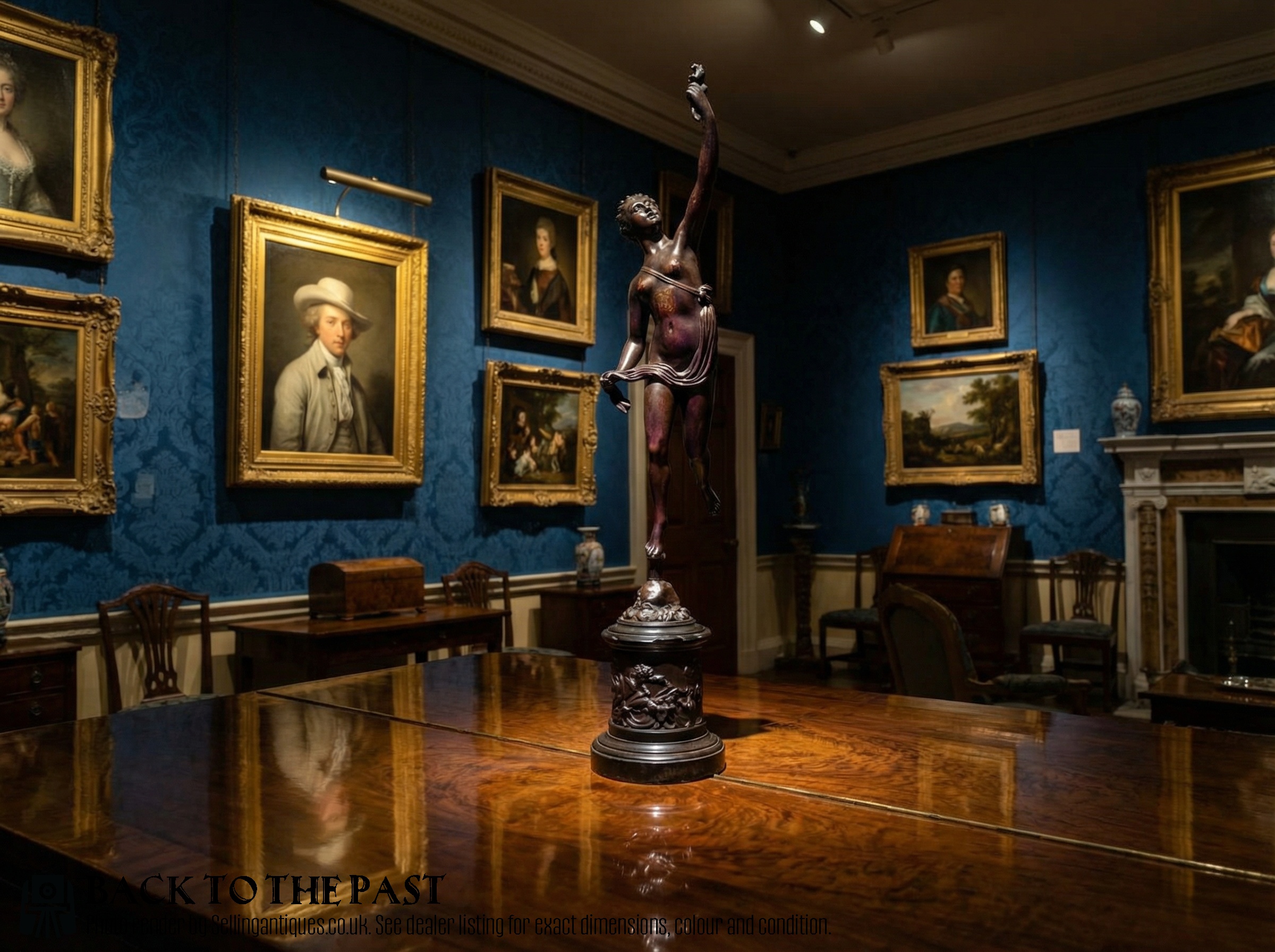
Classical Goddess Bronze
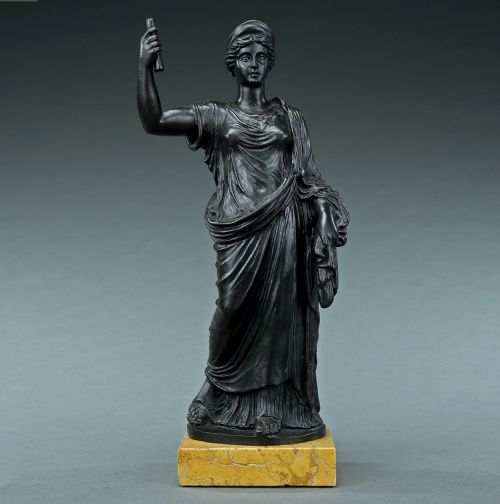
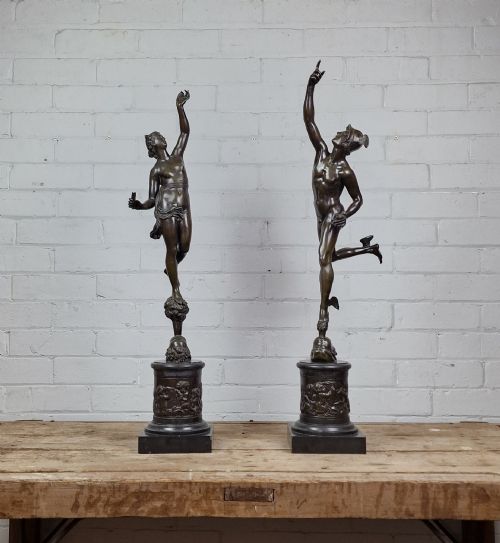
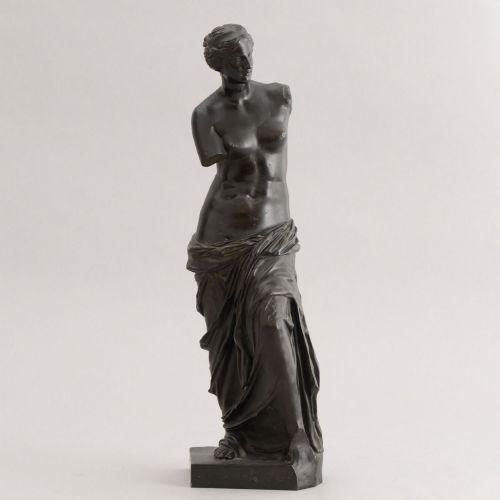
Buyers seeking a classical goddess bronze encounter nineteenth-century works shaped by Neoclassical, French Empire, and Grand Tour traditions. These sculptures and table lamps portray mythological figures such as Juno, Venus, Diana, and Fortuna, often derived from ancient marble prototypes.
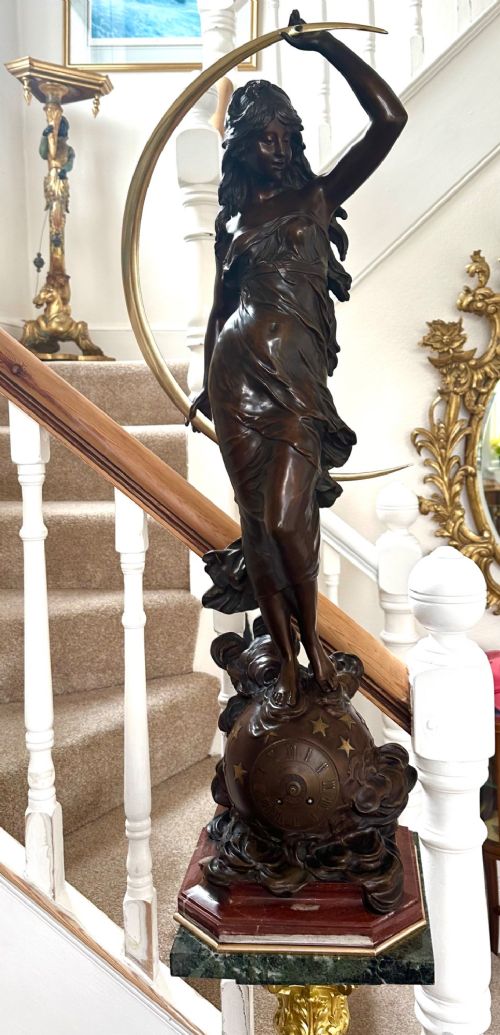
The selections span cabinet-sized souvenirs brought back by travellers alongside larger sculptural figures and candelabra. Figures appear patinated or gilded, frequently mounted upon heavy plinths of black slate, rouge marble, or ebonised wood.
Most examples originate from French foundries of the Victorian era, capturing mythological subjects with academic precision. They function equally as standalone statues or converted lighting.
Materials and technique
Surface patination ranges from deep brown and black tones to bright gilded finishes, achieved through chemical treatments or gold leaf application. Mounts frequently incorporate contrasting materials such as polished marble, slate, and ormolu.
Signatures, foundry marks, or titles are occasionally chased into the base metal before final assembly onto stone or timber plinths.
Listings feature works spanning the Victorian era, incorporating materials such as black slate, rouge marble, and patinated bronze.
Assessing quality
Quality rests in the crispness of the chasing and the subtlety of the patination across drapery and hair. Superior castings retain intricate facial expressions and anatomical definition without softening from worn moulds.
The integration of the bronze figure with its architectural base distinguishes finer studio pieces from standard decorative items. Heavier mounts of rouge marble, black slate, or ormolu indicate greater workshop investment.
Signed works by documented sculptors carry distinct artistic authority over unmarked commercial editions intended for the souvenir trade.
August Moreau·Mercié·R Henn·Bulio·Louis Ernest Barrias
The Classical Goddess Bronze Glossary
- Grand Tour
- A traditional journey through Europe undertaken by upper-class scholars and travellers during the eighteenth and nineteenth centuries. Souvenirs collected included bronze reductions of classical antiquities.
- Patinated bronze
- A bronze surface treated with chemical solutions to produce a controlled brown, green, or black coloration. This finish protects the metal and accentuates sculptural contours.
- Ormolu
- Gilded bronze used for decorative mounts and architectural details. The technique involves applying a mercury-gold amalgam to the bronze base.
- Neoclassical
- A revival of artistic styles inspired by the classical art and culture of ancient Greece and Rome. It dominated European sculpture and architecture through the eighteenth and nineteenth centuries.
- Candelabra
- Branched lighting fixtures designed to hold multiple candles. Nineteenth-century examples often incorporated cast bronze figures supporting the candle arms.
Classical Goddess Bronze: Frequently Asked Questions
What are Grand Tour bronzes?
Grand Tour bronzes are miniature or reduced-scale sculptures acquired by travellers visiting classical sites in Italy during the nineteenth century. They served as scholarly mementos of ancient statues housed in European museums.
These pieces were produced in Parisian and Italian workshops to satisfy the demand for portable classical art. Their quality often matches the academic standards of the period.
How do I identify different goddesses?
Goddesses are identified by their traditional attributes, such as bows for Diana, sickles for Ceres, or youth symbols for Hebe. Inscriptions on the plinth occasionally name the subject directly.
Sculptural poses also reference specific ancient prototypes, such as the Venus de Milo or Diane de Gabii.
Are these pieces solid bronze?
Many nineteenth-century sculptures are cast as hollow forms to conserve metal and reduce weight, a standard foundry practice. Heavier bases often incorporate slate or marble plinths to provide stability.
Substantial weight usually indicates the presence of these stone mounts rather than solid metal throughout.
How should I clean patinated bronze?
Bronze requires minimal maintenance beyond gentle dusting with a soft, dry cloth to prevent dust accumulation. Liquid cleaners or abrasive polishes must be avoided, as they strip the historic patina.
Wax can occasionally be applied sparingly if the surface appears dry, following professional conservation guidelines.
What is French Empire style?
French Empire style reflects the Neoclassical taste promoted during the rule of Napoleon, emphasising military glory and Roman antiquity. Bronzes from this movement feature formal compositions and heavy ormolu mounts.
This aesthetic influenced nineteenth-century decorative arts across Europe.