



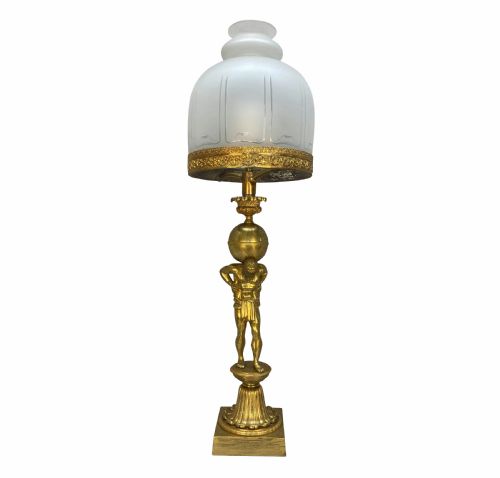
Classical Figural Lamps
Classical figural lamps unite sculptural human figures with illumination, drawing upon historical motifs from the nineteenth century to the early twentieth century.
Classical Figural Lamps
Classical figural lamps combine cast metal or porcelain figures with lighting functions, appearing across table lamps, floor torcheres, oil lamps, and wall sconces. These pieces span the nineteenth century, Regency era, and the early twentieth century, incorporating French Neoclassical, Art Nouveau, and Victorian design idioms.
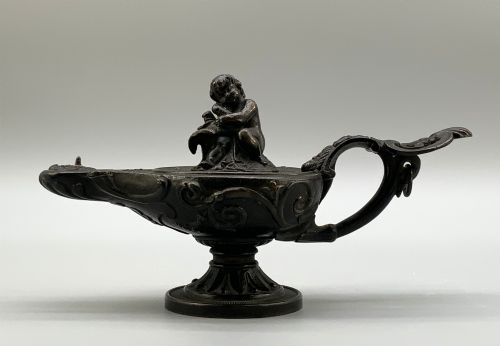
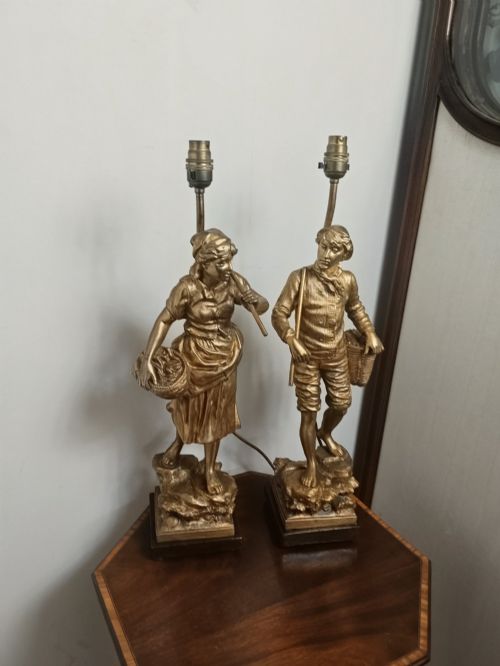
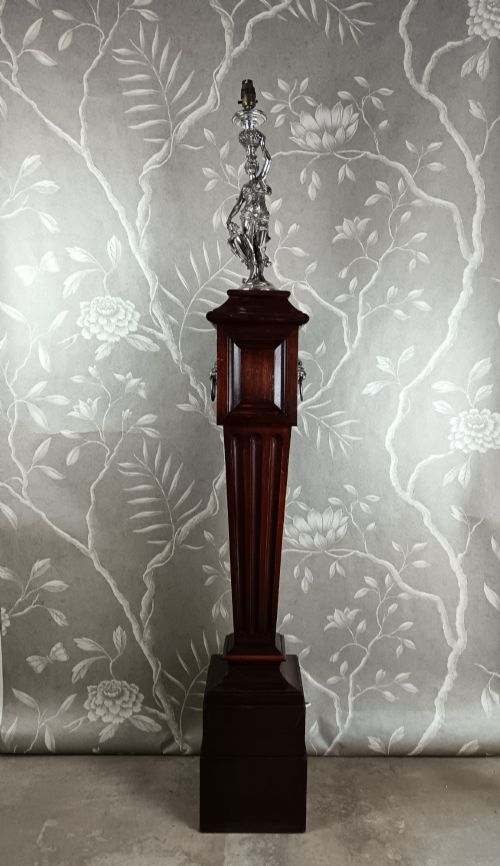
The most frequent examples on this page are French and English bronze or spelter table lamps and torcheres depicting cherubs, maidens, and mythological subjects. Makers and sculptors often integrated these figures directly into lampbases or pedestals made of marble and brass.
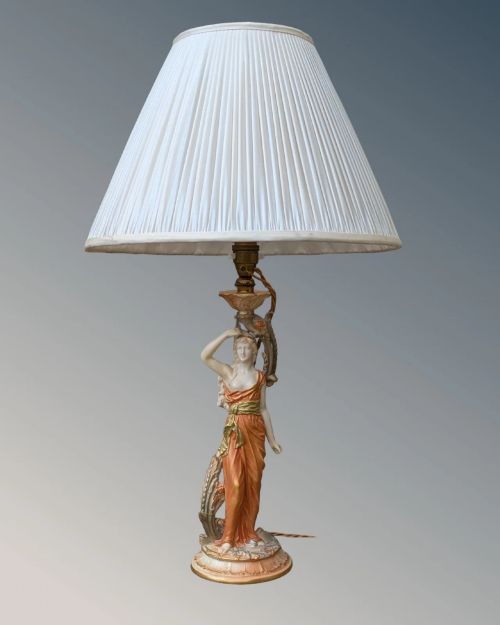
Makers utilised diverse materials such as frosted glass, porcelain, and alabaster alongside metal castings to build functional illumination. Pieces range from modest boudoir lamps to large floor-standing figures holding torchere shades.
Materials and Technique
Foundry casting methods determined the precision of bronze and spelter figures, with cold painting, gilding, or silver-plating applied to finished metal surfaces. Sculptors shaped classical maidens, cherubs, and allegorical subjects which were subsequently mounted onto marble plinths or china bases.
Glass components include moulded frosted glass shades and specialised lamp bodies, occasionally paired with fabric elements. Artisans combined turned brass, carved alabaster, and porcelain elements to support the primary figural sculptures.
Materials documented across the inventory include bronze, spelter, marble, alabaster, porcelain, and frosted glass.
Sculptural Execution
Quality depends upon the crispness of the metal casting and the depth of the chasing work on bronze and spelter figures. Superior examples display refined facial expressions, articulated drapery, and careful hand-finishing by identified sculptors.
The choice of base materials, such as heavy solid marble plinths versus lighter composite substitutes, distinguishes higher tier production. Integrated patination, whether fire gilt or cold painted, retains greater definition on masterworks than on mass-produced commercial castings.
E Rousseau·L & F Moreau·WMF·Royal Worcester·Humphrey Hopper·Baccarat·Emile Picault·Jean-Jules Cambos·H. Moreau·François-Christophe-Armand Toussaint·Coutan·Henri Honore Ple·Auguste Moreau
The Classical Figural Lamps Glossary
- Torchere
- A tall stand or floor lamp designed to hold a light source pointing upwards. These often take the form of a figural bronze statue holding a torch or urn.
- Spelter
- A zinc alloy commonly utilised as a less expensive alternative to bronze during the nineteenth and early twentieth centuries. It accepts various metallic paints and finishes to simulate bronze or silver.
- Neoclassical
- A style reviving classical Greek and Roman artistic motifs, prevalent in furniture and decorative objects. Figures from mythology frequently populate pieces designed in this manner.
- Ormolu
- Finely ground high-carat gold applied to a bronze base through mercury amalgamation. This technique produces a durable golden finish seen on French luxury items.
Classical Figural Lamps: Frequently Asked Questions
What periods do classical figural lamps come from?
These lamps date primarily from the nineteenth century through the early twentieth century, encompassing Regency, Victorian, and Art Nouveau periods.
Design influences span French Neoclassical revivals and early twentieth-century decorative arts movements.
How were these lamps originally powered?
Earlier examples functioned as oil lamps utilising burning fluids before homes adopted electricity. Many surviving bases were subsequently converted to electrical wiring during later decades.
Later pieces from the twentieth century were manufactured directly for electrical bulbs and fabric shades.
Where should I place a large torchere lamp?
Floor-standing torcheres work well in corners or beside substantial furniture where their height provides upward illumination. They command considerable floor space due to heavy bronze or spelter construction.
Table lamp variants suit sideboards, desks, or pedestals where detailed metalwork remains visible.
How do I identify bronze versus spelter?
Bronze exhibits greater weight, density, and resistance to bending compared to zinc-based spelter alloys. Closer inspection often reveals a finer chased detail in bronze castings.
Spelter usually displays a painted or plated surface finish that can show wear where underlying grey metal appears.