



Classical Dancer Bronze Figure
A classical dancer bronze figure brings kinetic grace into a room, capturing movement in enduring metal from the nineteenth and early twentieth centuries.
Classical Dancer Bronze Figure
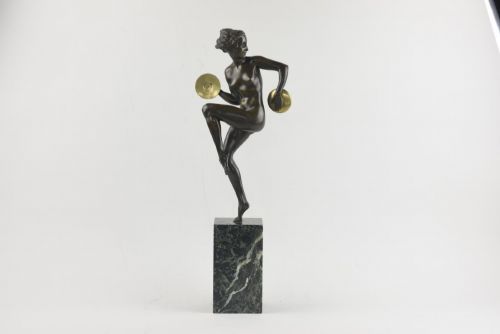
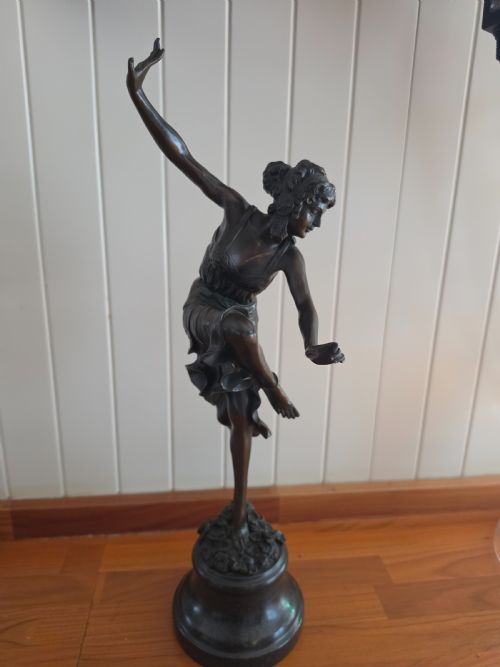
A classical dancer bronze figure represents female performers in motion, shaped through French nineteenth-century traditions and later twentieth-century modernist aesthetics. These sculptures take the form of individual figurines or balanced pairs, frequently mounted upon solid marble bases to anchor their dynamic postures.
Most examples encountered here date from the early decades of the twentieth century, particularly the Art Deco era of the nineteen-twenties and nineteen-thirties. Artists captured dancers mid-stride, balancing with hoops, or holding instruments like the thyrsus, translating ephemeral theatrical moments into permanent sculpture.
The aesthetic bridges neoclassical academic sculpture with the streamlined geometry of Art Nouveau and Art Deco design. Buyers find works originating predominantly from French workshops alongside select American interpretations of the dancing girl theme.
Materials and methods
Foundries produced these sculptures primarily in cast bronze, utilising traditional metal-casting techniques to capture intricate drapery and musculature. Artisans frequently enhanced the metallic surfaces through cold painting, parcel-gilt highlights, or complete silvered finishes.
Heavier elements such as bases relied on contrasting blocks of natural marble to support the slender balance of the figures. Signatures and foundry marks were typically chiselled or cast directly into the metal body during production.
Recorded periods span from the nineteenth century through the nineteen-thirties.
Distinctions in craftsmanship
Quality rests in the fidelity of the cast and the crispness of the chased surface details, where sharper lines articulate fingers, hair, and fabric. Superior pieces retain their original applied patination, cold paint, or silvered layers without heavy wear.
The integration between the bronze figure and its stone support indicates overall workshop standards, with finer examples demonstrating seamless structural balance. Recognised maker signatures and distinct foundry stamps elevate the standing of a sculpture within the broader field.
Pierre le Faguays·Aurore Onu·C J R Colinet·Rousseau·Eugène Désiré Piron·Claire Colinet·Jean Jacques Pradier·Mario Korbel·Francisque Joseph Duret
The Classical Dancer Bronze Figure Glossary
- Cold paint
- Paint applied to a bronze object after casting, without subsequent firing. This decorative finish often appears on garments or hair in early twentieth-century figurines.
- Parcel-gilt
- A technique where selective areas of the bronze surface receive a thin layer of gold leaf or gilding. This highlights specific ornaments or drapery against the darker patinated metal.
- Silvered bronze
- Bronze treated with a silver finish to impart a bright, reflective surface quality. This treatment found particular favour among sculptors working during the Art Deco period.
- Thyrsus
- A staff of fennel tipped with a pine cone and entwined with ivy, associated with Dionysus. Figures holding this ritual object appear in classical theatrical representations.
- Patination
- The chemical coloration or natural film that develops or is applied to the surface of bronze. It protects the metal while defining the visual tone of the sculpture.
Classical Dancer Bronze Figure: Frequently Asked Questions
What periods do these figures come from?
The selection spans from the nineteenth century through the nineteen-thirties. Most examples concentrate in the early decades of the twentieth century.
Art Deco and Art Nouveau movements dominate the dates, alongside earlier neoclassical French works.
Are most of these figures mounted on marble?
Many examples utilise solid marble bases to provide stability and visual weight. These plinths often match the geometric sensibilities of the Art Deco period.
Not every piece requires a stone base, as certain sculptural compositions balance independently.
How should I clean a bronze dancer?
Dust the surface gently with a soft, dry cloth to prevent the accumulation of particles. Avoid harsh chemical cleaners or abrasive agents that might strip the original patina or cold paint.
Consult a specialist conservator if the sculpture requires deeper maintenance or restoration of its finish.
Who made these classical dancer figures?
Recorded makers include prominent European sculptors such as Pierre le Faguays, Claire Colinet, and Jean Jacques Pradier. French workshops produced the majority of these pieces.
Individual artists signed their work directly into the bronze before the casting process concluded.