




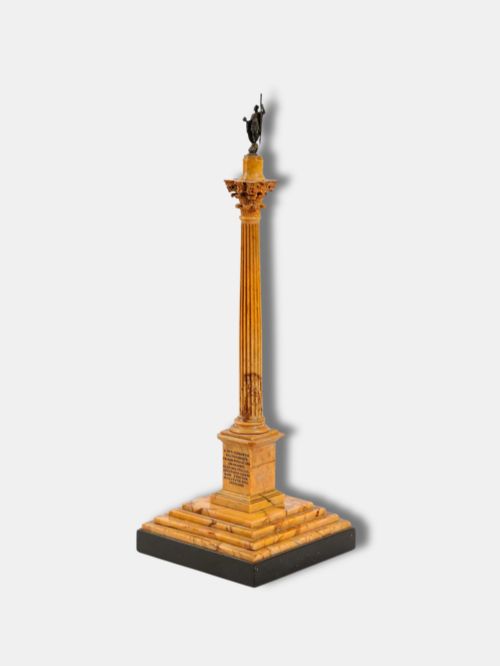
Classical Columns
Classical columns bring architectural order and proportion into a room, taking the form of pedestals, table lamps, candlesticks, and mirrors.
Classical Columns
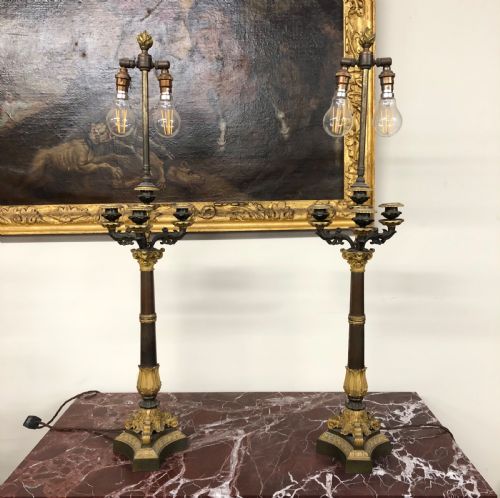
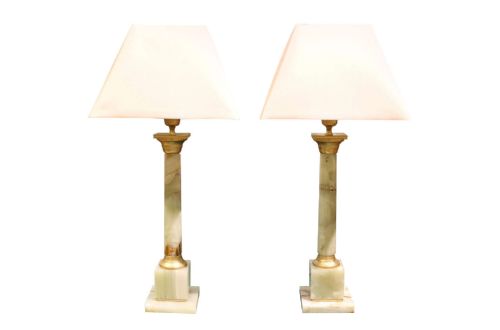
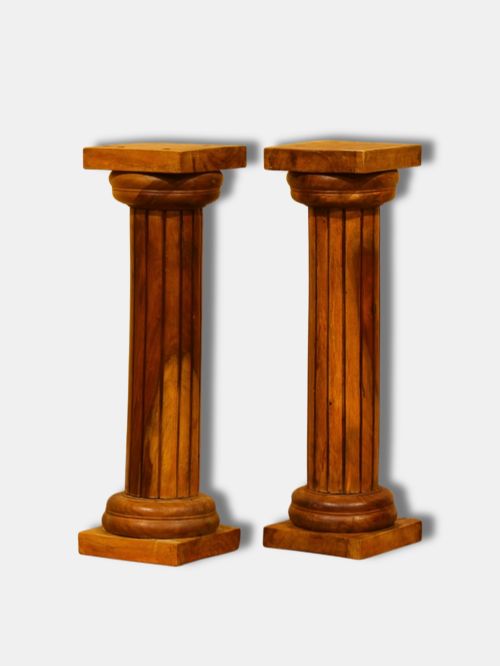
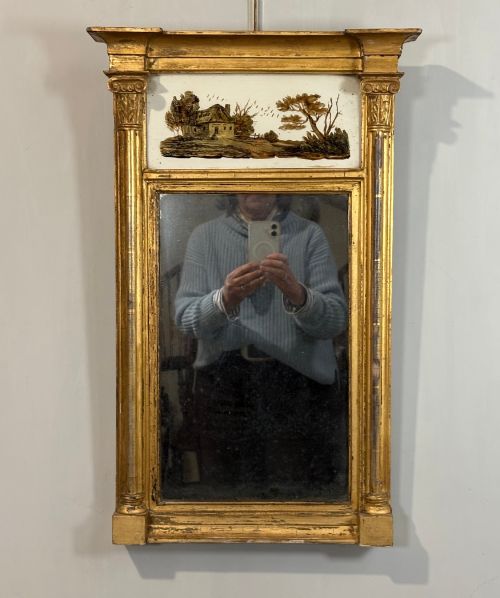
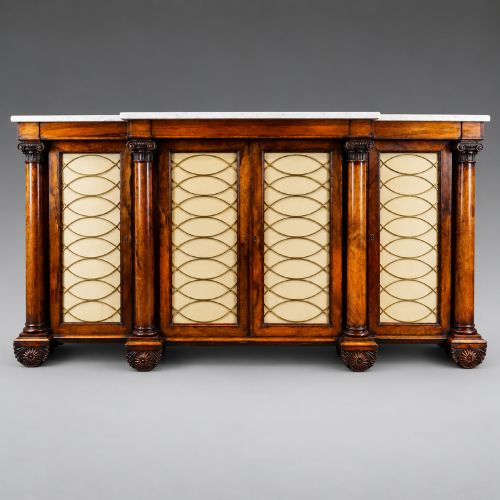
When buyers search for classical columns, they encounter architectural supports and decorative objects drawn from the Neoclassical, Regency, and Victorian periods. These pieces include marble display pedestals, brass table lamps modelled on the Corinthian order, and carved wooden half-columns integrated into mirror frames.
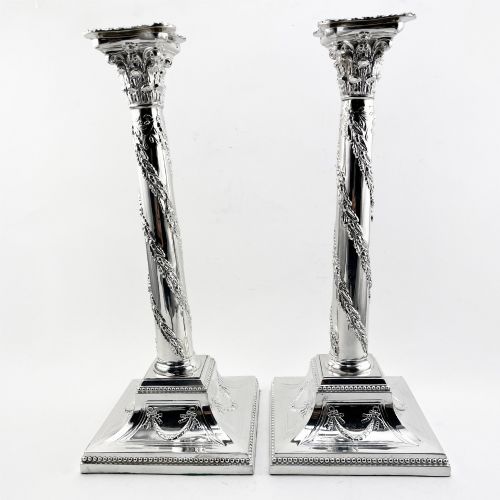
The versions most frequently met on this page span the nineteenth and early twentieth centuries, reflecting revivals of ancient Greek and Roman design. They range from tall onyx and marble display pillars to smaller bronze and silver-plated candlesticks bearing classical capitals.
Materials and construction
The makers of these pieces utilised traditional media such as carved mahogany, giltwood, gesso, and cast bronze alongside turned marbles and onyx. Metal components often combine brass or silver plating with weighted bases, while display pedestals frequently employ dense hardwoods or stone.
Surface decoration relies on applied gilding, parcel-gilding, and ormolu collars that accent the capitals and bases of stone and wood shafts. Carved details like reeding and acanthus leaves follow historical architectural orders closely.
Classical Columns Retail Price Guide 2026
Typical asking prices for classical columns among the pieces listed under this phrase on Sellingantiques today, from the lower quarter to the upper quarter. They describe what is for sale here now, not the wider market.
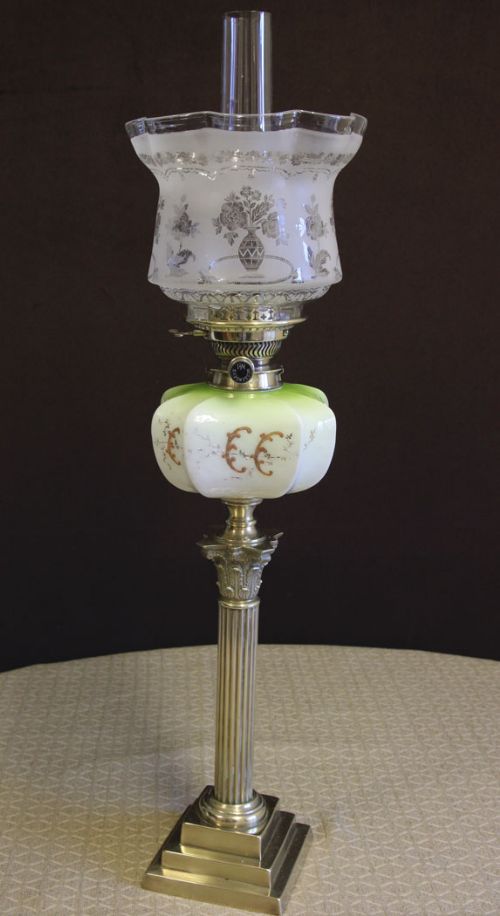
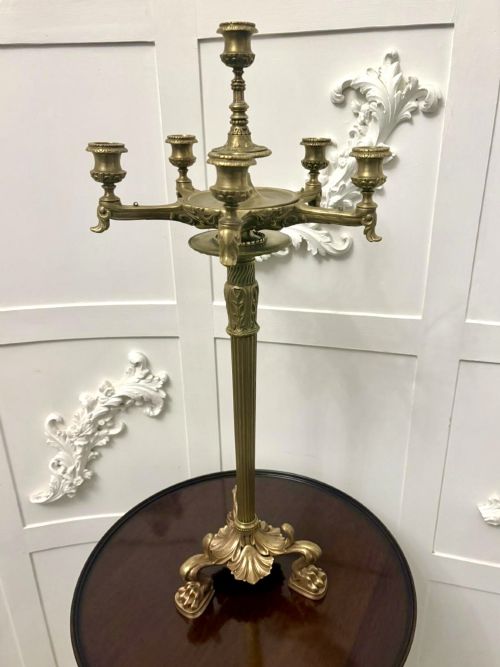
Even a humble table lamp gets to wear a Corinthian capital.
Distinctions in quality
The upper tier of pieces is distinguished by precise carving and heavier, authentic materials such as solid marble, fine-grained mahogany, or fire-gilt bronze. Less ambitious examples rely on lighter plated metals, gesso over softwood, or simplified surface decoration.
Proportion and fidelity to historical architectural orders dictate the visual success of each piece. Superior columns maintain correct classical ratios between the shaft, base, and capital.
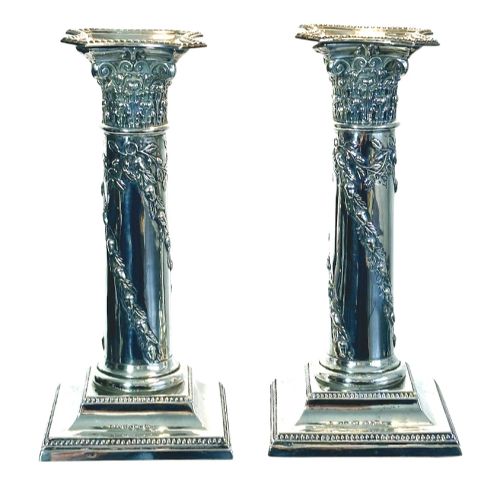
Garrard & Co. London
The Classical Columns Glossary
- Corinthian
- An architectural order identifiable by an ornate capital decorated with carved acanthus leaves. This motif appears frequently on nineteenth-century table lamps and candlesticks.
- Ormolu
- Gilt bronze mounted onto stone or wood columns, providing metallic contrast to marble and onyx shafts. It requires careful cleaning to preserve the underlying finish.
- Gesso
- A plaster-based mixture applied to wood frames and mirrors before gilding, allowing for crisp moulded architectural details. It forms the foundation for many nineteenth-century gilt surfaces.
- Pedestal
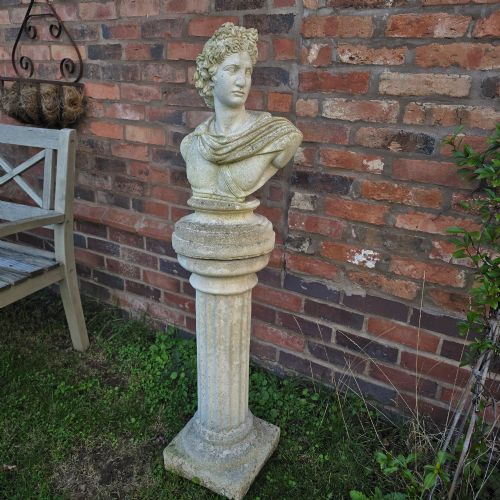
- A freestanding column or plinth designed to display busts, vases, or lamps at eye level. These structural supports appear in materials ranging from honey-coloured marble to carved oak.
Classical Columns: Frequently Asked Questions
What periods do these columns represent?
The selection spans the Regency, Victorian, and Edwardian eras, alongside early twentieth-century interpretations. These periods drew heavily on earlier Neoclassical traditions.
Craftsmen adapted ancient Greek and Roman architectural forms to suit nineteenth-century domestic interiors as lamps, mirrors, and display stands.
How were column table lamps used?
Column lamps served as functional lighting on side tables and desks in period drawing rooms and libraries. They brought formal architectural symmetry into domestic spaces.
Many examples originally designed for oil have since been converted to electricity for modern household use.
What is the difference between a pedestal and a candlestick?
Pedestals are large freestanding display columns intended to elevate sculptures, clocks, or urns from the floor. They are constructed from substantial materials like marble, onyx, or carved timber.
Candlesticks are smaller tabletop objects designed specifically to hold wax candles, often cast in brass, bronze, or silver.
How do you identify a Neoclassical revival piece?
Neoclassical revival pieces incorporate direct architectural references such as fluted shafts, stepped bases, and classical capitals. These elements mirror archaeological discoveries valued by nineteenth-century collectors.
Proportions and decorative motifs mimic authentic antique precedents while utilising the manufacturing techniques of the Victorian or Edwardian eras.