




Classical Campana Urns
Classical campana urns bring architectural dignity and classical proportion to a garden or room.

Classical Campana Urns
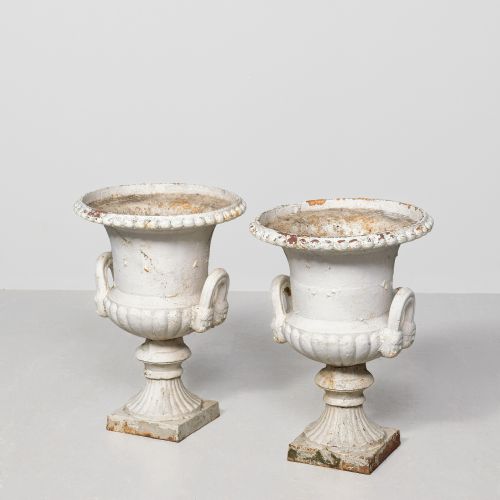
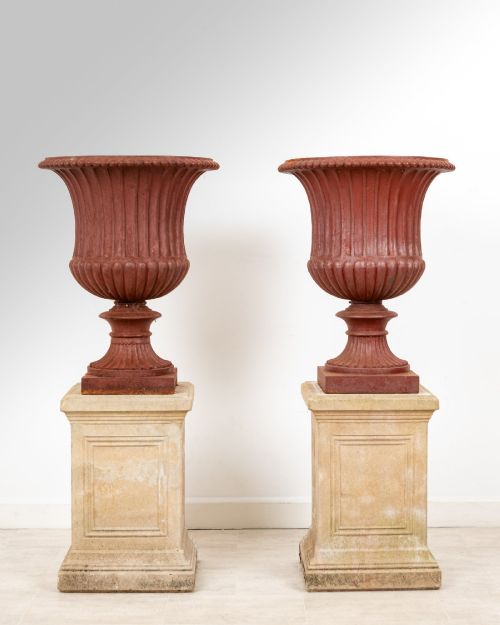
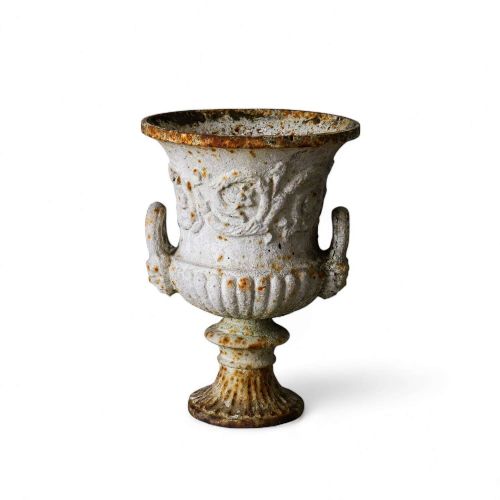
Classical campana urns take their distinct inverted-bell silhouette from ancient pottery and marble vessels discovered during archaeological excavations. When you search for classical campana urns, you encounter garden ornaments and interior decorative vessels designed to echo antiquity. These objects appear primarily as heavy cast iron garden pieces or refined bronze and marble table ornaments originating from the nineteenth century.
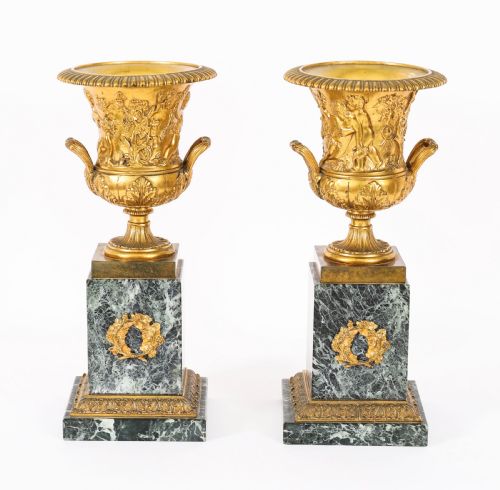
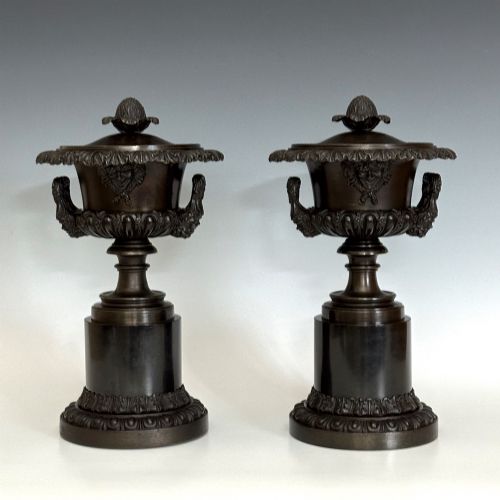
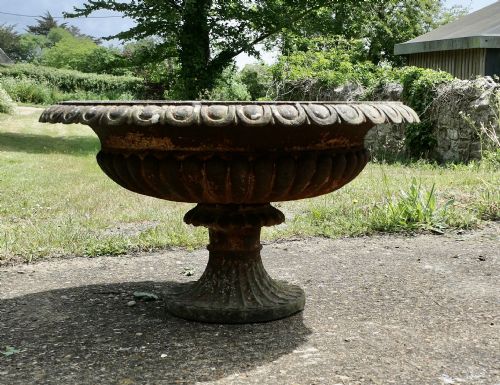
The pieces on this page span several distinct periods of revival, particularly the Regency and Victorian eras, alongside continental Grand Tour souvenirs. Garden examples take the form of robust cast iron or stone planters meant to sit on plinths and withstand the elements. Smaller interior versions emerge in gilt bronze, brass, and polished stone, often decorated with classical figures, handles, and gadrooned rims.
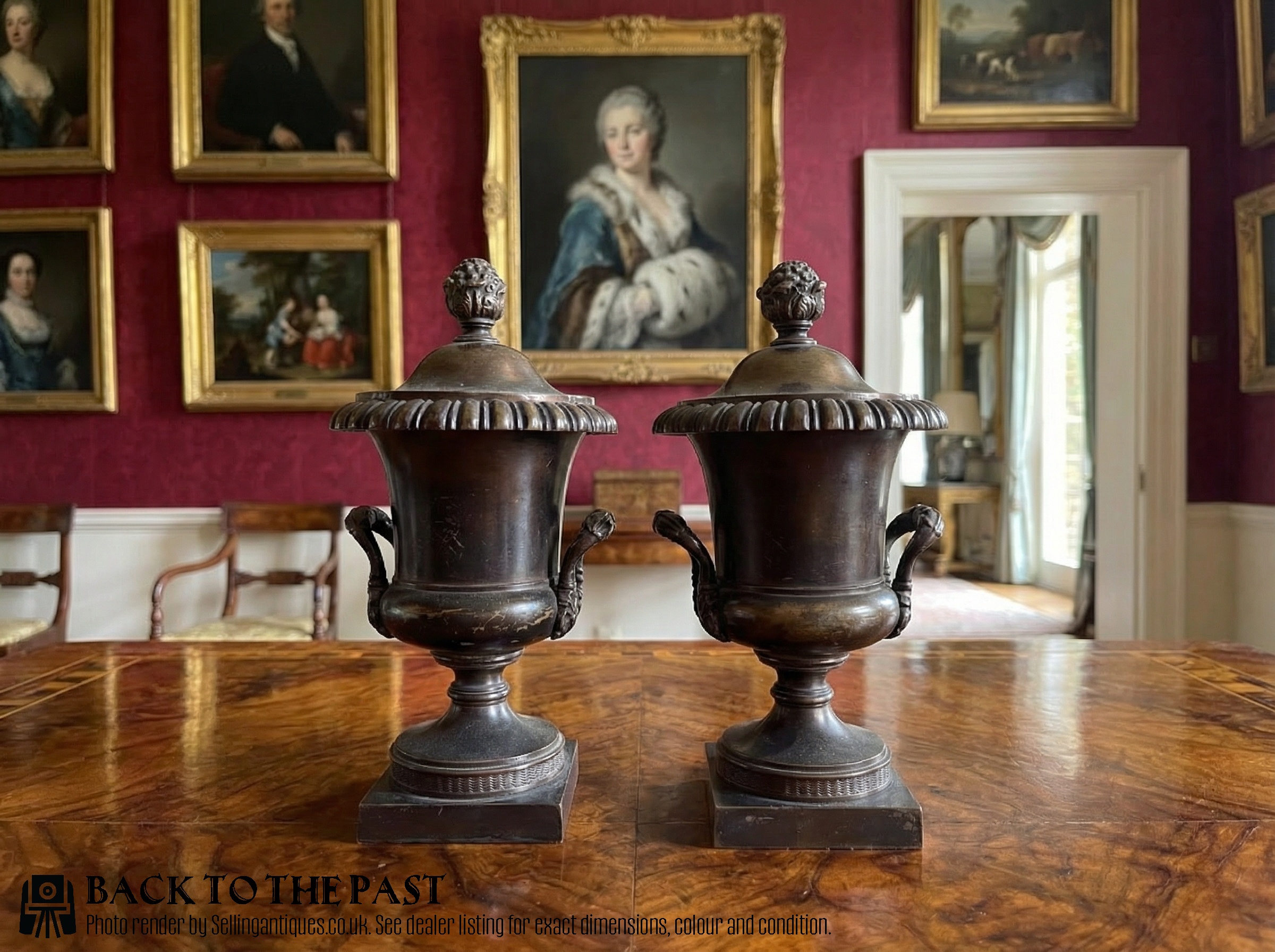
How they were made
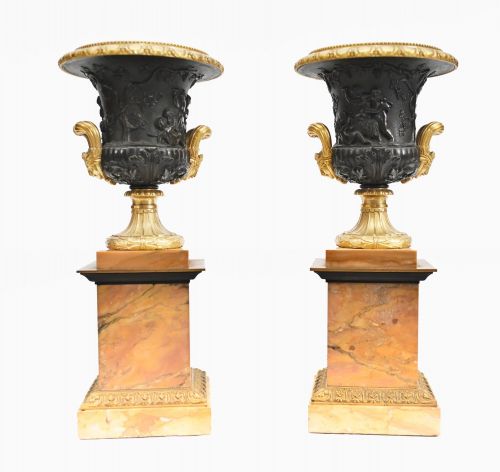
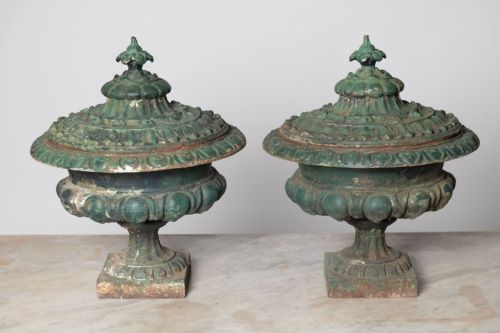
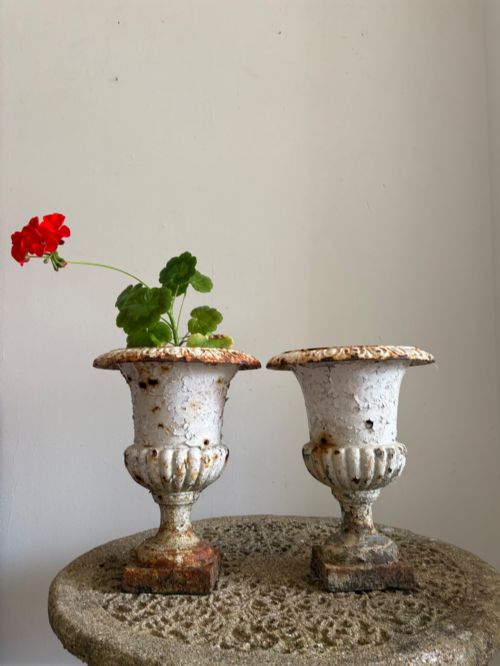
Foundry work dominates the production of these pieces, utilising cast iron or bronze poured into intricate moulds to achieve crisp classical detailing. Iron garden urns rely on sand casting, which leaves a robust and textured surface that frequently holds traces of early paint or weathering. Bronze and ormolu examples demand lost-wax casting or fine metalwork, followed by chasing and gilding to accentuate the classical friezes.
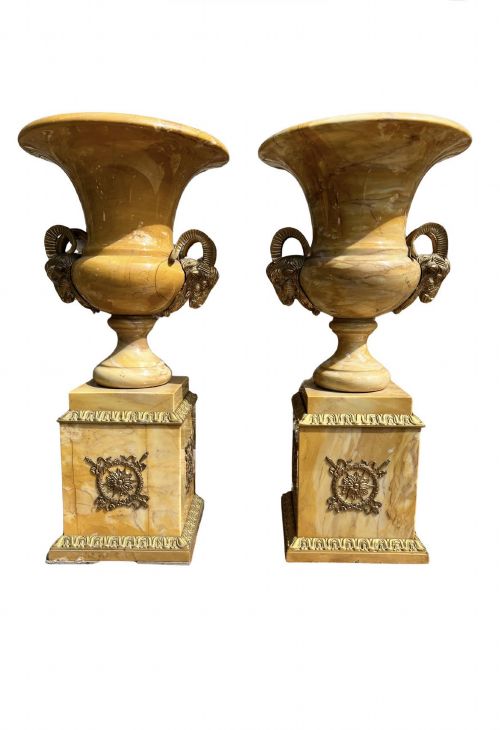
Stonemasons and lapidaries shaped the marble, limestone, and terracotta variants, turning stone on lathes or carving details by hand. Interior decorative pieces combine materials, mounting bronze or brass mounts onto Sienna or Ashford marble bases. Potters utilised terracotta and jasperware to press classical bas-reliefs into clay bodies before firing.
Classical Campana Urns Retail Price Guide 2026
Typical asking prices for classical campana urns among the pieces listed under this phrase on Sellingantiques today, from the lower quarter to the upper quarter. They describe what is for sale here now, not the wider market.
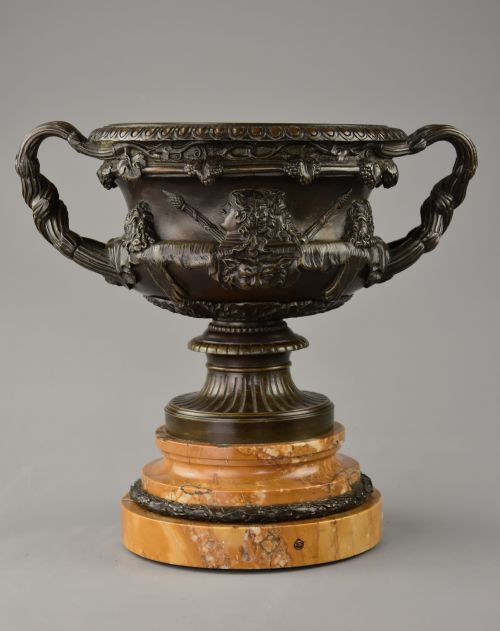
Grand Tour travellers packed bronze miniature Warwick vases into luggage alongside their laundry.
What varies in quality
The refinement of the casting separates standard production pieces from exceptional works of art. Superior bronze and iron urns display sharp, deep relief in the ornamentation, whereas inferior castings appear soft and blurred in the foliage and figures. The crispness of the chasing on metal mounts and the tightness of the joins in multi-material pieces indicate the skill of the original workshop.
Material selection dictates the upper tier of the range, with solid marbles, fire-gilt ormolu, and heavy bronze commanding greater presence than spelter or thin iron. Original surfaces, such as untouched weathered paint on iron or patinated bronze aged over decades, preserve the integrity of the object. Pieces that retain their matching lids or original pedestals possess a completeness that elevates their standing.
Andrew Handyside·Selim Bright·Wedgwood
The Classical Campana Urns Glossary
- Campana
- Having the shape of an inverted bell with an everted rim and a footed base. This profile defines the classical urn tradition.
- Grand Tour
- A cultural journey undertaken by wealthy Europeans through France and Italy to collect art and antiquities. Souvenirs from these travels included miniature bronze and marble urns.
- Ormolu
- Finely ground high-carat gold applied to a bronze base using a mercury amalgamation technique. This process creates a brilliant, enduring golden surface on decorative mounts.
- Gadrooned
- Decorated with a series of convex curves or flutes moulded along the edge of a vessel. This ornamental detail frequently encircles the lower body of an urn.
- Bas-relief
- Sculpture in which the figures project only slightly from a flat background. Wedgwood jasperware and metal friezes utilise this technique to depict classical scenes.
Classical Campana Urns: Frequently Asked Questions
What is a campana urn?
A campana urn is a vessel shaped like an inverted bell, featuring a flared rim, a tapering body, and a footed base. The design originates from ancient Roman and Greek pottery and stone vases.
Makers across the nineteenth century adapted this profile for both substantial garden planters and decorative interior ornaments.
How were these urns used?
Large iron and stone versions served as garden planters and architectural focal points on terraces, lawns, and entrance plinths. Smaller bronze, marble, and ceramic examples functioned as decorative mantelpiece ornaments or wine coolers.
Their primary purpose was to evoke classical antiquity within domestic and landscape architecture.
How do I date a nineteenth-century urn?
Dating relies on material composition, casting technique, and stylistic markers associated with specific revival periods such as Regency or Victorian Gothic and Classical revivals. Examining the underside, construction joins, and surface patination reveals manufacturing methods typical of particular decades.
Makers' marks or attribution to known foundries like Andrew Handyside offer further chronological precision.
Can cast iron urns stay outside?
Cast iron urns were specifically manufactured to endure outdoor garden environments through all seasons. Their heavy weight and robust metal construction allow them to withstand weathering.
Over time, exposure to the elements develops a natural rust patina that many collectors prize for its authenticity.