



Classical Bronze Urn Lamps
Classical bronze urn lamps bring monumental architectural presence to a room, combining antique vessel forms with period lighting.
Classical Bronze Urn Lamps
Classical bronze urn lamps draw upon ancient vessel forms, frequently originating from nineteenth-century interpretations of archaeological discoveries. These table lamps adapt oil lamps, cassolettes, and decorative vases into functional lighting by mounting them on substantial bases.
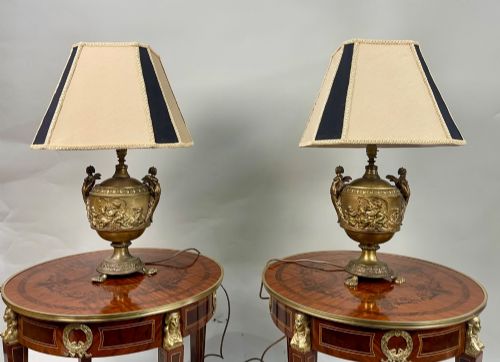
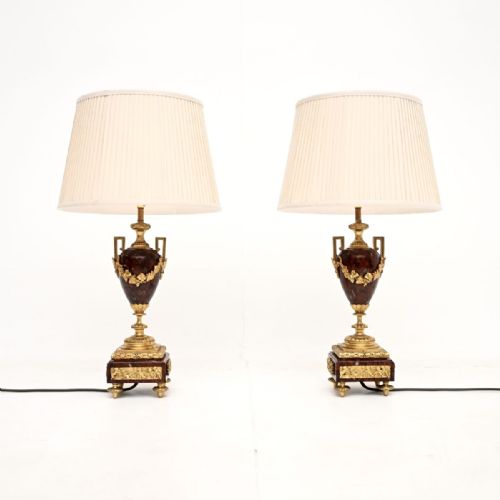
Buyers commonly encounter French examples from the nineteenth century featuring neoclassical design vocabularies. The selection spans single sculptural pieces to matched pairs incorporating marble plinths and cast metal mounts.
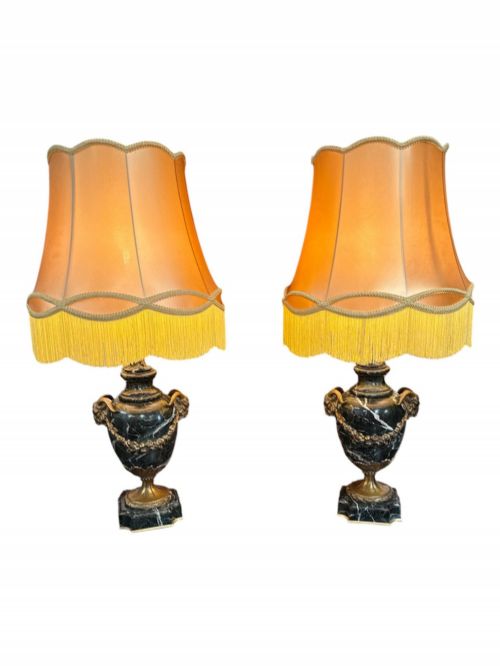
The aesthetic leans heavily on historical revivalism, channelling eighteenth-century French taste through Louis XVI styling and grand tour souvenirs. These objects serve both as structural illumination and as sculptural focal points within a traditional interior.
Materials and construction
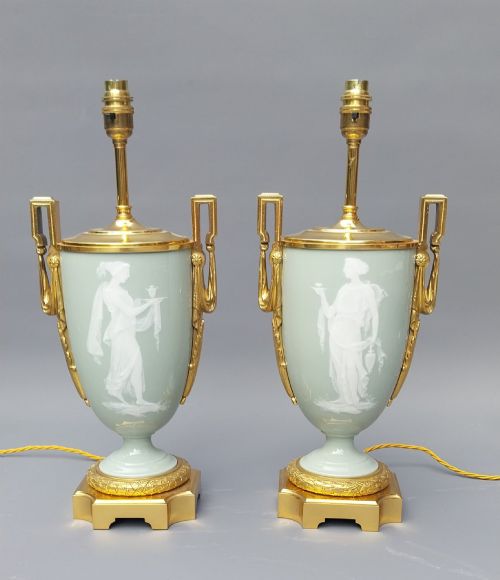
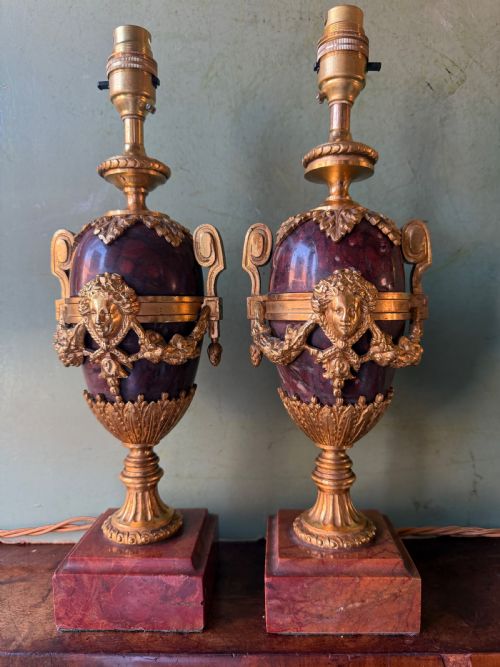
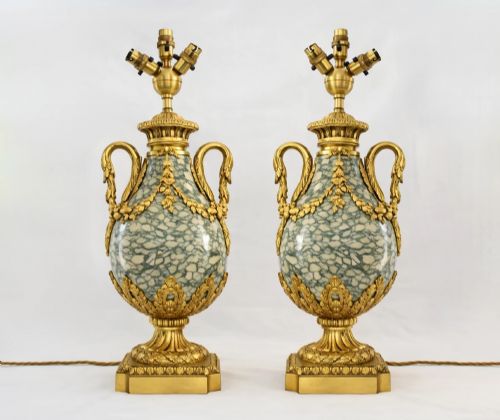
The body of each piece relies upon cast bronze, brass, or carved marble, frequently paired with gilt bronze and ormolu mounts. Makers utilised contrasting materials to accentuate the classical silhouette, setting dark patinated metal against polished stone or gilded highlights.
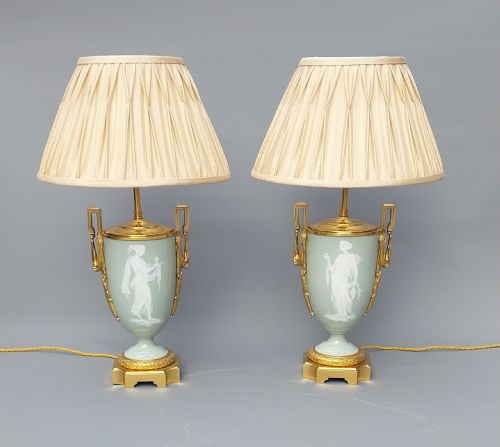
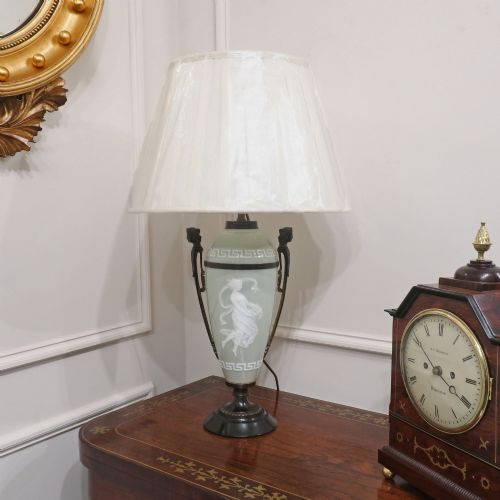
Surface decoration involves fine chasing, hand-painted porcelain panels, and pate sur pate techniques applied to ceramic bodies. Converted oil lamps and ewers retain their original structural integrity while accommodating modern electrical fittings discreetly.
Classical Bronze Urn Lamps Retail Price Guide 2026
Typical asking prices for classical bronze urn lamps among the pieces listed under this phrase on Sellingantiques today, from the lower quarter to the upper quarter. They describe what is for sale here now, not the wider market.
The listings span the nineteenth and early twentieth centuries, uniting bronze, marble, porcelain, and ormolu across neoclassical and Louis XVI revival styles.
Distinctions in manufacture
Quality reveals itself in the crispness of the bronze chasing and the weight of the ormolu mounts. Superior examples exhibit finely detailed relief work on handles, drapery, and classical motifs rather than soft, mass-produced casting.
The selection of the underlying stone or porcelain body dictates the refinement of the piece. Dense marbles like rouge or Siena, combined with heavy fire-gilded bronze, separate high-grade studio work from simpler decorative items.
The Classical Bronze Urn Lamps Glossary
- Ormolu
- Gilded bronze produced through a mercury amalgamation process common in nineteenth-century French metalwork. This technique yields a deep, enduring lustre that distinguishes high-end decorative mounts.
- Cassolette
- A decorative vessel featuring a reversible lid that functions either as a closed urn or a perfume burner. These forms frequently serve as the body for converted nineteenth-century table lamps.
- Neoclassical
- An artistic style reviving classical antiquity during the eighteenth and nineteenth centuries. It governs the symmetrical proportions, architectural friezes, and mythic motifs seen on these lamp bases.
- Pate sur pate
- A ceramic decorating method where successive layers of white slip are built up on a coloured clay body to create a low-relief cameo effect. This technique appears on select porcelain lamp bodies.
- Grand tour
- The traditional trip undertaken by nineteenth-century elites across Europe to collect classical antiquities and art. Many bronze urns originate as souvenirs brought home from these travels before later conversion to lamps.
Classical Bronze Urn Lamps: Frequently Asked Questions
Are these lamps converted from older vessels?
Many examples originate as nineteenth-century decorative urns, cassolettes, or oil lamps that were later adapted for electricity. This practice preserves antique metalwork and porcelain bodies within a functional domestic context.
Conversion methods typically maintain the original structure of the vessel while threading wiring through the base or central mount. Collectors value pieces where this adaptation respects the integrity of the antique bronze and marble work.
How do I identify Louis XVI style?
Louis XVI style draws on strict classical symmetry, straight architectural lines, and restrained ornamental motifs like acanthus leaves and ribbon-tied swags. It stands apart from the more exuberant curves of earlier rococo design.
On these lamps, the style appears through balanced handles, fluted columns, and geometric ormolu mounts applied to marble bodies.
Where should I place an urn lamp?
These substantial lamps suit heavy wooden sideboards, entrance hall consoles, or large desk surfaces where their sculptural weight provides visual balance. Their classical proportions demand space to be fully appreciated.
Pairing matching urn lamps on either side of a mantelpiece or large piece of furniture creates symmetrical focal points in a traditional room.
What maintenance do antique bronzes require?
Antique bronze and ormolu surfaces need only gentle dusting with a soft, dry cloth to prevent the accumulation of grit. Avoid chemical polishes, which can strip the historic patination or damage the fire-gilded finish.
Marble bases benefit from occasional wiping with a barely damp cloth, followed immediately by drying to protect the polished stone from moisture rings.