



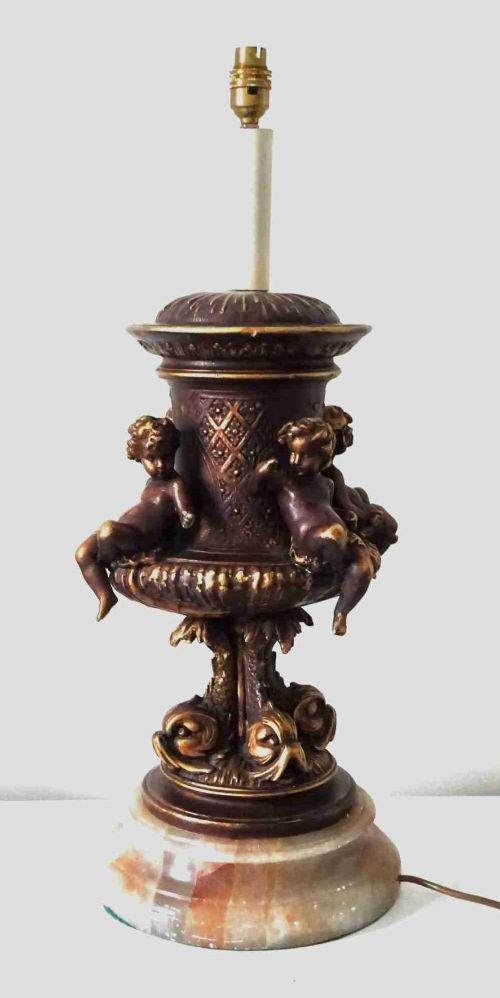
Cast Bronze Urn Light
These cast bronze urn light examples bring sculptural weight and period detail to a room, offering functional illumination through converted vessels.
Cast Bronze Urn Light
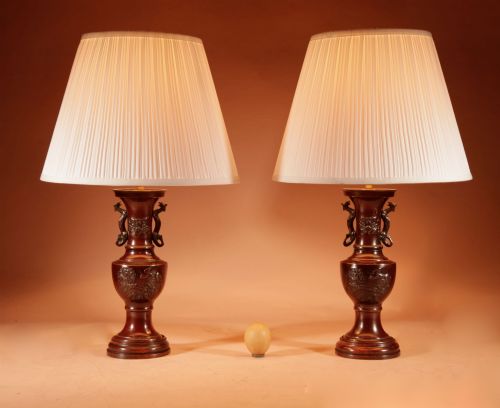
A cast bronze urn light is typically a converted 19th century or early 20th century vessel adapted into a table lamp. When you search for a cast bronze urn light, you encounter pieces that began life as vases, ewers, or decorative urns before receiving electrical fittings.
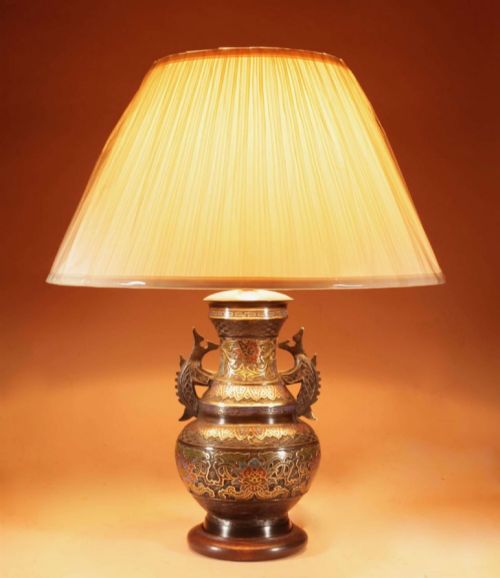
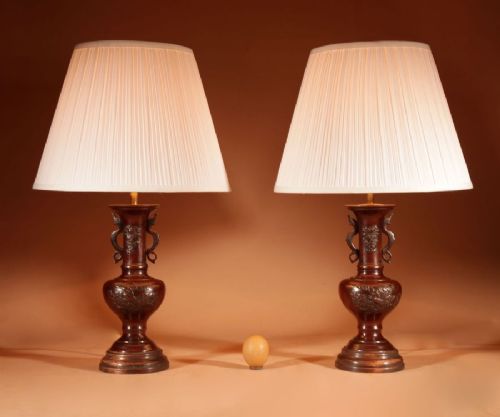
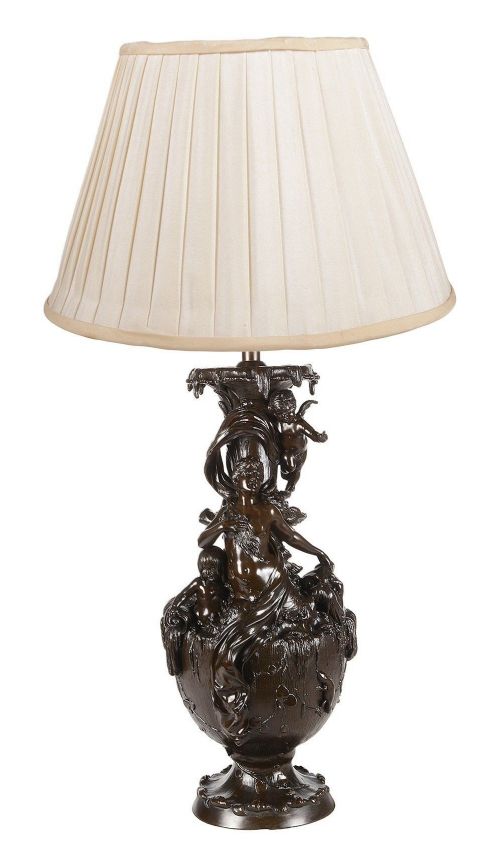
The selections on this page span the 19th Century through to 1930, drawing heavily on Japanese Meiji period casting traditions alongside French Classical and Neoclassical revival designs. You will frequently find pairs featuring cherubs, dolphins, or classical figures mounted on marble bases.
Many of these lamps integrate mixed materials, pairing patinated or gilt bronze bodies with fabric shades. They function primarily as statement table lamps that anchor a room with antique presence.
How they were made
The foundation of these pieces lies in traditional metal casting, utilising bronze, brass, and gilt metal. Artisans shaped these metals through intricate casting processes, often incorporating champlevé enamel or applying patinated finishes to achieve tonal depth.
Many examples incorporate secondary materials such as marble bases for stability and aesthetic contrast. Fabric elements are introduced primarily through modern or replacement shades paired with the antique bronze bodies.
Several pieces feature dolphins acting as structural supports, proving that Victorian marine life enthusiasm knew no bounds.
What varies in quality
Quality in these table lamps rests largely on the crispness of the original bronze casting and the depth of the patination. Finer examples display sharp relief work on figurative elements like cherubs and classical deities, whereas simpler pieces show softer surface detail.
The integration of the conversion work also dictates the overall standard. Superior items retain their original proportions and mount securely to weighted bases like marble without destabilising the form of the vessel.
The Cast Bronze Urn Light Glossary
- Champlevé
- An enamelling technique where recessed areas are gouged out of the bronze body and filled with enamel vitreous paste before firing. This adds colourful decorative bands to the metal surface.
- Patinated Bronze
- Bronze that has undergone a chemical or natural treatment to alter its surface colour and finish. This process darkens the metal and highlights its sculptural contours.
- Meiji Period
- A Japanese historical era lasting from 1868 to 1912 characterised by exceptional metalwork and bronze casting exported to Western markets. Pieces from this time often feature elaborate surface decoration.
- Neoclassical
- A style drawing inspiration from the classical art and culture of ancient Greece and Rome. It informs the symmetry and figurative motifs seen on many European urn lamps.
- Ewer
- A large jug with a wide spout traditionally used for water, frequently chosen by makers for conversion into a tall table lamp.
Cast Bronze Urn Light: Frequently Asked Questions
Are these lamps originally wired for electricity?
Most of these pieces started as decorative vessels, vases, or ewers before being converted into lamps at a later date. The electrical fittings are added during this adaptation process.
Buyers should inspect the current wiring to ensure it meets modern standards and fits safely within the antique metal body.
How do I identify a Meiji period bronze?
Japanese metalwork from this era typically displays precise, intricate surface details and distinct patination techniques. Makers focused heavily on naturalistic motifs and complex casting methods.
Such pieces often entered European collections during the late 19th and early 20th centuries as orientalism influenced interior design.
What is the best way to clean patinated bronze?
Patinated surfaces require gentle dusting with a soft, dry cloth to preserve the aged chemical finish. Avoid using abrasive metal polishes that strip away the original colour.
Maintaining the surface carefully ensures the bronze retains its historical character and depth.
Do these lamps come with lamp shades?
The listings on this page include various configurations, with some lamps retaining fabric shades while others consist purely of the metal base. Shade fittings may vary depending on the specific conversion style.
Buyers often select complementary fabric shades separately to suit their specific interior lighting requirements.