




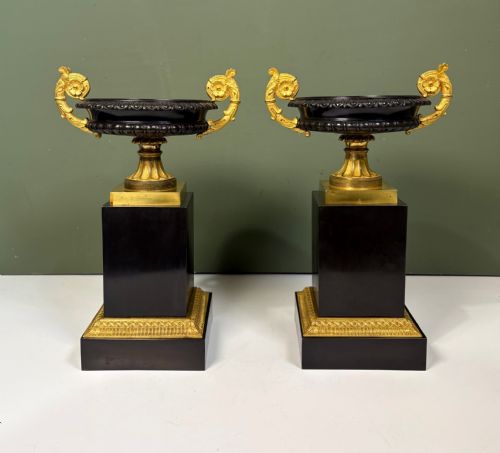


Classical Bronze Tazza
A classical bronze tazza is a low-footed ceremonial vessel of antique derivation, prized for bringing sculptural dignity and classical proportion to a room.
Classical Bronze Tazza
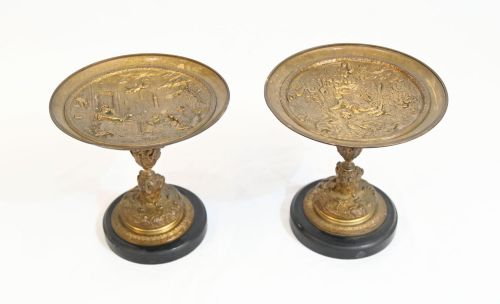
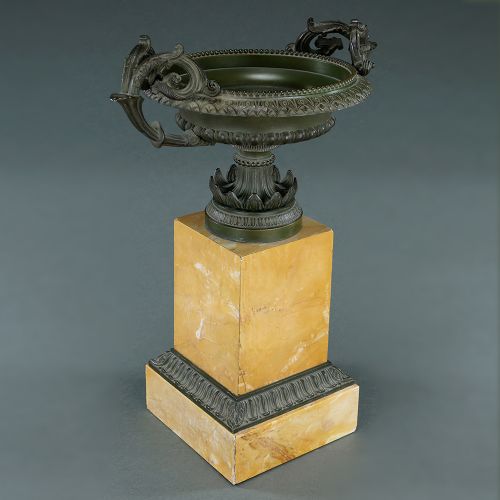
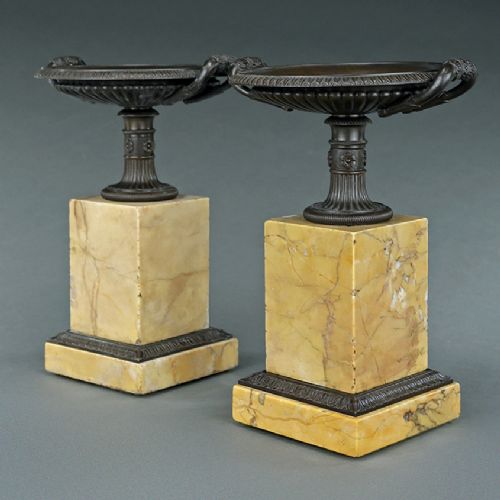
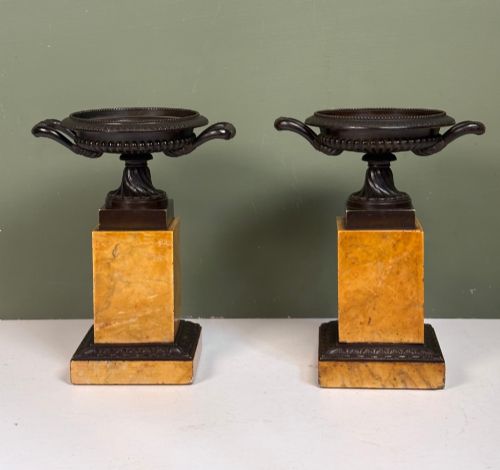
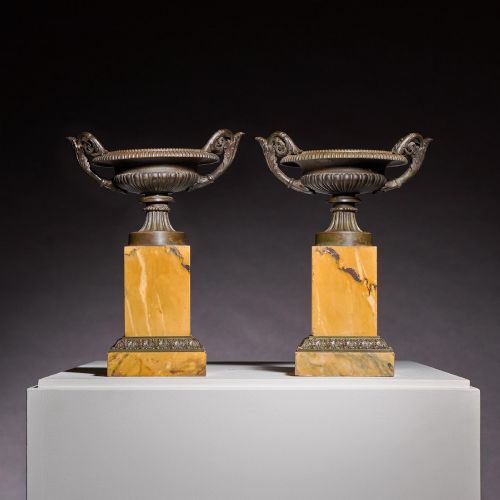
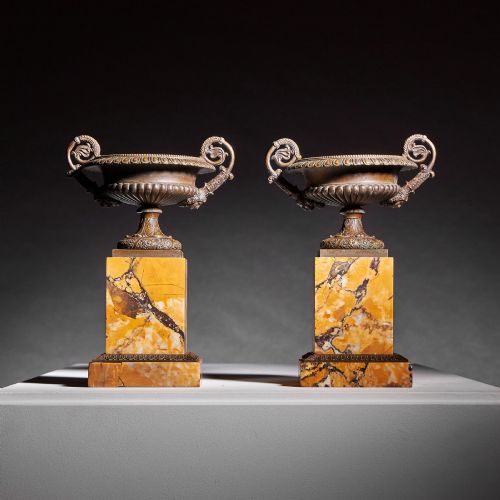
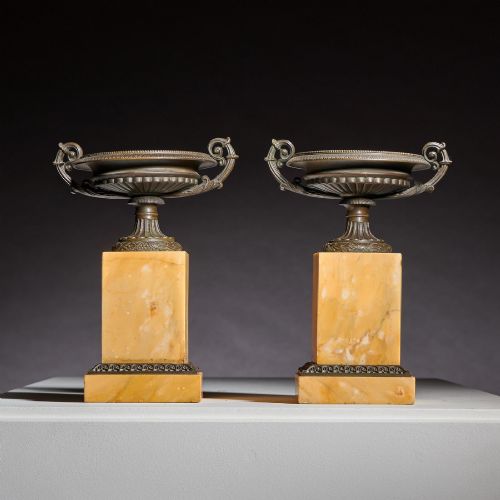
A classical bronze tazza takes the form of a shallow bowl raised on a stem and foot, drawing directly on ancient Roman and Greek vessels. You will frequently encounter pairs on this page, often paired with marble plinths or bases.
The pieces span the nineteenth century, including Regency, Victorian, and French Empire designs, alongside Grand Tour souvenirs brought back by travellers. These take the shape of decorative bowls, lidded cups, and ornamental centrepieces.
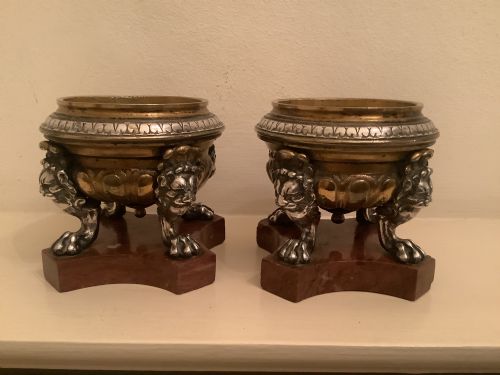
Many examples combine cast bronze with contrasting materials such as Siena marble, rouge griotte marble, or ormolu mounts. Others incorporate porcelain, enamel, and semi-precious stones like malachite and Blue John.
Materials and construction methods
Foundries utilised traditional casting methods to shape the bronze, often applying a dark patination or gilding the surface to create gilt bronze and ormolu highlights. Silver plating also appears on select nineteenth-century examples.
The stonework relies on turned marble bases, notably Siena and rouge marble, which provide substantial weight and a classical colour contrast to the metallic bowl above.
Classical Bronze Tazza Retail Price Guide 2026
Typical asking prices for classical bronze tazza among the pieces listed under this phrase on Sellingantiques today, from the lower quarter to the upper quarter. They describe what is for sale here now, not the wider market.
The selection includes Grand Tour souvenirs, library tazzas, and table centrepieces originating from French and Italian makers.
What distinguishes finer examples
Quality rests upon the crispness of the cast detail in the bronze and the articulation of classical motifs. Finer pieces demonstrate meticulous hand-finishing in the chasing of the metal.
The selection of supporting materials marks another division, with dense variegated marbles, champlevé enamel, and gilt mounts elevating an object above standard production.
The Classical Bronze Tazza Glossary
- Tazza
- A shallow bowl mounted on a stem and foot, used historically for display or serving. The plural form is tazze.
- Grand Tour
- A nineteenth-century journey through Europe undertaken by travellers collecting classical souvenirs, including bronze tazzas after the antique.
- Ormolu
- Gilt bronze produced by applying a gold amalgam to a bronze base and heating it to drive off the mercury.
- Siena Marble
- A yellow Italian marble with dark grey or purple veins, frequently utilised for nineteenth-century architectural bases.
- Champlevé
- An enamelling technique where troughs are dug into a metal surface and filled with vitreous enamel before firing.
Classical Bronze Tazza: Frequently Asked Questions
What is a classical bronze tazza?
A classical bronze tazza is a shallow decorative vessel raised on a central foot, modelled after ancient Greek and Roman forms. They were produced extensively in the nineteenth century as ornamental objects.
Creators often combined patinated bronze with marble bases, ormolu mounts, and enamel details. They serve today as decorative centrepieces on tables and mantelpieces.
How were tazzas used historically?
These vessels originated as ceremonial cups and serving dishes in antiquity, but nineteenth-century examples served purely decorative functions. Grand Tour travellers collected them as souvenirs of classical architecture and sculpture.
In period interiors, they occupied prominent positions on libraries, tables, and cabinets. Their design mirrored archaeological finds discovered during excavations in Italy and Greece.
How do I style a tazza at home?
A tazza works well as a freestanding centrepiece on a dining table, console, or library bookcase. Their sculptural silhouette allows them to stand alone without needing additional items inside the bowl.
Pairing matching pieces symmetrically on a mantelpiece draws on nineteenth-century display habits. The contrast between dark bronze and coloured marble helps anchor them visually within a room.
How can I date a nineteenth-century tazza?
Dating relies on stylistic markers associated with periods like the Regency, French Empire, and Victorian eras. Grand Tour pieces often date from the early to mid-nineteenth century, reflecting specific archaeological excavations of the time.
Material combinations also offer clues, as certain enamel techniques and marble types gained popularity during specific decades. Examining the casting quality and patination helps distinguish earlier work from later Victorian reproductions.