
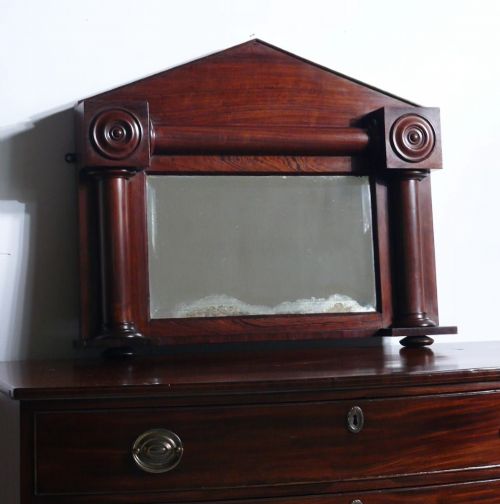


Classical Architectural Overmantel Mirror
A classical architectural overmantel mirror brings order and scale to a room, framing reflections with the balanced proportions of classical design.
Classical Architectural Overmantel Mirror
A classical architectural overmantel mirror is designed to sit directly above a fireplace mantel, drawing the eye upward with structured mouldings and formal geometry. These pieces frequently adopt styles such as Regency, Neoclassical, and French Empire, anchoring themselves visually within a room.
Buyers on this page encounter various forms, including triptych layouts, column-framed compositions, and pier mirrors. The selection spans the Georgian period through the nineteenth century, including Edwardian interpretations of earlier Regency aesthetics.
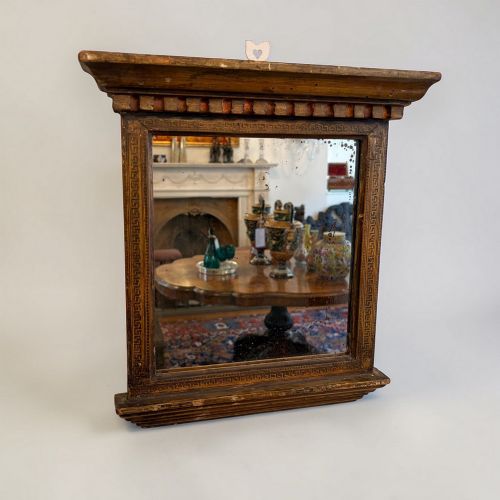
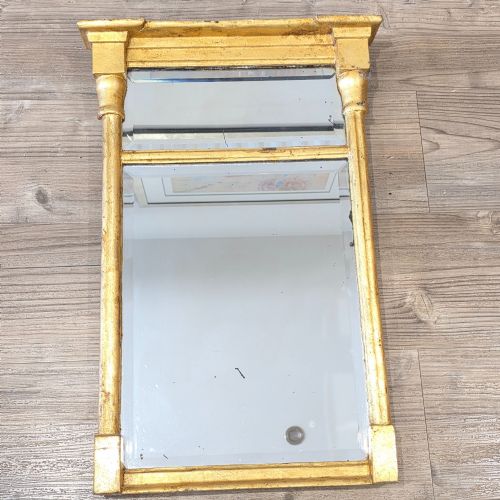
Frames rely on rectilinear proportions, often incorporating classical architectural motifs like pediments, pilasters, and friezes. The glass itself ranges from original silvered plates to later replacements housed within wood or gesso structures.
Construction and materials
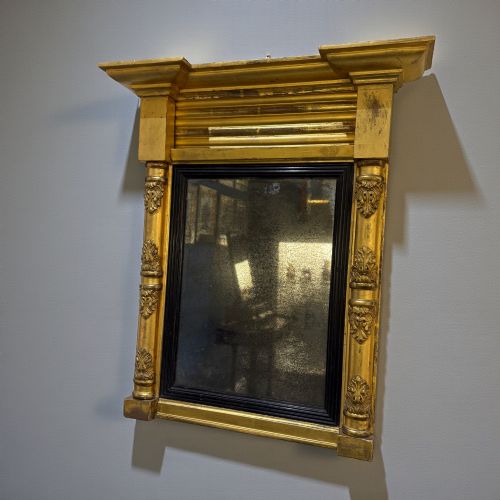
Frames are constructed from wood, including mahogany, rosewood, and birchwood, which is then carved, painted, or gilded. Giltwood and gesso application requires skilled layering of chalk and glue before gold leaf is laid down and burnished.
Composition ornament, known as compa, is frequently pressed into moulds and applied over wooden carcasses to create crisp architectural details like Vitruvian scrolls and leaf borders. This technique allows for intricate neoclassical ornamentation without the weight of deep hand carving.
Listings feature pieces spanning from the eighteenth-century Georgian era through the Victorian period, utilising giltwood, painted wood, and ebonised finishes.
Judging quality and execution
Quality rests in the crispness of the architectural carving and the depth of the gilding. Hand-carved wooden details and well-modelled gesso hold sharper edges than worn or heavy-handed restorations.
The relationship between the mirror plate and the frame dictates visual balance. Original glass plates showing soft oxidation possess a different character compared to clean modern replacements, reflecting the age of the piece.
The Classical Architectural Overmantel Mirror Glossary
- Overmantel mirror
- A large mirror specifically designed to hang on the wall directly above a fireplace mantelpiece. These pieces often repeat the width of the fireplace surround below.
- Gesso
- A plaster-like mixture applied to wood frames as a base for gilding or paint. It accepts fine carving and moulding before finishing.
- Pier mirror
- A tall, narrow mirror designed to hang on the wall space between windows. They share many stylistic traits with overmantel mirrors of the same period.
- Vitruvian scroll
- A classical running ornament composed of wave-like scrolls or wave patterns. It appears frequently on neoclassical architectural frames.
- Triptych
- A mirror plate divided into three distinct vertical sections by internal division bars or mullions. This layout broadens the visual span of the glass.
Classical Architectural Overmantel Mirror: Frequently Asked Questions
Where should an overmantel mirror hang?
These mirrors traditionally sit centrally on the wall directly above a fireplace mantel, resting on the shelf or hanging securely from brackets. Their scale is specifically proportioned to balance the hearth below.
In rooms without active fireplaces, they function equally well mounted above low console tables or sideboards to replicate the same visual weight.
How do I identify a Regency mirror?
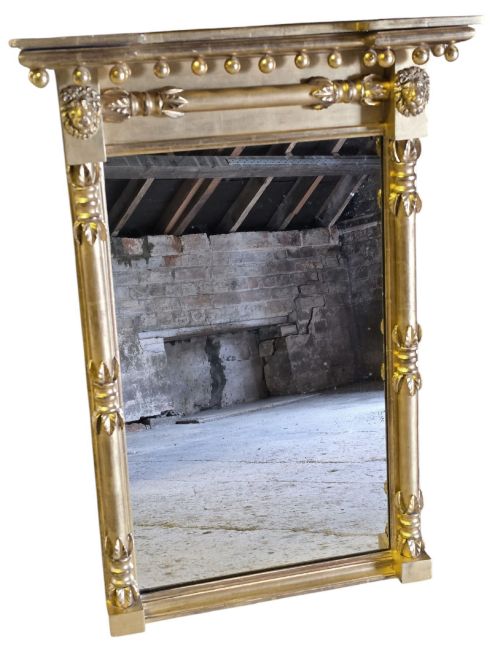
Regency frames lean heavily on classical antiquity, featuring motifs like reeded columns, ball-stud mouldings, and breakfront cornices. The wood is frequently gilded or painted to resemble bronze.
Proportions tend to be clean and architectural, avoiding the heavy ornamentation found in later Victorian revival pieces.
What is compa ornament?
Composition ornament is a mixture of whiting, resin, glue, and oil pressed into wooden moulds while hot. Craftsmen applied these flexible reliefs directly to the wooden frame before gilding.
This method enabled makers to produce intricate neoclassical details efficiently across large production runs.
Are mirror plates original?
Original mirror plates often show slight foxing, minor pitting, or uneven silvering due to age. These natural signs of wear confirm the glass has survived from the period of the frame.
Clear, blemish-free reflections usually indicate that the mirror plate has been replaced at some point in its history.