
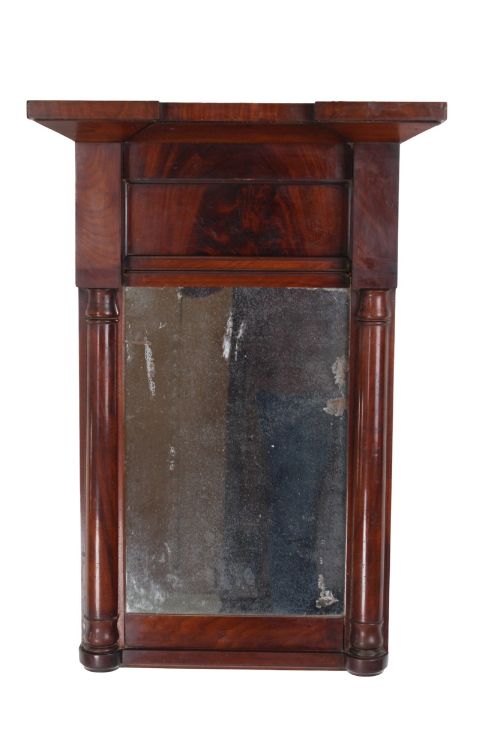
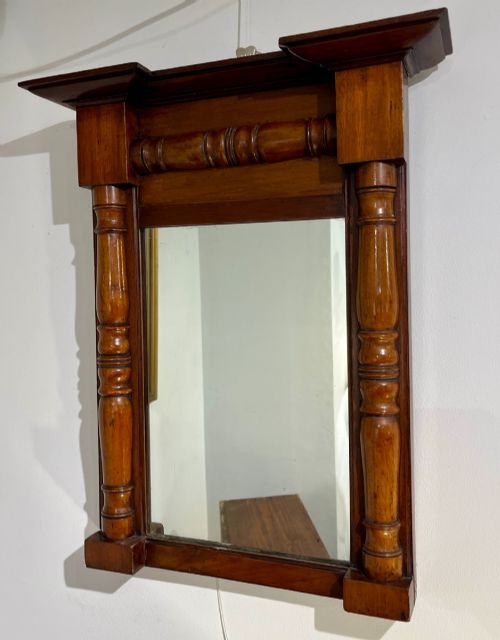
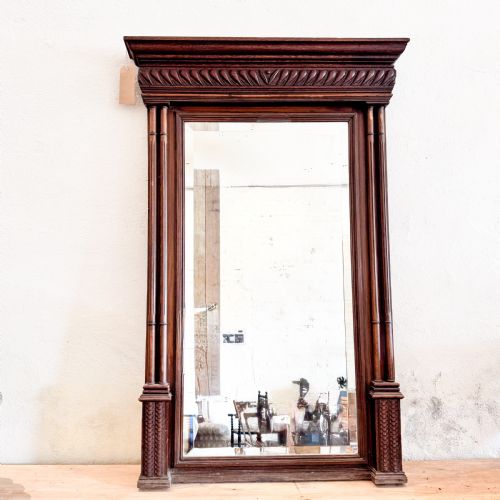


Vintage Column Frame Mirror
These vintage column frame mirror examples bring architectural weight and depth to a room through classical framing.
Vintage Column Frame Mirror
When someone searches for a vintage column frame mirror, they are looking for wall and overmantel looking glasses framed with architectural pilasters or side columns. These pieces draw on classical design traditions, giving them a structured and commanding presence on a wall.
The versions most commonly met on this page span the nineteenth century and the early twentieth century, alongside Regency and Victorian interpretations. They appear in forms such as pier mirrors, mantle mirrors, and large overmantle mirrors designed to sit above a fireplace.
Makers and cabinetmakers drew on various stylistic revivals, including French Empire, Neoclassical, and French Renaissance Revival. The resulting objects range from compact pier glasses intended for narrow wall spaces to grand, wide frames suited for principal reception rooms.
How they were made
The construction of these mirrors relies on substantial timber carcasses formed from mahogany, oak, walnut, and birds eye maple, often enhanced by flame mahogany and burr walnut veneers. These foundational woods provide the stability required to support heavy glass plates and projecting architectural mouldings.
Surface decoration frequently involves carved wood, gesso, and parcel gilt finishes applied over the frame structure. Plaster is also utilised in mouldings and tabernacle frames, while side columns are sometimes turned or carved directly from the solid timber.
Listings on this page feature mirrors constructed from mahogany, oak, walnut, and birds eye maple across the nineteenth and early twentieth centuries.
What varies in quality
The refinement of the carving on the side columns and the crispness of the gesso work separate the finer examples from simpler production. Superior pieces display deeply undercut mouldings and carefully balanced proportions that make the architectural framing appear intentional rather than applied.
The choice of timber and veneer figure dictates much of the visual character, with selected burr walnut and flame mahogany showing distinct grain patterns across the primary surfaces. Parcel gilt highlights and original mirror plates further elevate an object, showing the care taken by the original maker.
The Vintage Column Frame Mirror Glossary
- Pier mirror
- A tall, narrow looking glass designed to hang on the wall between two windows, often reflecting light into darker spaces.
- Overmantel mirror
- A wide looking glass proportioned to sit directly above a mantelpiece or fireplace surround.
- Gesso
- A plaster-based mixture applied to wood frames and carved or smoothed to receive paint or gilding.
- Pilaster
- A rectangular column that projects slightly from the wall or frame surface, functioning as a classical architectural support.
- Parcel gilt
- A surface treatment where only specific carved details or mouldings are highlighted with gold leaf.
Vintage Column Frame Mirror: Frequently Asked Questions
Where should I hang a column frame mirror?
These mirrors suit locations where their architectural lines can command the space, such as above a sideboard, mantelpiece, or in a hallway.
Because many examples are substantial in weight, ensure the wall fixings are secured directly into studs or masonry.
How do I identify the period of these mirrors?
Dating relies on examining the underlying timbers, construction joints, and stylistic motifs such as Neoclassical or Victorian Classical details.
Turned columns and veneer choices like flame mahogany or burr walnut also offer clear indicators of nineteenth-century or early twentieth-century manufacture.
Are the mirror plates original?
Older looking glasses frequently retain their original silvered plates, which can display characteristic oxidation, speckling, or foxing.
Such ageing indicates age and authenticity, distinguishing period glass from modern replacements.
What is a tabernacle frame?
A tabernacle frame is an architectural picture or mirror frame styled after a classical temple or tabernacle, featuring side columns and a distinct cornice.
This form adds strong vertical emphasis and a sense of antiquity to the piece.