
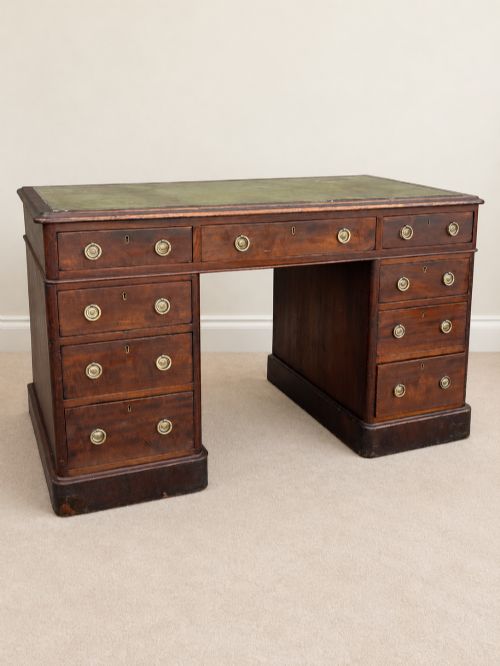
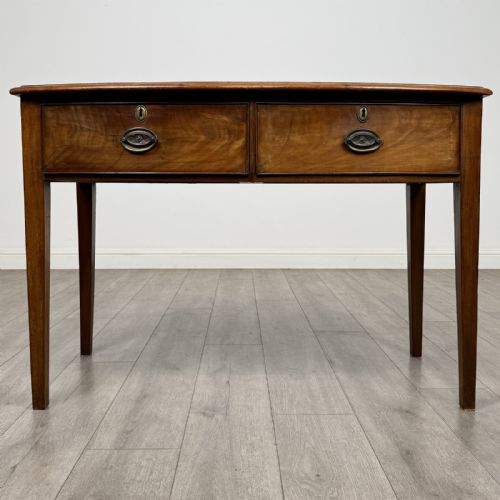
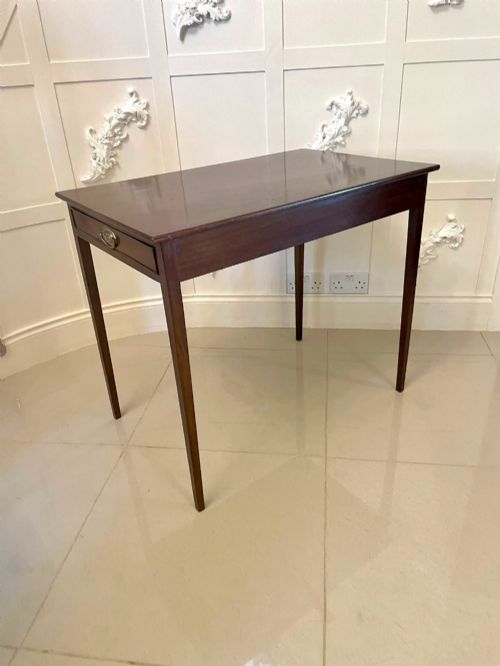
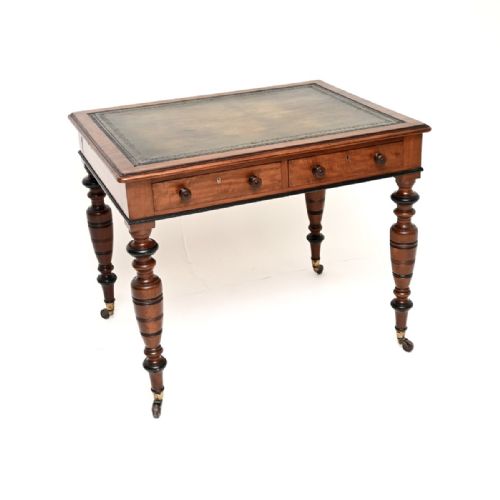


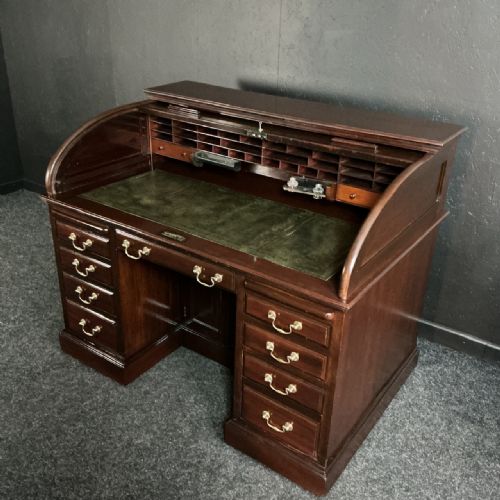


Classic Writing Table
A classic writing table brings enduring form and function to a room, offering a dedicated surface for correspondence that anchors a study.
Classic Writing Table
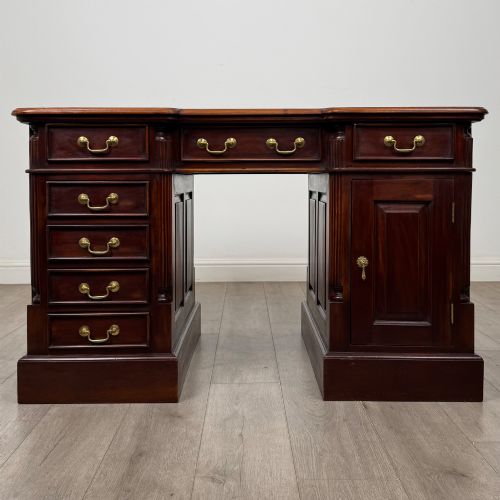
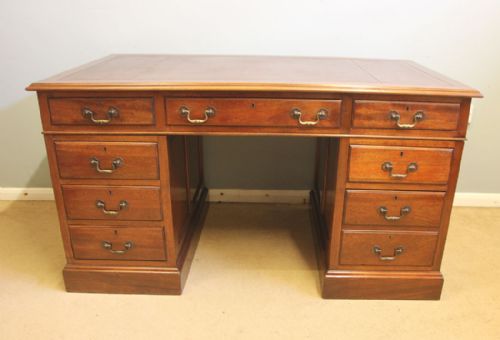
A classic writing table encompasses a variety of practical forms designed for study and administration, ranging from pedestal desks to compact writing tables. Buyers exploring this category frequently encounter pieces dating from the Victorian and Edwardian eras, alongside Georgian designs and later revivals.
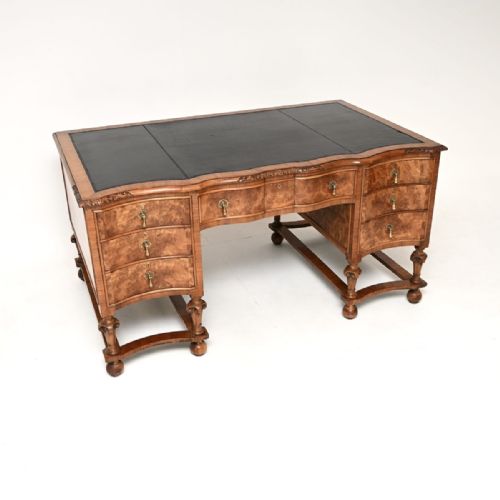
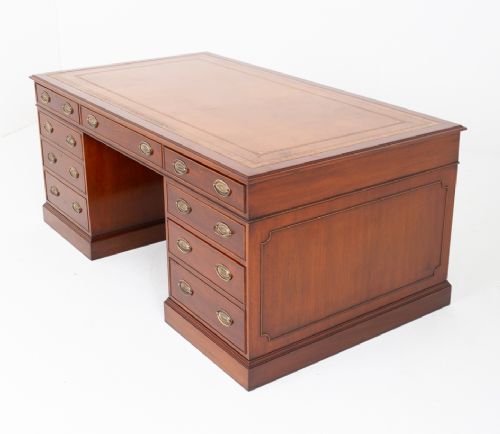
The selection includes substantial partners desks, pedestal desks with multiple drawers, and occasional writing tables featuring leather inserts or crossbanded surfaces. These items originate from workshops active during the nineteenth and early twentieth centuries, as well as revival periods spanning into the nineteen-twenties.
Materials and Construction
Makers utilised dense timbers such as mahogany, burr walnut, and rosewood, often applying flame mahogany veneer or boxwood inlay to create decorative surfaces. Structural elements frequently incorporated brass hardware, ormolu mounts, and inset leather writing panels.
Joinery techniques relied on solid timber construction for frames and drawers, supporting the weight of heavy books and writing materials. Cabinetmakers combined figured wood veneers with contrasting crossbanding to accentuate the proportions of each desk.
Mahogany is the predominant timber across these listings, appearing alongside burr walnut, rosewood, and golden oak.
Distinctions in Execution
The distinction between standard examples and superior pieces rests on the choice of timber and the precision of the cabinetwork. Finer writing tables display carefully selected flame mahogany or burr walnut veneers that match symmetrically across the surface.
Execution of secondary details, such as boxwood inlay, hand-tooled leather writing surfaces, and cast brass handles, separates baseline furniture from workshop pieces attributed to known makers.
Maple and Co·James Mein Kelso
The Classic Writing Table Glossary
- Partners desk
- A large double-sided desk designed for two people to work opposite one another, featuring drawers on both faces. These pieces were standard in institutional and large domestic libraries.
- Sofa table
- A rectangular occasional table traditionally placed in front of a sofa, featuring drop leaves on either end. The form often includes two small drawers.
- Crossbanding
- A strip of veneer applied perpendicularly to the grain of the main surface, creating a decorative border. This technique frames panels of figured timber.
- Ormolu
- Gilded bronze mounts applied to furniture for decorative effect, common on French-influenced writing tables. The technique requires mercury gilding or modern electroplating.
Classic Writing Table: Frequently Asked Questions
What is a classic writing table?
A classic writing table is a dedicated wooden desk designed for correspondence and administrative tasks, usually featuring a finished top and storage drawers.
These pieces emerged in various forms across the Georgian, Victorian, and Edwardian periods, prioritising both utility and proportion.
How do I identify a Victorian desk?
Victorian desks are typically constructed from solid mahogany or walnut, often featuring pedestal configurations with multiple small drawers and brass pulls.
They display the heavier proportions and robust joinery characteristic of nineteenth-century British cabinetmaking.
What is a partners desk?
A partners desk is a large pedestal desk with drawer storage accessible from both sides, designed so two people could work face-to-face.
These desks were traditionally utilised in libraries, studies, and administrative offices by business associates.
How do I care for a leather desk top?
Leather desk tops require gentle cleaning with a damp cloth and occasional treatment with appropriate leather dressings to prevent drying.
Avoid excessive moisture and direct sunlight to preserve the gilt tooling and supple texture of the hide.