



Classic River Landscape Painting
A classic river landscape painting brings the quiet movement of water and open skies directly into a room, offering a timeless window onto pastoral calm.
Classic River Landscape Painting
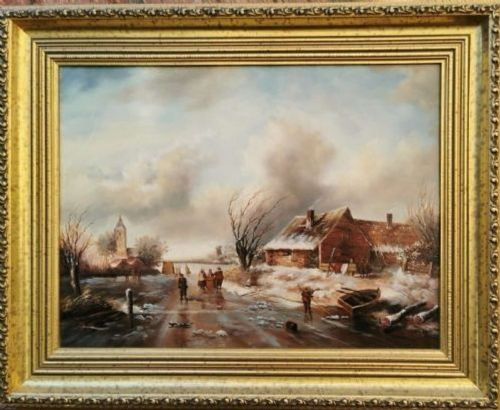
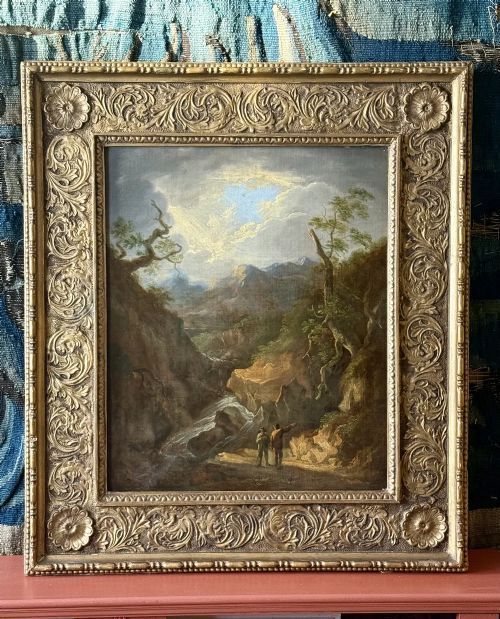
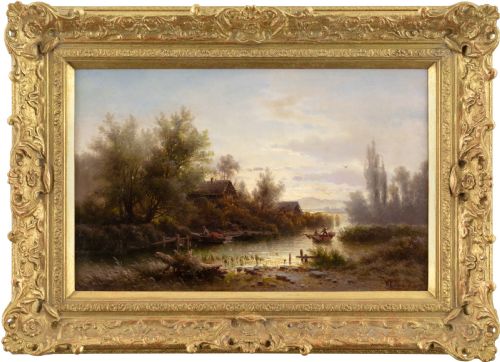
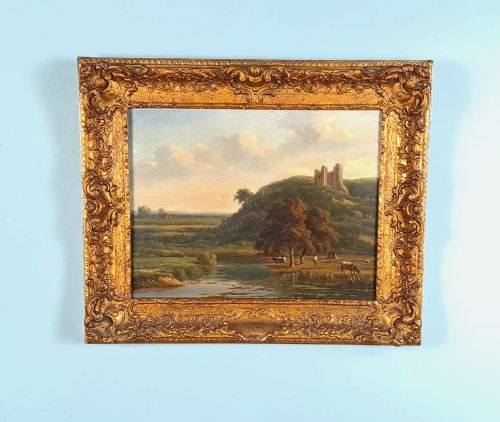
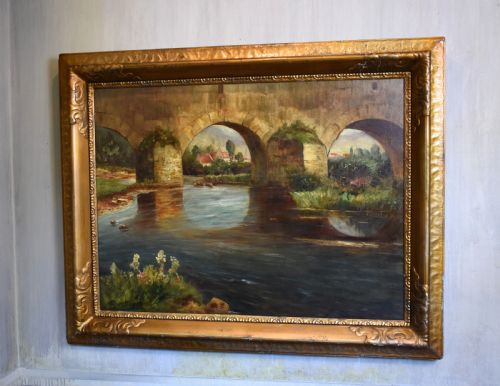
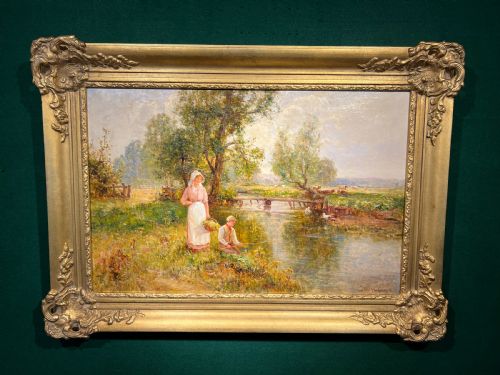
A classic river landscape painting captures pastoral waterways, winding banks, and rural scenery across centuries of artistic tradition. These works range from seventeenth-century Dutch school compositions to Victorian and Edwardian depictions of British and European riverways.
The pieces on this page are most frequently nineteenth-century oil paintings on canvas or board, often housed in period giltwood frames. Collectors encounter everything from expansive Welsh river views to intimate woodland streams rendered with realist or pastoral sensibilities.
Materials and Technique
Artists relied primarily on oil paint applied to stretched canvas or wooden panels, building rich textures and subtle light effects across the water and sky. Pigments were worked with brushes and sometimes palette knives to create depth in foliage and river surfaces.
Frames form an integral part of these works, typically constructed from wood with applied gesso and heavy gilding. Gilt frames enhanced the perceived light within the canvas and provided a formal architectural boundary for the domestic interior.
Geese frequently inhabit the water alongside grazing cattle, proving that nineteenth-century artists understood that no river scene is complete without stubborn waterfowl.
Factors That Distinguish Quality
Quality rests heavily on the confidence of the brushwork and the artist's ability to manage atmospheric perspective across water and distant hills. Finer works display sophisticated handling of light reflections and river currents rather than rigid or formulaic composition.
The integrity of the original canvas, the subtlety of the palette, and the preservation of the giltwood frame elevate an individual piece. Works retaining their period frames and untouched paint surfaces represent the upper echelon of surviving examples.
Albert Rieger·T C Hofland·William Mellor·Walter J Watson·Benjamin Williams Leader·Peter Deakin·John Wright Oakes·Franz Reder-Broili·William Stephen Coleman·James Poole·Sir David Murray
The Classic River Landscape Painting Glossary
- Oil on Canvas
- A traditional painting technique where oil-based pigments are applied to a woven fabric support stretched over a wooden frame. This medium allowed artists to blend tones smoothly and build rich impasto layers.
- Gesso
- A plaster-like mixture applied to wooden frames as a smooth base before gilding with gold leaf or metallic paint. It creates the crisp relief details seen on period frames.
- Dutch Golden Age
- A period in seventeenth-century art characterised by naturalistic depictions of landscape and everyday life. Works from this tradition often feature meticulous attention to atmospheric sky and water.
- Victorian Pastoral
- A nineteenth-century artistic style focusing on idealized, peaceful rural and river scenes. These paintings emphasise harmony between human figures, livestock, and the natural waterway.
Classic River Landscape Painting: Frequently Asked Questions
How do I hang a heavy oil painting safely?
Heavy oil paintings require sturdy picture hooks fixed directly into wall studs or masonry using appropriate wall plugs. The weight of the canvas and gilt frame demands robust hardware to prevent slippage over time.
Ensure the hanging wire or brass rings on the back of the frame match the weight distribution of the piece. Professional framing hooks distribute the load evenly across the structure of the wall.
Where should I place a landscape in my home?
River landscapes suit living rooms, studies, or hallways where natural light can illuminate the details of the canvas. Placing them away from direct sunlight protects the oil pigments and the gilded frame from fading.
Keep paintings away from active heat sources such as radiators or open fires. Constant temperature fluctuations cause wood panels and canvases to expand and contract, risking damage to the paint surface.
What is the difference between oil on canvas and oil on board?
Oil on canvas involves stretching woven textile across a wooden stretcher frame, offering slight flexibility and a visible fabric texture beneath the paint. Artists favoured canvas for larger works that needed durability and tension.
Oil on board uses a rigid wooden panel or stiff card as the painting support, eliminating canvas weave entirely. Board supports often indicate smaller studies or plein-air sketches painted outdoors.