

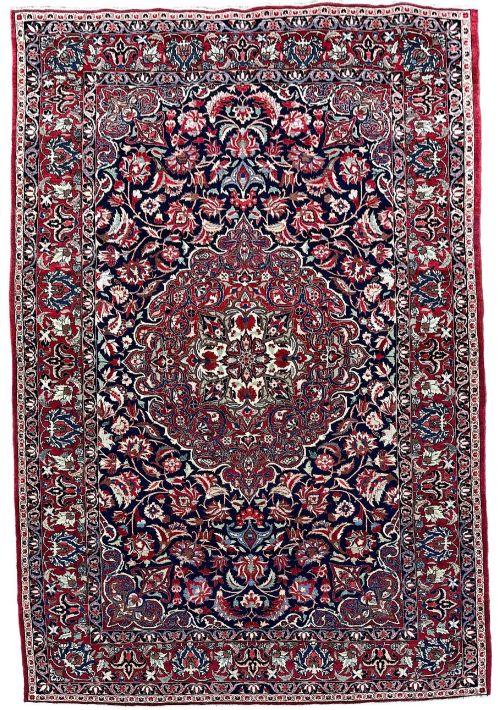
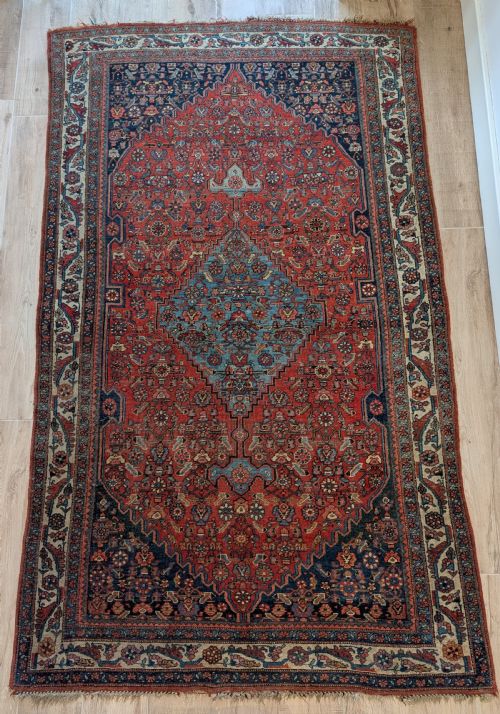
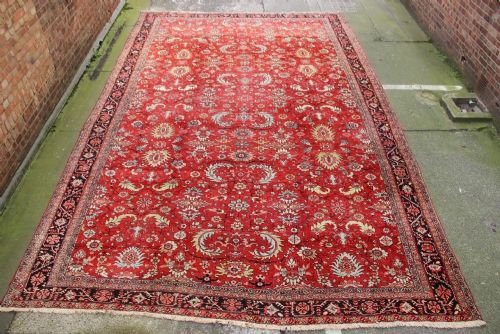
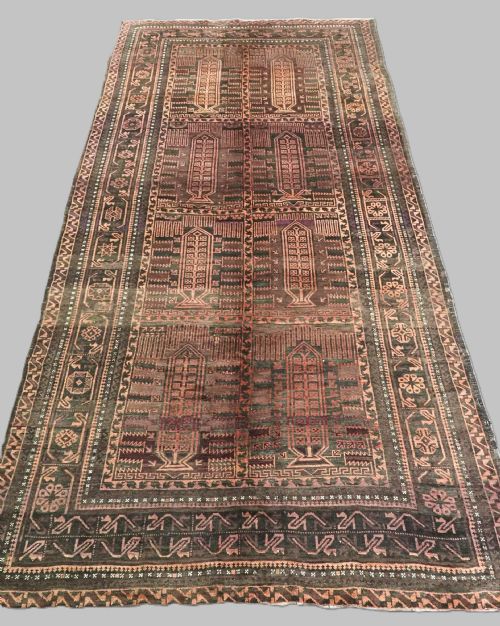
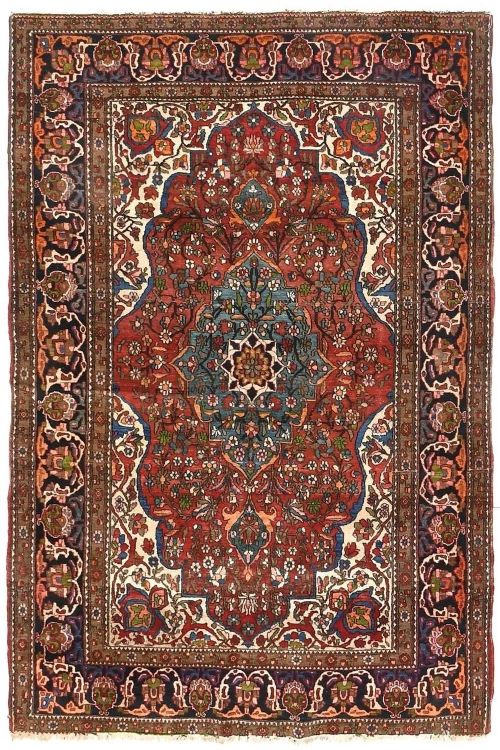
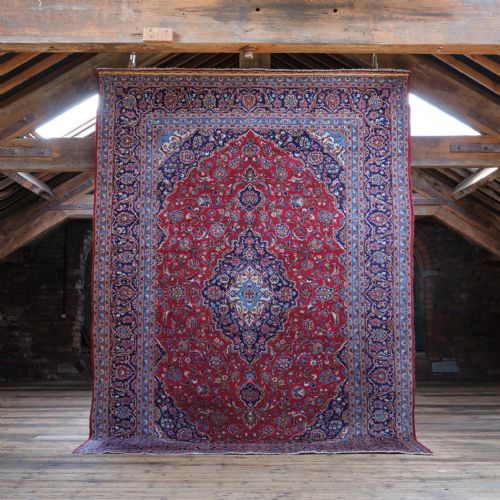
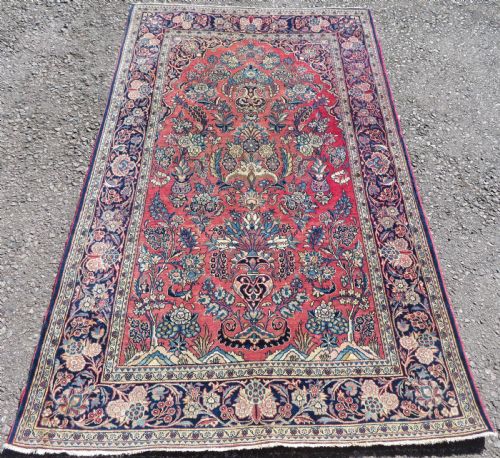


Classic Persian Wool Rug
A classic persian wool rug brings centuries of woven artistry into a room, offering rich botanical motifs and enduring tactile warmth.
Classic Persian Wool Rug
When searching for a classic persian wool rug, buyers encounter hand-knotted floor coverings originating from renowned weaving centres such as Heriz, Isfahan, Kashan, and Tabriz, alongside nomadic tribal pieces.
The inventory on this page spans the late nineteenth century through to the mid-twentieth century, encompassing grand room-size carpets, balanced medallion designs, and smaller village or nomadic rugs.
Most pieces meet here as room-size carpets or manageable area rugs, employing traditional motifs handed down through generations of weavers.
Materials and construction
These carpets rely on wool foundations and pile, often combined with cotton for warp and weft threads to maintain structural stability.
Weavers utilised natural dyes derived from plants and minerals, resulting in deep, saturated colours that mellow gracefully over decades of use.
Each rug is hand-knotted by skilled artisans, incorporating sturdy materials like goat hair in specific tribal pieces to reinforce selvedges.
Classic Persian Wool Rug Retail Price Guide 2026
Typical asking prices for classic persian wool rug among the pieces listed under this phrase on Sellingantiques today, from the lower quarter to the upper quarter. They describe what is for sale here now, not the wider market.
Listings feature pieces dated from 1870 through to 1940, incorporating regional styles from Heriz, Tabriz, Isfahan, Kashan, and various tribal workshops.
Distinctions in quality
Knot density and precision of the design determine the fidelity of the intricate floral or geometric patterns executed across the field.
The depth and complexity of the natural dye palette separate standard village weaving from finer city workshops where master designers planned the composition.
Overall survival of the original pile and structural integrity of the foundation dictate the lasting calibre of an antique carpet.
The Classic Persian Wool Rug Glossary
- Medallion
- A central ornamental design motif placed in the middle of the rug field. It forms the focal point for traditional symmetrical layouts.
- Warp
- The stationary vertical threads stretched tightly on the loom before knotting begins. Weft threads pass across these to secure the knots.
- Weft
- The horizontal threads passed through the warp threads after each row of knots. They pack down tightly to hold the pile in place.
- Selvedge
- The reinforced side edges of a rug finished to prevent fraying. Traditional examples often wrap these edges in wool or goat hair.
- Natural Dyes
- Colourants sourced from plants, insects, and minerals prior to the invention of synthetic alternatives. They yield nuanced, harmonious tones.
Classic Persian Wool Rug: Frequently Asked Questions
How do I choose the right size?
Consider the proportions of your furniture arrangement, ensuring the rug either anchors the entire seating group or sits comfortably beneath a central table.
Measure your floor space carefully, leaving a uniform border of exposed timber or stone around the perimeter of the room.
Are these rugs suitable for high-traffic areas?
Traditional construction methods using resilient wool pile make these floor coverings exceptionally durable for daily household use.
Regular rotation and gentle vacuuming help distribute foot traffic evenly across the surface over the years.
How do I identify different regional styles?
Look for distinct design characteristics, such as the bold geometric geometry of Heriz carpets or the refined floral medallions found in Isfahan and Kashan work.
Tribal pieces like Baluch or Qashqai rugs often display more spontaneous layouts and earthy palettes tied to nomadic traditions.
How should I care for an antique carpet?
Keep the piece away from direct, prolonged sunlight to protect the natural dyes from fading prematurely.
Use a professional specialist familiar with antique textiles for cleaning rather than standard domestic methods.