

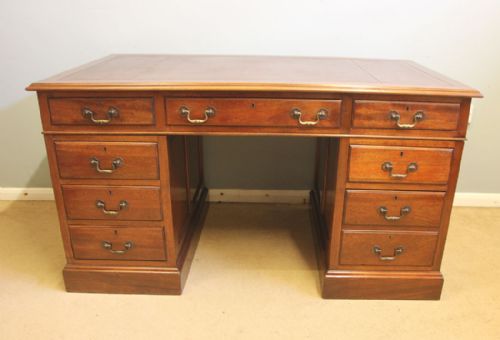


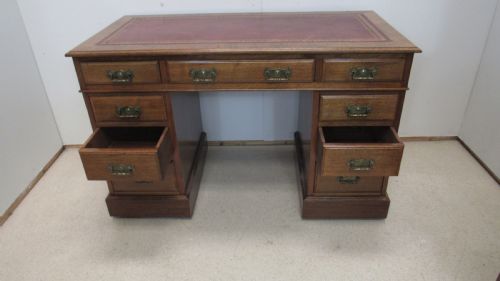
Classic Pedestal Writing Desk
A classic pedestal writing desk anchors a room with dignity, offering twin banks of drawers beneath a generous writing surface.
Classic Pedestal Writing Desk
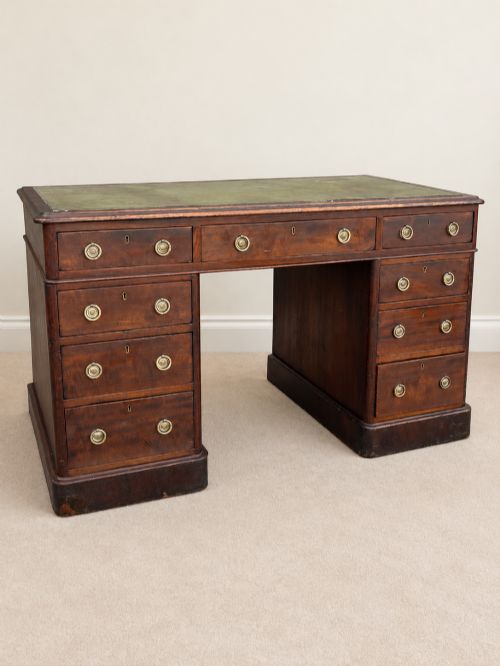
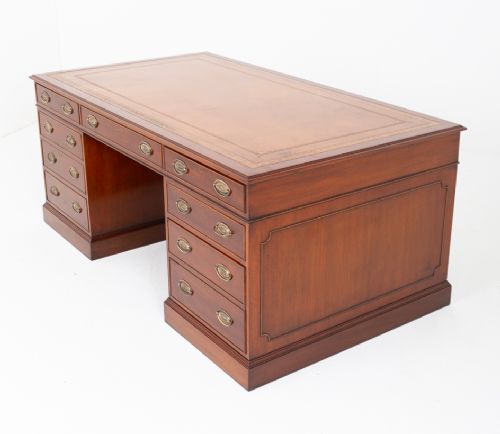
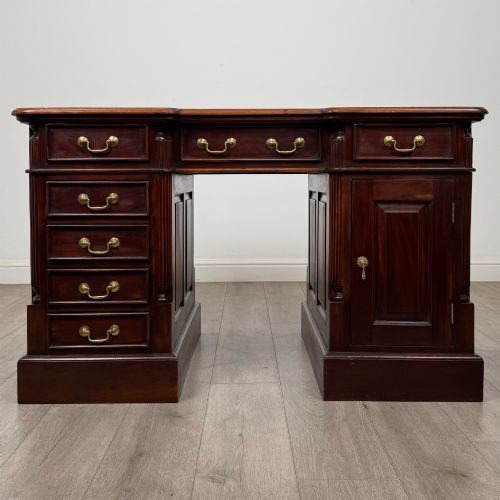
A classic pedestal writing desk consists of a rectangular top resting on two separate pedestals, creating a central kneehole for the seated writer. These pieces range from compact kneehole variants to larger partner desks designed for two users facing each other.
The versions most commonly found here date from the Victorian and Edwardian eras, alongside revival styles that emulate earlier Georgian craftsmanship. Mahogany is the predominant timber, though walnut, burr walnut, and oak also appear across the selection.
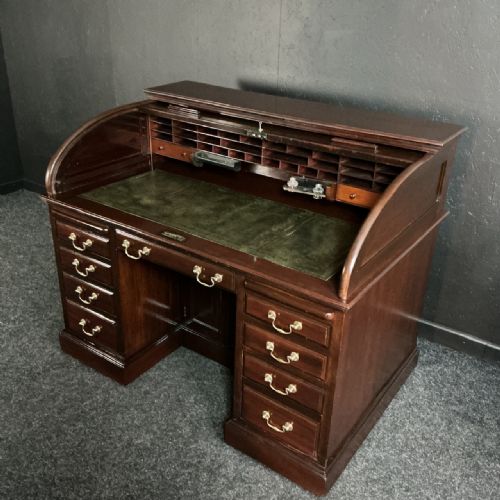
Makers such as Maple and Co contributed to this tradition, producing substantial pieces with fitted writing surfaces. Buyers encounter both straightforward utilitarian desks and grander iterations featuring tambour shutters or ormolu mounts.
Materials and construction methods
Timbers like solid and veneered mahogany form the primary structure of these desks, frequently enhanced by contrasting satinwood or burr walnut figure. Cabinetmakers constructed the pedestals as distinct carcases to support the heavy loads of books and papers.
Writing surfaces are traditionally lined with inset leather, often tooled with gold leaf to provide a smooth, durable plane for correspondence. Brass hardware, including handles and key escutcheons, provides functional detailing across the drawers.
Tambour mechanisms in roll-top variants employ narrow strips of wood glued to a fabric backing to slide smoothly along curved grooves. Ormolu mounts applied to French examples introduce cast bronze details fixed securely to the timber frame.
Classic Pedestal Writing Desk Retail Price Guide 2026
Typical asking prices for classic pedestal writing desk among the pieces listed under this phrase on Sellingantiques today, from the lower quarter to the upper quarter. They describe what is for sale here now, not the wider market.
One listed desk spent its prior years residing on the Elveden Estate.
Factors of distinction
The quality of a classic pedestal writing desk lies in the selection of timber veneers and the crispness of the secondary wood framing within the drawers. Grain matching across the drawer fronts and pedestals demonstrates the cabinetmaker's intent.
Proportions dictate visual balance, with superior examples exhibiting harmonious drawer depths and neat corner joints that endure decades of daily use. Original leather writing inserts and functioning brass locks with matching keys elevate the standing of a piece.
Subtleties in secondary detailing, such as finely turned knobs or hand-cut dovetails joining the drawer sides, separate standard utility furniture from finer workshop output.
Maple and Co
The Classic Pedestal Writing Desk Glossary
- Pedestal desk
- A freestanding office table with two supporting columns of drawers flanking a central kneehole space. This form became the standard executive desk format during the nineteenth century.
- Partners desk
- A large double-sided desk designed for two people to work opposite one another, featuring drawers and cupboards on both faces. These are deeper than standard single-sided pedestal desks.
- Tambour
- A flexible sliding shutter formed of narrow vertical strips of wood attached to canvas, allowing a desk top to roll shut. It encloses the pigeonholes and small drawers above the main writing surface.
- Ormolu
- Gilt bronze ornamentation applied to furniture, often seen on continental or high-status nineteenth-century pieces. The technique involves coating cast bronze with a mercury and gold amalgam before firing.
- Kneehole
- The recessed central space beneath the desk top where the chair sits. In breakfront examples, this section projects forward from the flanking pedestals.
Classic Pedestal Writing Desk: Frequently Asked Questions
How do I care for the leather top?
Apply a neutral leather balm periodically to keep the hide supple and prevent cracking from dry air or sunlight.
Avoid using harsh chemical cleaning agents or excessive water near the gold tooling to preserve the surface finish.
Can these desks be dismantled for moving?
Most pedestal desks separate into three distinct sections: the two under-desk pedestals and the top slab. Removing the interior drawers reduces weight before lifting.
Secure any loose internal components and protect the moulded edges with padded blankets during transport.
What is the difference between a partner desk and a standard desk?
Standard pedestal desks feature drawers on one side only, with a finished or panelled back intended to face a wall. Partner desks provide functional drawer and cupboard storage on both operating sides.
This double-sided arrangement requires a larger floor area in the centre of a room.
How do I distinguish Victorian from Edwardian examples?
Victorian desks generally display heavier proportions, darker finishes, and dense mahogany timbers with robust brass hardware. Edwardian pieces often exhibit lighter wood tones, satinwood banding, and Sheraton revival influences.
Construction techniques also shift subtly toward lighter framing in the later period.