

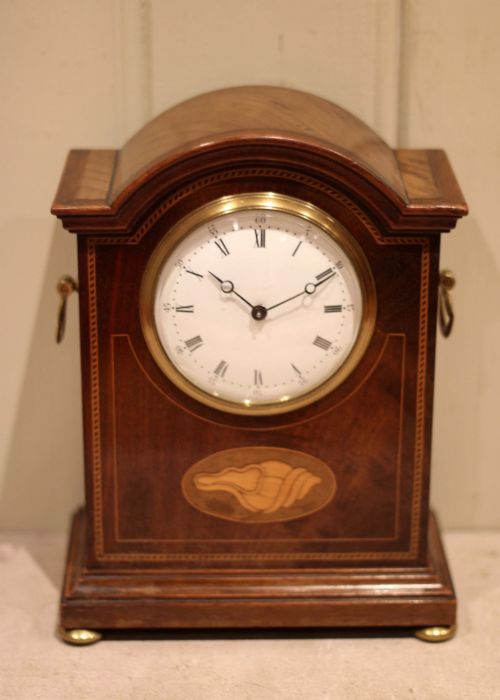


Classic Mechanical Mantel Clock
These classic mechanical mantel clock pieces span Georgian style to Mid-Century Modern, offering precision timekeeping alongside traditional materials.
Classic Mechanical Mantel Clock
A classic mechanical mantel clock brings together centuries of horological design, ranging from early nineteenth century bracket clocks to mid twentieth century Atmos models. Buyers examining this category encounter various forms including carriage clocks, table clocks, and traditional mantel timepieces housed in wooden or metallic cases.
Most items serve both a practical function and a decorative purpose, designed to sit neatly upon a mantelpiece, shelf, or table. The physical presence of each object is defined by its specific housing, whether that involves inlaid mahogany, polished brass, or glass panels.
Materials and construction
Traditional examples rely heavily on dense hardwoods such as mahogany and oak, often enhanced with satinwood inlay or brass fittings. Enamel dials provide a clear surface for numerals, while glass panels protect the delicate internal movements from dust.
Metals play a central role in both the exterior cases and the internal mechanics, utilising brass, gilt brass, and rhodium plating. Lucite and glass feature in later twentieth century designs, offering transparency that highlights the intricate workings inside.
Classic Mechanical Mantel Clock Retail Price Guide 2026
Typical asking prices for classic mechanical mantel clock among the pieces listed under this phrase on Sellingantiques today, from the lower quarter to the upper quarter. They describe what is for sale here now, not the wider market.
Materials utilised in these pieces include brass, mahogany, glass, enamel, oak, and lucite.
Assessing quality
Quality in these timepieces rests upon the precision of the mechanical movement and the integrity of the materials used in the case. Items featuring twin fusee movements or specialised mechanisms like the Atmos system demonstrate superior engineering compared to standard timepieces.
The refinement of the exterior decoration, from detailed brass engraving to carefully fitted wood veneers, distinguishes finer examples. Preservation of original components and overall condition further separates standard production pieces from higher grade specimens.
DeLa Salle And Christie·Jaeger Le Coultre
The Classic Mechanical Mantel Clock Glossary
- Twin Fusee
- A clock movement mechanism utilising a fusee cone and chain for each train, designed to equalise the force of the mainspring as it unwinds. This system helps maintain consistent timekeeping accuracy throughout the power reserve.
- Carriage Clock
- A portable spring-driven clock designed for travel, typically featuring a brass frame with glass panels and a swing handle on top. They originated in France during the nineteenth century.
- Bracket Clock
- A shelf or table clock traditionally placed upon a matching wall bracket. These pieces often feature chiming mechanisms and substantial wooden cases.
- Atmos Clock
- A mechanical timepiece manufactured by Jaeger-LeCoultre that is powered by subtle temperature fluctuations in the ambient air. It requires no manual winding.
- Timepiece
- A clock that indicates the time of day but lacks any striking or chiming mechanism. They are simpler in construction than full striking clocks.
Classic Mechanical Mantel Clock: Frequently Asked Questions
How do Atmos clocks work without winding?
An Atmos clock operates using a hermetically sealed capsule containing a gas and liquid mixture that expands and contracts with temperature changes. This continuous expansion winds the mainspring automatically.
Because the mechanism requires only minuscule temperature variations to function, it continues running indefinitely without human intervention.
Where should I place a mantel clock?
These clocks find their traditional home on a mantelpiece, shelf, or sideboard where they can be viewed easily. A stable, level surface is essential for mechanical clocks to maintain proper balance and accurate beat.
Avoid placing them in areas subject to direct sunlight, excessive moisture, or heavy vibrations that might disturb the delicate internal components.
How do I distinguish a carriage clock from a bracket clock?
A carriage clock is typically smaller, constructed from brass and glass with a carrying handle on top, designed for portability. A bracket clock is usually larger, housed in a substantial wooden case made of mahogany or oak.
Bracket clocks often include complex chiming systems, whereas carriage clocks focus on compact mechanical portability.
What periods do these clocks cover?
The available timepieces span multiple historical eras, starting from Regency and nineteenth century pieces through Victorian and Edwardian examples. Mid-century design is also represented by items from the 1950s and 1960s.
Each period brings distinct stylistic choices, shifting from ornate wooden inlays to clean metallic lines.