

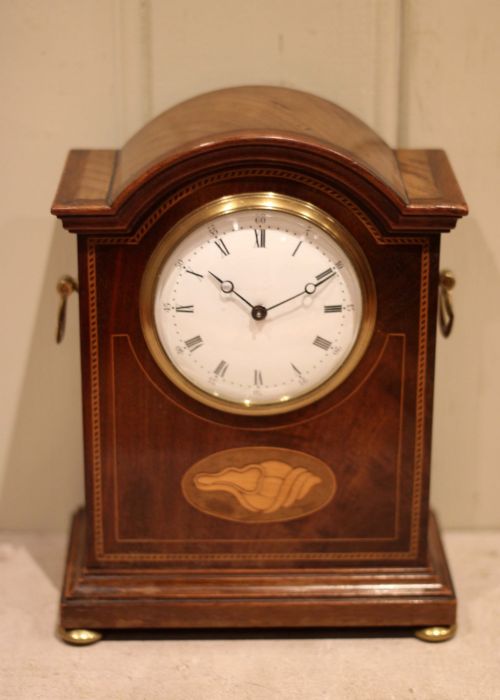


Classic Mechanical Clock
These classic mechanical clock pieces bring traditional timekeeping and fine craftsmanship into your room.
Classic Mechanical Clock
A classic mechanical clock brings traditional timekeeping into a room, spanning periods from the Regency era through the Victorian and Edwardian years to mid-century designs. You encounter mantel clocks, carriage clocks, and bracket clocks housed in timber, brass, and glass.
The versions you are most likely to meet on this page include mahogany mantel clocks from the Edwardian period and brass carriage clocks from the Victorian era. Swiss Atmos clocks from the nineteen-fifties and nineteen-sixties also appear frequently.
Makers such as DeLa Salle And Christie and Jaeger Le Coultre represent the higher end of the selection, while English and French origins dominate the geographical spread. Each piece demonstrates the specific style of its decade, whether French Classical or Mid-Century Modern.
What varies in quality
The choice of materials dictates much of the distinction between pieces, with solid mahogany cases and fire-gilt or rhodium-plated brass standing apart from simpler constructions. The presence of satinwood inlay or intricate engraving adds refinement to the exterior.
Movement complexity marks the separation between standard timepieces and superior examples, particularly twin fusee mechanisms and Atmos systems powered by atmospheric pressure changes. The reputation of the maker, such as London firms or Swiss houses, further elevates the standing of a clock.
Classic Mechanical Clock Retail Price Guide 2026
Typical asking prices for classic mechanical clock among the pieces listed under this phrase on Sellingantiques today, from the lower quarter to the upper quarter. They describe what is for sale here now, not the wider market.
Atmos clocks breathe with the weather, feeding on room temperature shifts to keep ticking without a single turn of a key.
DeLa Salle And Christie·Jaeger Le Coultre
The Classic Mechanical Clock Glossary
- Carriage clock
- A portable mechanical clock designed for travel, typically featuring a brass case with glass panels and a swing handle on top.
- Bracket clock
- A traditional shelf or table clock, historically placed upon a matching wall bracket, often housing a chiming movement within a wooden case.
- Twin fusee
- A mechanical clock movement utilising two conical pulleys and chains to equalise the force of the mainspring as it unwinds, ensuring accurate timekeeping.
- Atmos clock
- A mechanical timepiece manufactured by Jaeger Le Coultre that is powered by minute changes in temperature and atmospheric pressure, requiring no manual winding.
- Timepiece
- A clock that indicates the time without striking hours or playing chimes.
Classic Mechanical Clock: Frequently Asked Questions
How do I wind a mechanical clock?
Most traditional mechanical clocks require a key inserted into the dial to tension the mainspring at regular intervals.
Some models, such as Atmos clocks, operate automatically using changes in atmospheric temperature and need no manual winding.
Where should I place a carriage clock?
Carriage clocks suit stable surfaces on mantelpieces, desks, or tables where their glass panels can be admired safely.
Keep them away from direct sunlight and areas prone to heavy vibration to protect the internal escapement.
What is a fusee movement?
A fusee is a conical pulley connected to the mainspring by a chain, designed to maintain even power delivery as the spring relaxes.
This mechanism helps the clock maintain consistent accuracy throughout its running cycle.
How do I identify an Edwardian clock?
Edwardian clocks often feature mahogany cases with delicate satinwood inlay, reflecting the decorative tastes of the early twentieth century.
Makers of this period frequently produced straightforward timepiece mantel clocks alongside chiming bracket models.