


Classic Figurative Canvas Art
Classic figurative canvas art brings human presence and historic narrative into a room through oil paint applied to woven fabric.
Classic Figurative Canvas Art
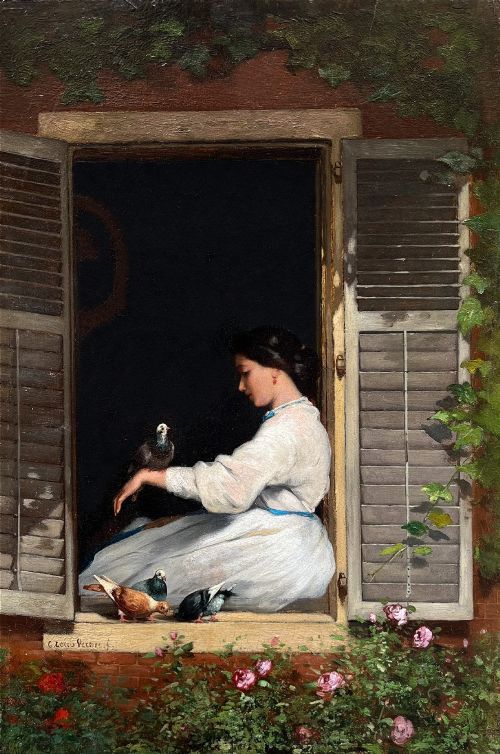
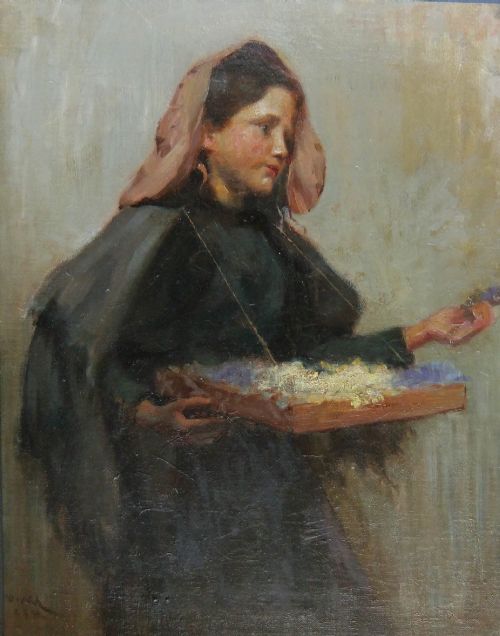
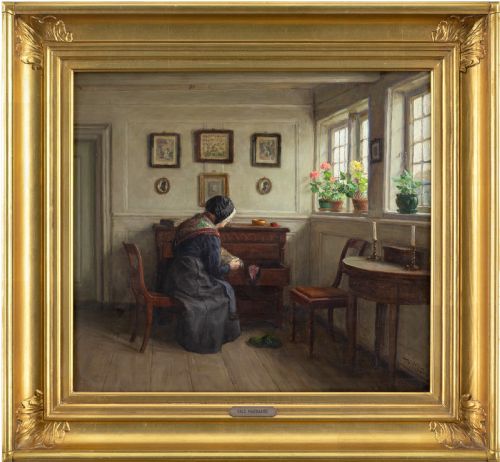
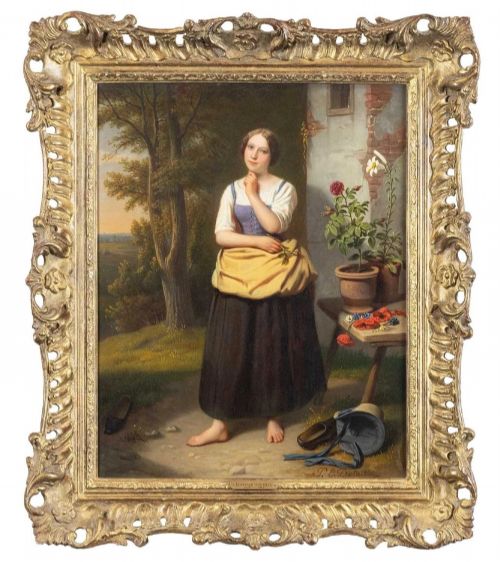
Classic figurative canvas art captures human figures, social gatherings, and intimate portraits across the eighteenth, nineteenth, and early twentieth centuries. When searching for classic figurative canvas art, buyers encounter oil paintings on woven supports depicting domestic interiors, outdoor rendezvous, and formal portraits.
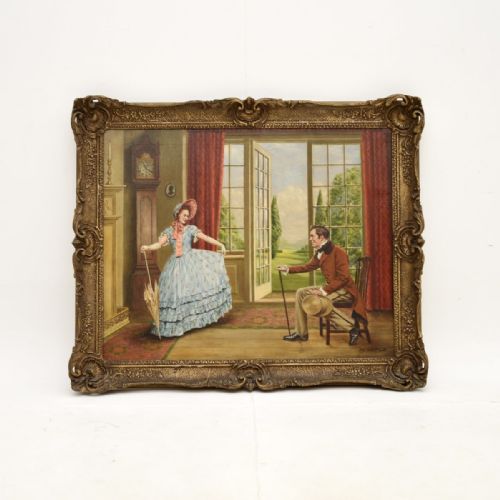
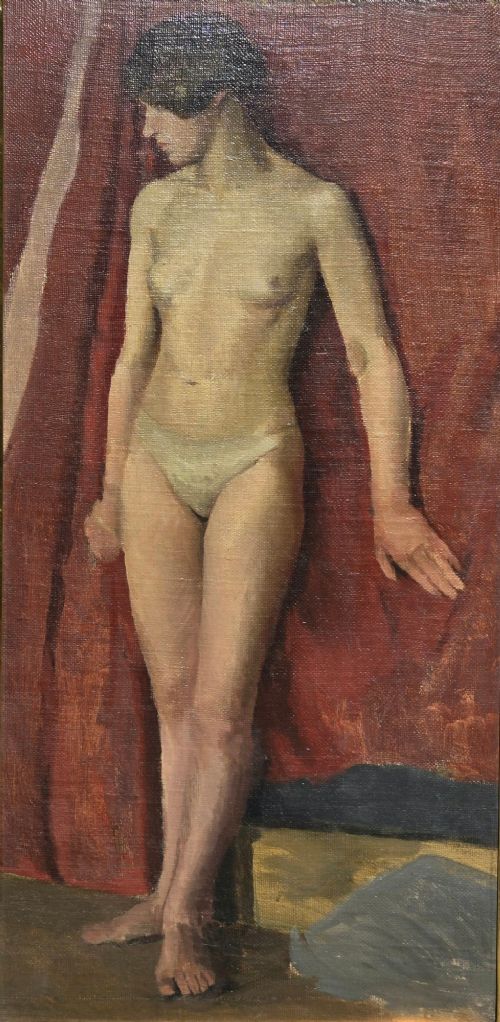
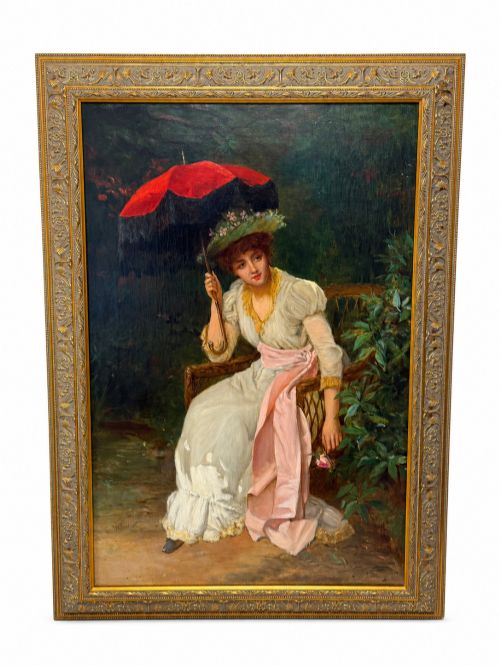
The selections span British, French, Danish, and Italian schools, moving from eighteenth-century portraiture through Victorian genre scenes to early modern treatments. These works record historical dress, architecture, and social customs through the rendered human form.
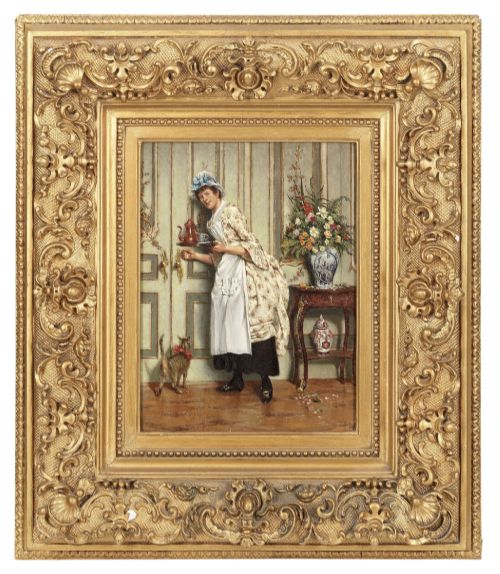
Domestic scenes with women, children, and domestic animals recur alongside pastoral landscapes populated by figures. The physical scale of these works ranges from modest interior studies to substantial framed salon pieces.
Materials and Technique
These works rely on oil paint bound with drying oils, applied to stretched canvas supports using bristle and sable brushes. Artists built compositions through successive layers of ground, underpainting, and glaze to achieve depth in skin tones and fabrics.
Many pieces retain their original wooden frames, often enriched with gesso mouldings and gilded surfaces. The combination of durable oil pigments on flexible canvas allows the painted surface to survive centuries with proper environmental control.
Dogs make frequent cameo appearances alongside their human owners in these historic domestic scenes.
Evaluating the Works
Quality rests in the anatomical accuracy of the figures, the handling of light across fabric and flesh, and the compositional balance of the scene. Masterful brushwork breathes life into facial expressions and textiles, whereas weaker examples rely on stiff postures and flat application.
The integrity of the canvas and the preservation of the original pigment layer dictate the overall merit of a piece. Works retaining their initial wooden stretchers and untouched paint surfaces hold greater historical weight.
Stephen Samuel Lewin·Alfred Lyndon Grace·Louis Charles Verwee·Winifred Rymer·William Oliver·Valdemar Magaard·William Watt Milne·William Arthur Breakspeare·Attilio Toro·Hendricus Joseph Dillens·Sydney Kendrick·Richard Waitt·Arthur Heinrich Wilhelm Fitger·John Singer Sargent
The Classic Figurative Canvas Art Glossary
- Genre painting
- A style depicting scenes from everyday life involving ordinary people engaged in common activities. These works provide visual records of historical dress and social interiors.
- Gesso
- A plaster-like mixture applied to wooden frames as a base for gilding and ornamentation. It creates a smooth surface for relief decoration.
- Canvas
- A heavy woven fabric used as a surface support for oil paintings. It is typically stretched tightly across a wooden frame before painting.
- Oil paint
- A slow-drying medium composed of pigments suspended in a drying oil such as linseed. It permits subtle blending of tones and rich colour depth.
Classic Figurative Canvas Art: Frequently Asked Questions
How do I hang classic figurative canvas art safely?
Support the weight of the piece using wall anchors suited to your plaster or masonry construction. Hang the work away from direct sunlight and strong heat sources to protect the oil pigments and canvas.
Ensure the frame rests level and secure against the wall surface using sturdy picture wire or D-rings attached directly to the wooden stretcher frame.
What subjects appear most often in these paintings?
Portraits of women and children dominate the selection, often accompanied by domestic animals like dogs. Interior domestic scenes and outdoor gatherings in parks also recur frequently.
Narrative moments from daily life, such as tea times or harvest celebrations, form the core of the genre subjects represented.
How can I tell a nineteenth-century canvas from a later work?
Examine the preparation of the canvas support, the composition of the wooden stretcher frame, and the ageing of the oil paint layers. Nineteenth-century works typically display characteristic fine network cracking known as craquelure in the pigment.
Stylistic markers such as Victorian dress, Realist brushwork, and period framing methods offer further confirmation of the era of production.
How should I clean the surface of an old oil painting?
Dust the painted canvas gently using a soft, dry artist brush with very light strokes. Avoid applying water, cleaning solutions, or pressure to the pigment surface.
Consult a professional conservator if the canvas requires deeper cleaning or removal of accumulated surface grime.