



Gilded Age Portrait Painting
These gilded age portrait painting works bring aristocratic presence into a room, framed in rich giltwood that catches the eye.
Gilded Age Portrait Painting
When you search for gilded age portrait painting, you encounter oil on canvas works and framed likenesses spanning several centuries rather than a single era. The selection ranges from seventeenth century Dutch and Spanish school pieces to later portraits and silhouettes.
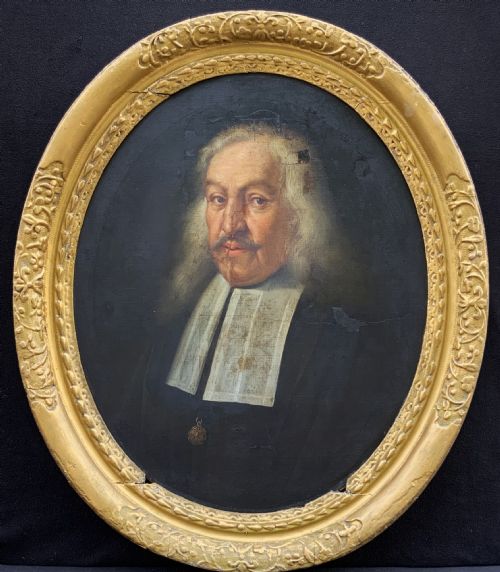
Most entries on this page date from the seventeenth century, featuring gentlemen in ruffs or coats, ladies with pearls, and theologians rendered in oil. Alongside these, you find miniature silhouettes and twentieth century interpretations linked to later styles.
How They Were Made
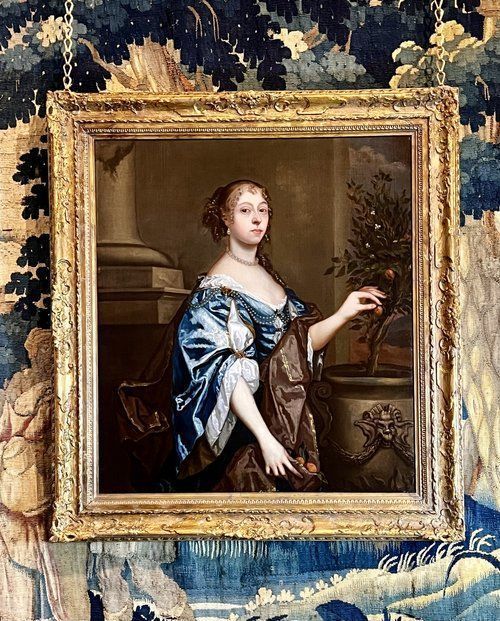
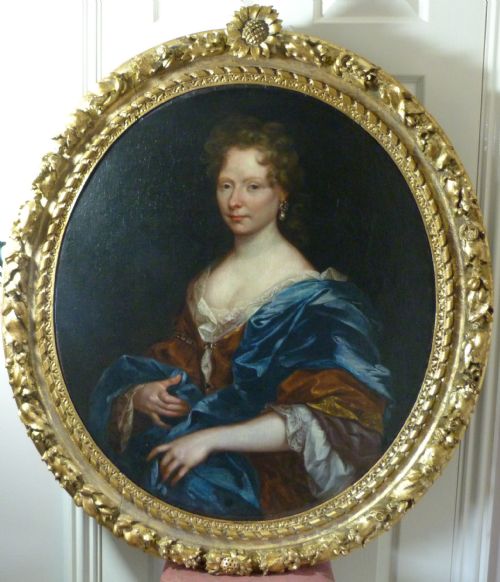
Artists painted primarily in oil on canvas, using layered pigments to build depth in garments such as satin dresses or blue coats. Frames consist of carved wood finished with gilt, providing a bright metallic border to the dark tones of the canvas.
Silhouette artists worked with paper and gilt highlights, mounted within protective wooden frames. The preparation of both canvas and panel required careful priming before the portraitist applied the oil medium.
One lady painted in the seventeenth century is immortalised while picking oranges.
What Varies in Quality
Quality rests upon the subtlety of brushwork in the subject's face and hands, distinguishing skilled studio output from more formulaic school pieces. The treatment of drapery, such as the folds of a white satin dress or a heavy curtain, reveals the painter's capability.
The preservation of the original giltwood frame matters greatly, as original frames complete the historic context of the oil painting. Condition of the canvas surface, free from heavy overpainting, dictates the visual integrity of the work.
Constantyn Netscher·Pieter Borseler·Toussaint Gelton·Nicolaes Maes·Rembrandt van Rijn·J. Deacon·Pieter Nason·Adriaen Hanneman·John Singer Sargent
The Gilded Age Portrait Painting Glossary
- Oil on Canvas
- A painting medium where pigments suspended in drying oils are applied to stretched fabric. This technique allowed artists to blend tones smoothly and achieve rich textures in clothing and skin.
- Circle of
- A term indicating the work of an artist closely associated with a master, often working in the same studio or style. It denotes proximity to a known hand without direct attribution.
- Ruff
- A voluminous pleated collar worn in the seventeenth century. Its stiff white folds frame the sitter's face in early portraiture.
Gilded Age Portrait Painting: Frequently Asked Questions
How should I hang a seventeenth century portrait?
Hang the portrait at eye level on a wall away from direct sunlight to protect the oil pigments and the giltwood frame from heat damage. Ensure the wall fixings can safely support the combined weight of the canvas and heavy wooden frame.
Pair the piece with traditional lighting such as a picture light mounted above, which highlights the varnished surface and brings out the fine details of the subject's clothing and expression.
What does circle of an artist mean?
Attributions to the circle of a master indicate that the painter worked in the direct sphere of a known artist during the same period. These works share the stylistic techniques and palette of the principal master.
Such pieces offer a strong connection to major artistic centres of the seventeenth century while remaining distinct from signed masterworks.
How do I care for giltwood frames?
Dust giltwood frames gently with a soft, dry brush to prevent accumulation in the carved crevices. Avoid using liquid cleaners or polishes, which can strip the delicate gold leaf finish.
Keep the frames in a room with stable humidity to prevent the underlying wood from warping and causing the gilding to flake or crack.
What is the difference between school of and attributed to?
A work designated to a specific school indicates an anonymous artist painting in the regional style and period of that location, such as the seventeenth century Dutch school. It reflects broader workshop practices rather than an individual hand.
An attribution points towards a specific named maker based on stylistic similarities, brushwork comparison, and historical context, while lacking a signature.