

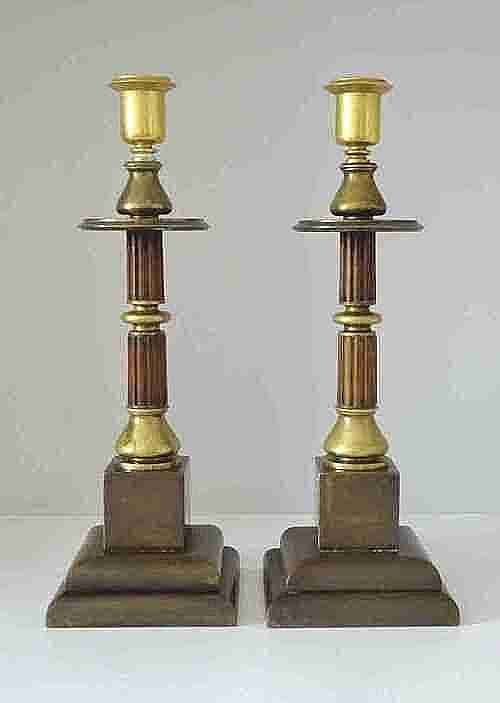


Classic Brass Candle Holders
Classic brass candle holders bring warmth and formal symmetry to a room, spanning periods from the eighteenth century to the early twentieth century.
Classic Brass Candle Holders
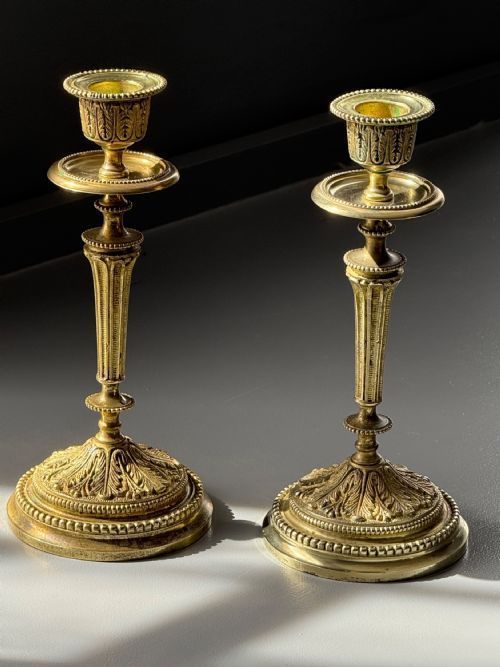
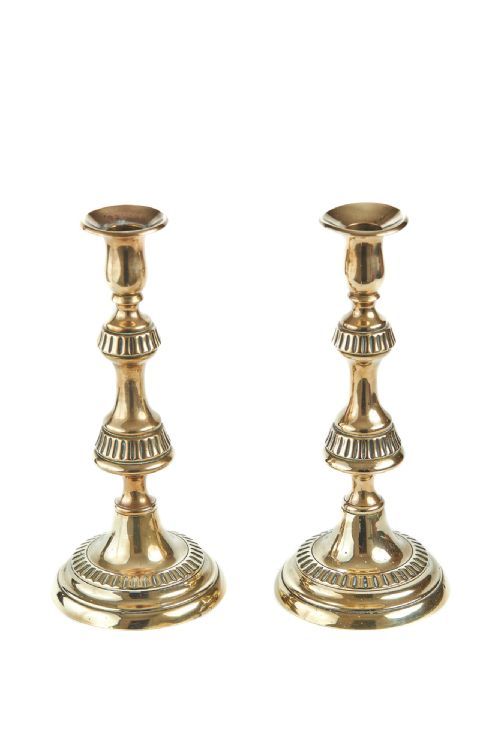
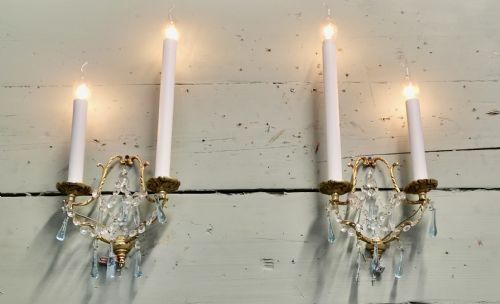
Classic brass candle holders encompass candlesticks, wall sconces, candelabras and wall lights formed from brass, gilt bronze, ormolu, and bronze. These functional lighting items appear in pairs or single forms across Georgian, Victorian, and Edwardian periods.
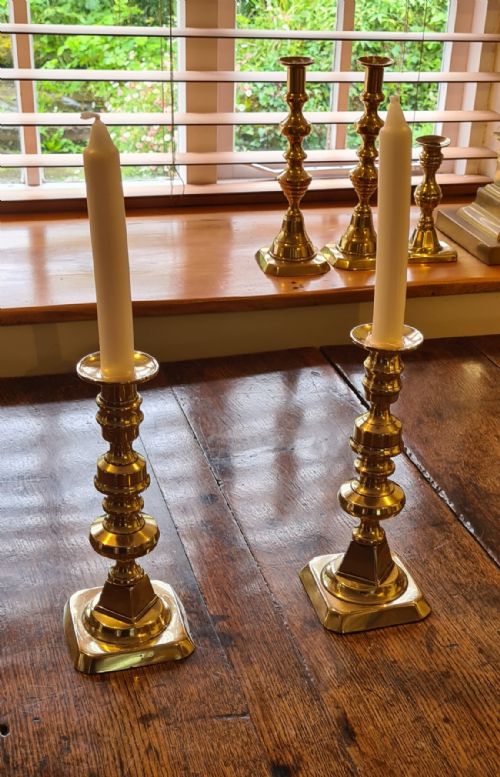
The most frequent examples on this page are seamed brass ejector candlesticks and ornate Victorian pairs. They range from small tabletop designs to tall multi-branched fixtures incorporating marble, mahogany, and cut glass elements.
Originating from English, French, and Italian workshops, these items reflect historical stylistic movements including Neoclassical, Louis XVI, and Italian Baroque. Buyers select them to anchor a mantelpiece or light a dining table with period authenticity.
What varies in quality
Quality rests in the crispness of casting detail and the heft of the metalwork, distinguishing heavy solid pieces from lighter stamped versions. Superior examples display clean joint lines, well-preserved gilding, and intact internal ejector mechanisms where fitted.
The balance between decorative ambition and structural proportion separates fine studio output from standard production. Integration of secondary materials like marble or mahogany demonstrates higher craftsmanship.
Object forms on this page include candlesticks, wall sconces, candelabras, and table lamps.
The Classic Brass Candle Holders Glossary
- Ejector
- A concealed internal mechanism with a small stem that pushes a consumed candle remnant out of the socket. This ingenious device appeared frequently on nineteenth-century brass candlesticks.
- Ormolu
- Finely ground high-carat gold applied to a bronze base through a mercury amalgamation process. This French technique yields a bright, durable golden finish found on luxury decorative objects.
- Paktong
- A copper-nickel-zinc alloy originating from China, valued for its bright silver-like appearance and weight. Eighteenth-century makers used this metal to cast high-status candlesticks.
- Candelabra
- A branched lighting fixture designed to hold multiple candles simultaneously. These larger pieces often feature three or five arms arranged around a central stem.
- Petal base
- A distinctive foot shape resembling a flower blossom, commonly seen on Georgian brass candlesticks. This scalloped profile adds stability and decorative contour to the base.
Classic Brass Candle Holders: Frequently Asked Questions
How do I clean brass candle holders?
Remove wax residue gently with warm water and a soft cloth, avoiding abrasive compounds that strip historical patina.
Preserve the aged surface rather than seeking a bright factory shine, as collectors value the natural oxidation accumulated over centuries.
How do I date an antique candlestick?
Examine the construction marks, base shape, and manufacturing method to determine the period of origin. Seams, tool marks, and alloy composition offer reliable clues to the decade of manufacture.
Stylistic indicators such as Neoclassical urn motifs or Victorian ornamentation further narrow down the production era.
Were these holders electrified?
Most antique candle holders were created exclusively for wax tapers or tallow candles before the advent of domestic electricity. Some larger candelabras and wall lights were later converted or manufactured with electric fittings.
Original wax-burning examples retain their solid sockets and drip pans without internal wiring channels.