


Circular Walnut Tilt Table
A circular walnut tilt table balances a practical folding top with rich timber figure, offering a versatile surface that tucks away neatly when not in use.
Circular Walnut Tilt Table
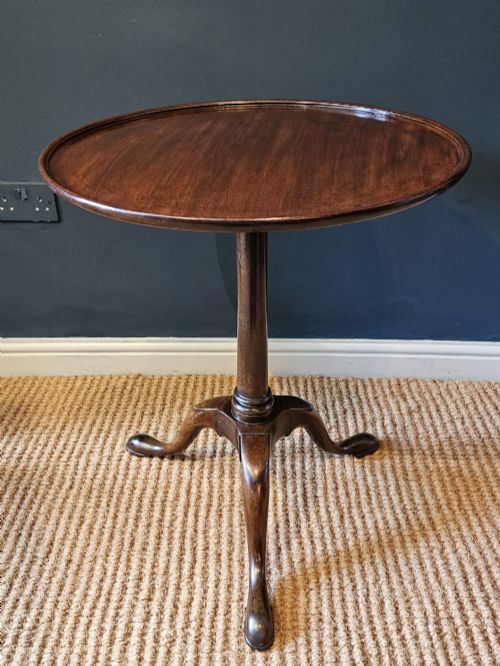
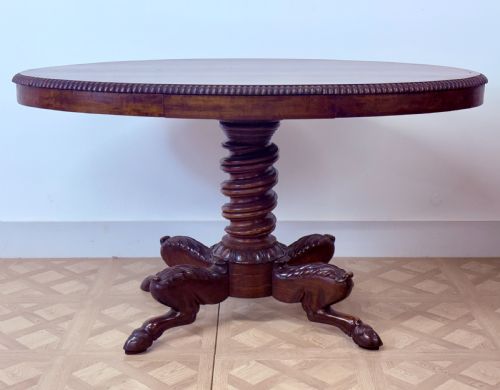
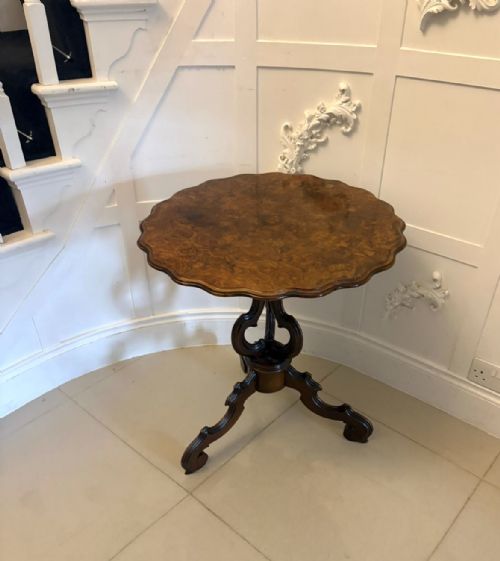
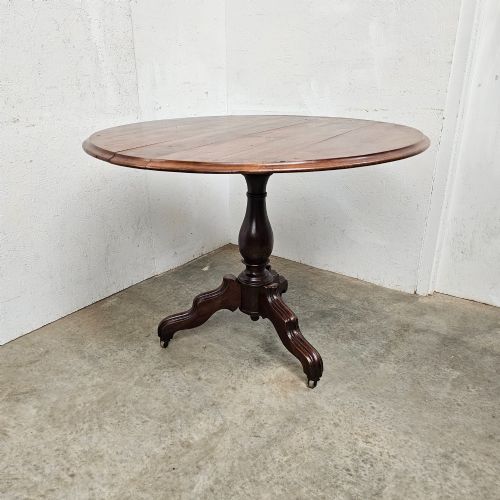
When you search for a circular walnut tilt table, you encounter flexible occasional and breakfast furniture designed to tilt flat against the pedestal for storage or display. The examples on this page span the Georgian and Victorian eras, alongside later revivals, reflecting generations of cabinet-making skill.
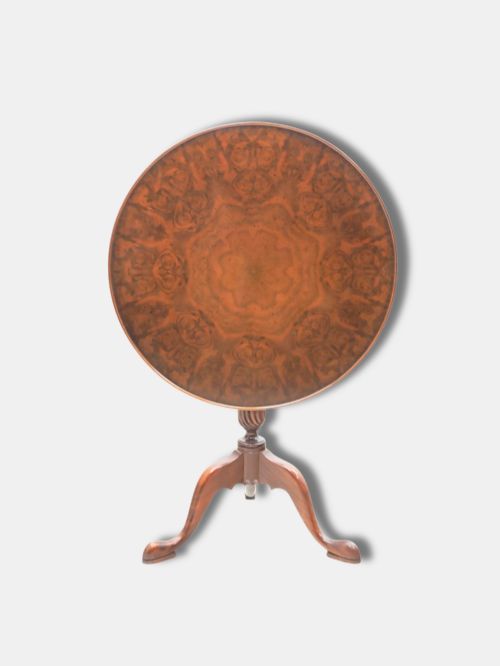
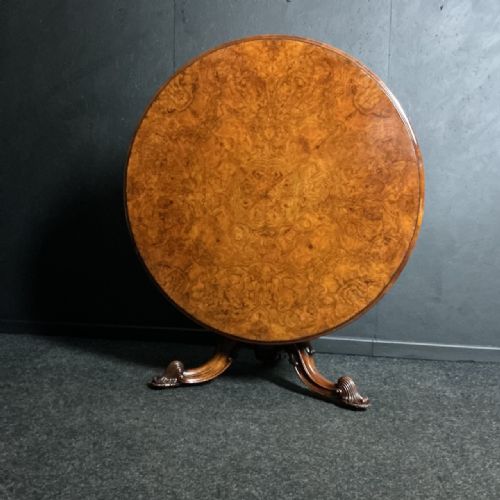
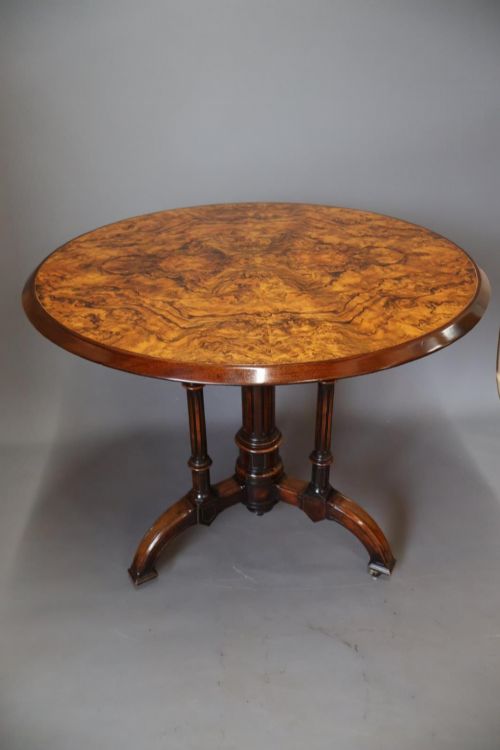
Most pieces you meet here date from the nineteenth century, often fashioned from burr walnut or figured veneers with tripod or pedestal bases. They function equally well as lamp tables, wine tables, or intimate dining surfaces in domestic rooms.
How they were made
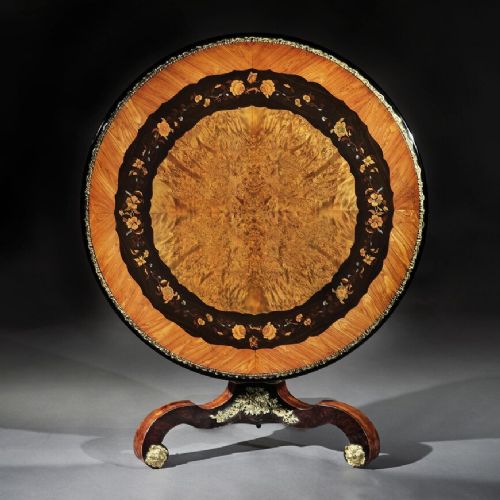
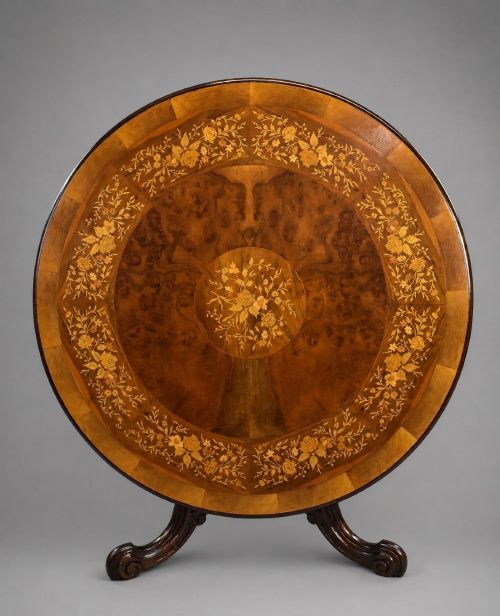
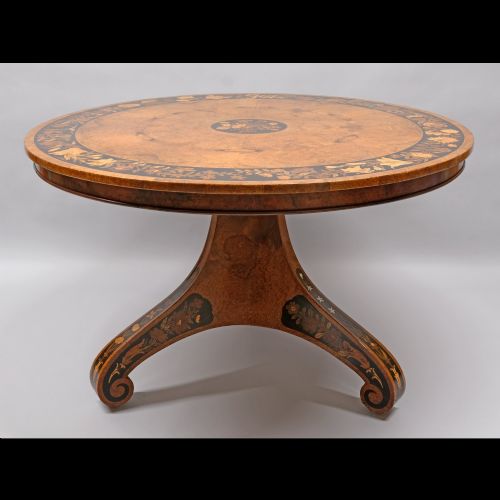
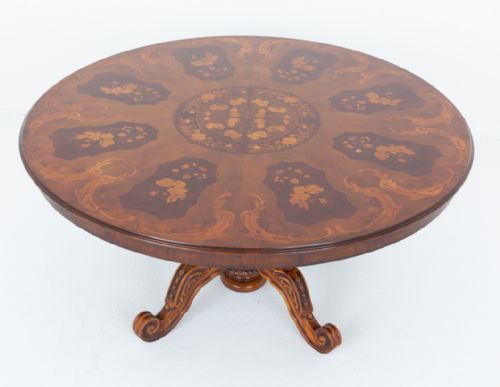
Cabinet-makers selected richly figured walnut and burr walnut veneers, applying them to stable secondary woods such as mahogany or fruitwood. Marquetry inlay using boxwood and fruitwood frequently embellishes the tops, creating geometric or floral motifs.
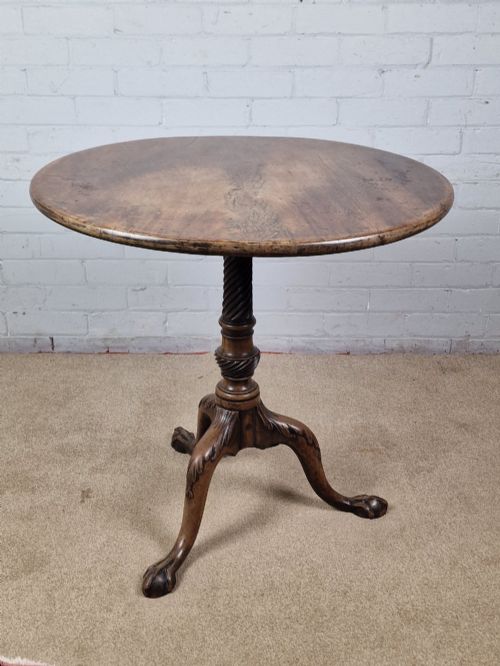
The pivoting mechanism relies on a birdcage or catch assembly mounted atop a turned pedestal and three-legged tripod base. Brass hardware occasionally secures internal mechanisms like secret drawers.
Listings feature walnut, burr walnut, mahogany, fruitwood, and boxwood, spanning Georgian, Victorian, Regency, and Aesthetic Movement styles.
What varies in quality
The depth and movement of the walnut figure dictate visual appeal, with burr veneers offering intense patterning that plain timber lacks. Finely executed marquetry inlay and crisp carving on the pedestal base distinguish superior workshops from standard production.
Structural stability in the tilt mechanism and the flatness of the circular top determine mechanical success. Older Georgian and Victorian examples show varying degrees of timber shrinkage and patination built up over decades of use.
Edward Holmes Baldock·John Kendal·Holland & Sons
The Circular Walnut Tilt Table Glossary
- Tilt top
- A table top hinged to tilt vertically when not in use. This clever mechanism allowed pieces to be stored against walls in smaller rooms.
- Burr walnut
- Timber taken from a tree growth or burl, yielding swirling, knotty grain patterns. Cabinet-makers prized this veneer for high-status table surfaces.
- Marquetry
- Decorative inlay work using various coloured woods to form pictorial or geometric designs. It often decorates Victorian and Italian walnut tables.
- Tripod base
- A support structure with three legs radiating from a central pedestal. This design provides steady footing on uneven floors.
- Pie crust edge
- A raised, carved rim shaped in undulating curves around the perimeter of the table top. This decorative detail frequently appears on Georgian tilt tables.
Circular Walnut Tilt Table: Frequently Asked Questions
How do I tilt the table top safely?
Most tables use a brass catch or wooden locking pin beneath the top. Release this mechanism carefully while supporting the surface to prevent sudden movement.
Ensure any items are removed from the table before lowering or raising the surface to avoid damage.
Can I use a tilt table for dining?
Larger Victorian breakfast and supper tables accommodate intimate dining for two to four guests. Their sturdy pedestals provide adequate legroom around the circular top.
Smaller wine and lamp versions suit drinks and display rather than seated meals.
How do I care for walnut veneer?
Keep walnut furniture away from direct sunlight and heat sources to prevent the veneers from drying and cracking. Dust gently with a dry cloth and apply occasional specialist wax.
Avoid placing damp glasses directly on the polished surface to prevent water rings.
How do I distinguish Georgian from Victorian pieces?
Georgian tables often feature simpler red walnut timber, snap-top mechanisms, and tripod bases with pad or snake feet. They date from the eighteenth century.
Victorian examples frequently incorporate burr walnut veneers, elaborate marquetry inlay, and central pillar bases with carved cabriole legs.