
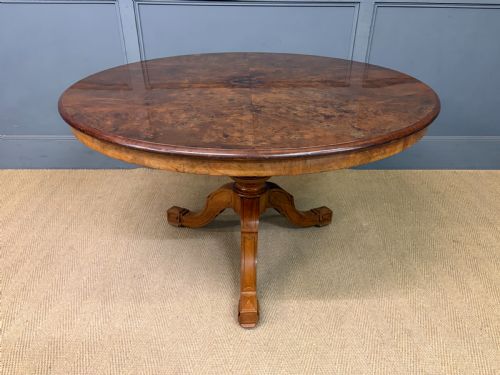
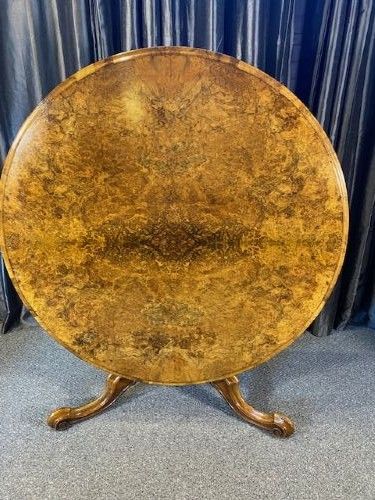
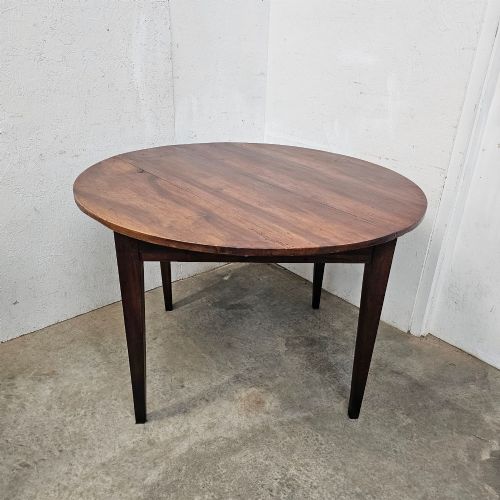
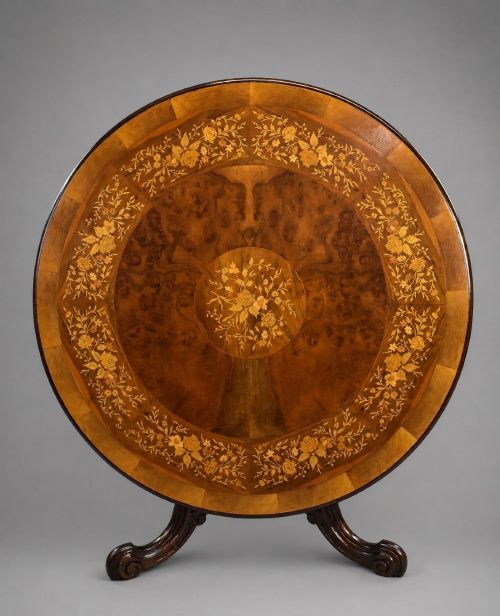
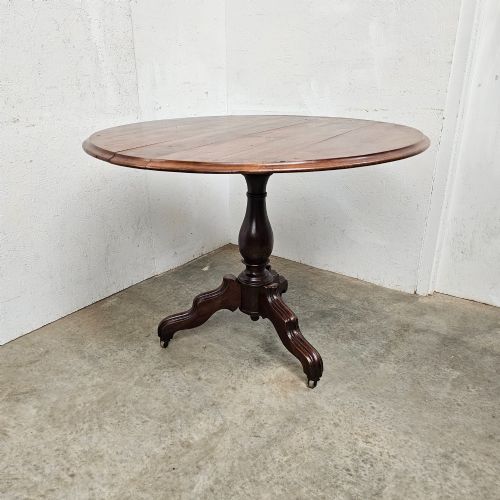
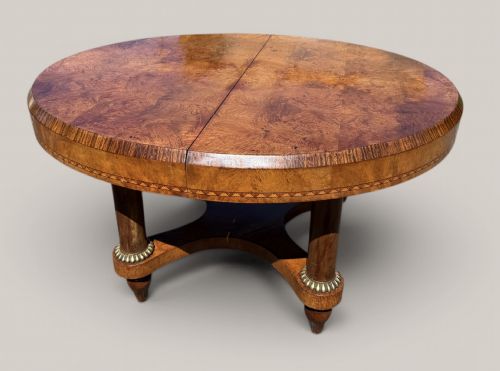
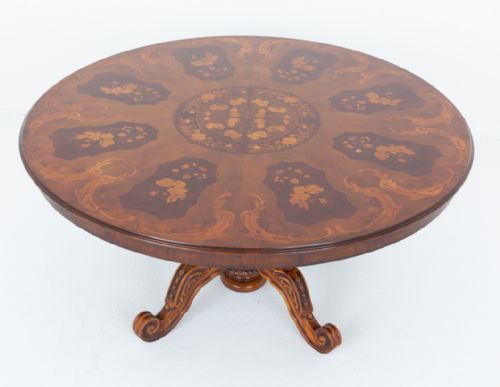


Circular Walnut Dining Table
A circular walnut dining table brings people together around rich grain and warm tone, offering a sociable shape rooted in nineteenth-century and later craftsmanship.
Circular Walnut Dining Table
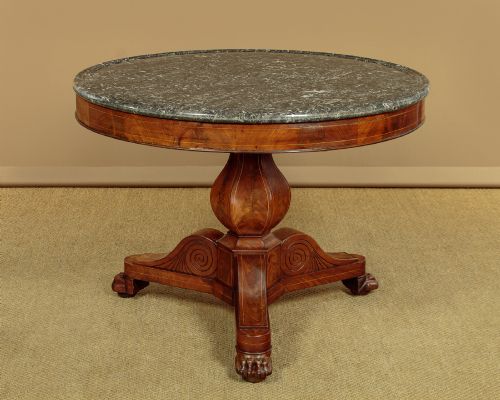
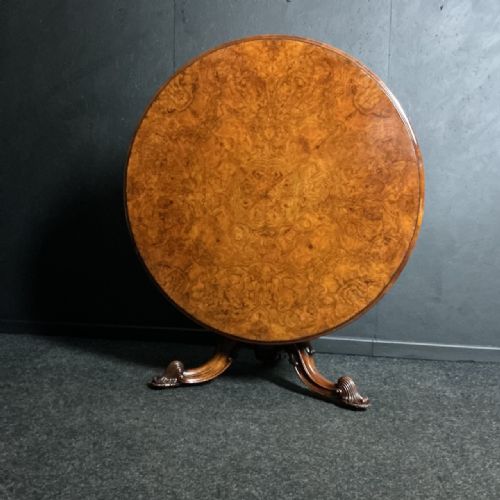
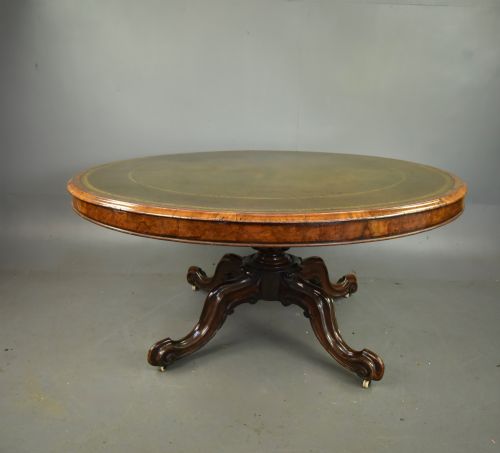
A circular walnut dining table appears in various forms across this page, from compact Victorian centre tables and breakfast tables to large extending dining sets designed for more than eight seats. Buyers searching for a circular walnut dining table encounter pieces spanning the nineteenth century, including the Victorian era, alongside twentieth-century iterations from the nineteen-twenties and thirties.
Many examples double as centre tables or library tables, reflecting how nineteenth-century rooms utilised multi-purpose furniture. French country and Italian neoclassical styles also surface alongside English Victorian designs, providing options ranging from intimate two-seat display tables to substantial extending formats.
Craftsmanship and Detail
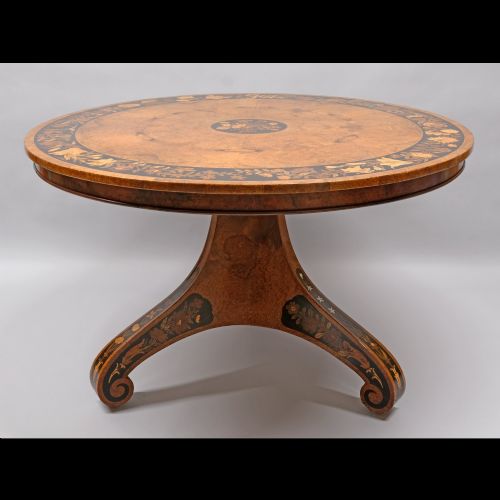
Quality separates pieces through the selection of timber veneers and the precision of the marquetry inlay. Superior examples display carefully matched burr walnut grain across segmented tops, whilst lesser pieces rely on simpler, plainer timber surfaces.
The sophistication of the carving on pedestal bases and the smooth mechanics of extending dining mechanisms also distinguish the finest tables. Finer workshop attributions or detailed floral and geometric inlays indicate higher levels of nineteenth-century cabinet making.
Listings feature walnut, burr walnut, mahogany, marble, brass, and boxwood inlay across nineteenth and twentieth-century periods.
Holmes Baldock·Holland & Sons·John Kendal·Bombay Furniture Company
The Circular Walnut Dining Table Glossary
- Burr walnut
- A veneer taken from the warted excrescence of a walnut tree, producing highly complex, swirling grain patterns. It is prized by cabinet makers for decorative table tops.
- Marquetry
- Decorative patterns formed by fitting together thin slices of wood veneer and other materials onto a structural surface. It creates elaborate floral or geometric designs.
- Gueridon
- A small French round table, often supported by a single central column or tripod base. The form gained popularity in various nineteenth-century interior styles.
- Centre table
- A freestanding table finished on all sides to stand in the middle of a room rather than against a wall. These frequently feature circular walnut tops.
- Pedestal table
- A table supported by a single central pillar resting on feet or a plinth base. This design allows maximum legroom around a round top.
Circular Walnut Dining Table: Frequently Asked Questions
How do I seat six people comfortably?
A circular walnut dining table with a diameter around four and a half feet generally accommodates four to six diners comfortably. Pedestal bases help maximise legroom around the perimeter.
Larger extending versions provide additional space when hosting dinner parties. Radial leaves allow the top to expand whilst maintaining the round shape.
How do I care for walnut veneer?
Walnut surfaces respond best to gentle dusting with a soft cloth and occasional application of appropriate furniture wax. Direct sunlight can fade the rich brown tones of the timber over time.
Keeping the room humidity stable prevents the underlying wood and delicate marquetry inlay from shifting. Hot dishes and moisture require protective mats to preserve the polish.
Can I use a centre table for dining?
Many nineteenth-century centre tables share the same height and sturdy construction as dedicated dining tables. Victorian examples often function interchangeably for intimate meals.
Checking the knee clearance beneath the apron ensures comfortable seating. Extension leaves on specific models provide the necessary surface area for larger groups.