

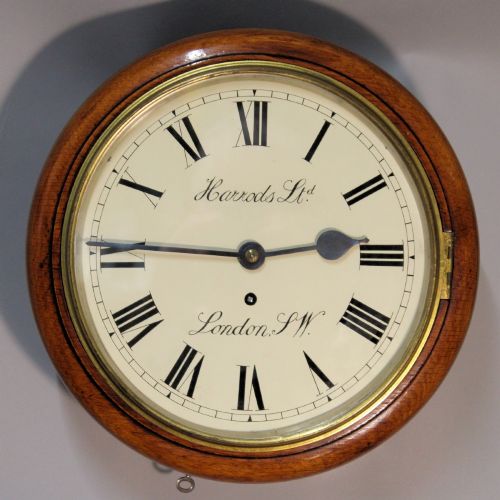
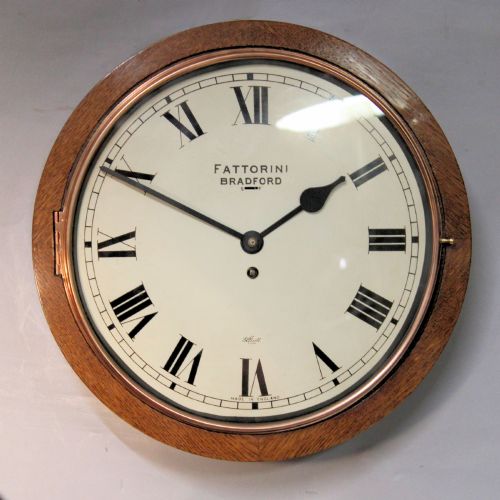
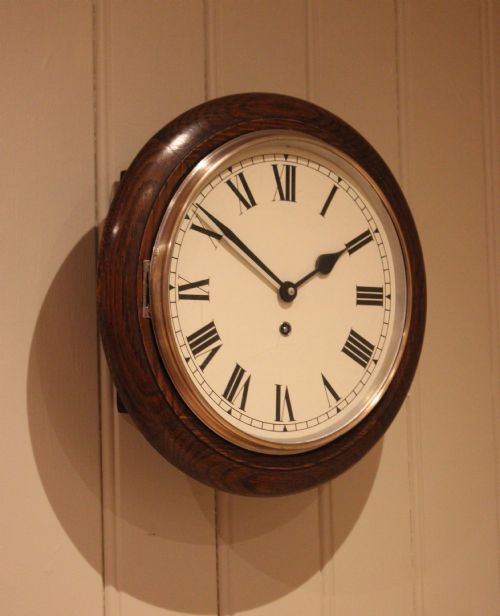
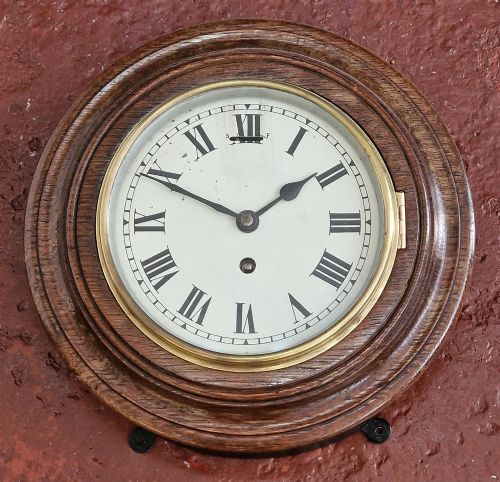


Circular Oak Clock
A circular oak clock brings robust timber framing and clear dial work into a room, offering both practical timekeeping and architectural presence.
Circular Oak Clock
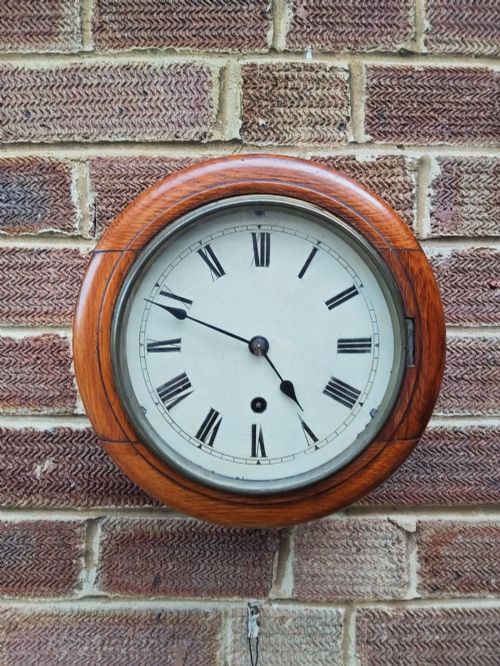
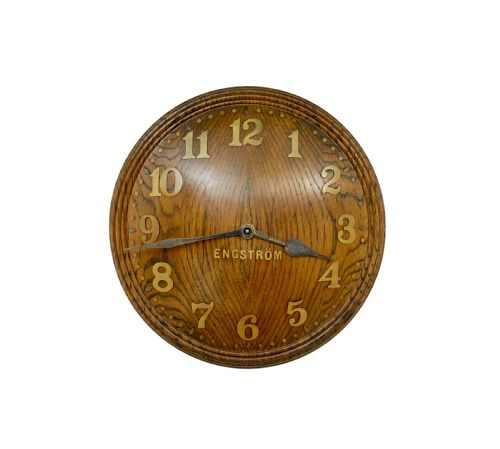
A circular oak clock combines a round timber housing with a legible face designed primarily for wall mounting. When searching for a circular oak clock, buyers encounter formats ranging from compact six-inch dials to larger station and school house variants.
The pieces on this page span the nineteenth century through to the mid-twentieth century, capturing Victorian, Edwardian, and Art Deco design aesthetics. Most examples function as wall clocks utilising timber cases paired with brass, glass, and enamel elements.
Origins include notable English makers and specialised transport networks, alongside unbranded domestic pieces. The predominant material throughout remains oak, appearing in various tones from pale golden hues to darker aged timber.
What varies in quality
The refinement of the movement distinguishes simpler domestic timepieces from precision instruments made for railway stations or public buildings. Fusee movements and signed mechanisms by established makers represent a higher standard of clockmaking craftsmanship.
Cabinetwork varies from straightforward functional housings to pieces exhibiting finely turned bezels, carved mouldings, and choice golden oak grain. The clarity of the enamel dial and the presence of original brass work contribute significantly to the character of each piece.
Circular Oak Clock Retail Price Guide 2026
Typical asking prices for circular oak clock among the pieces listed under this phrase on Sellingantiques today, from the lower quarter to the upper quarter. They describe what is for sale here now, not the wider market.
Railway signal box clocks earned the affectionate nickname 'pork pie' due to their deep, round wooden profiles.
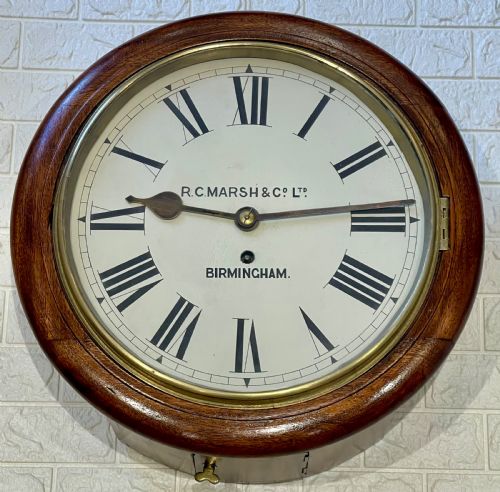
Elliott·W&H Sch·Zenith·Dent of London·Smith·R C Marsh & Co Ltd Birmingham
The Circular Oak Clock Glossary
- Fusee
- A conical pulley used in spring-driven clocks to ensure uniform tension and even timekeeping as the mainspring unwinds. This mechanism improves accuracy throughout the running period.
- Dial
- The face of the clock where the numbers and hands are displayed. Enamel or painted metal faces are common on these wall clocks.
- Escapement
- The mechanical linkage that controls the release of gear train power to the hands and delivers impulses to keep the pendulum or balance swinging. Lever escapements allow clocks to operate reliably in various positions.
- Bezel
- The ring of brass, wood, or metal that holds the glass cover over the dial. It often opens on a hinge to allow hand-setting.
- Timepiece
- A clock that indicates the time of day without a striking mechanism for hours or quarters. Many circular wall clocks are configured strictly as timepieces.
Circular Oak Clock: Frequently Asked Questions
How do I hang a circular wall clock securely?
These timber-cased clocks are heavy, particularly those featuring thick oak surrounds and mechanical brass movements. Fix them directly into wall studs or utilise appropriate masonry anchors.
Ensure the hanging bracket or screw engages firmly with the internal mounting point to support the weight safely.
What is the difference between a fusee movement and a standard spring movement?
A fusee movement incorporates a conical drum and chain to equalise the declining power of the mainspring. This traditional method maintains consistent force on the gear train.
Standard spring movements rely on direct power delivery from the mainspring barrel to the gears, which can cause slight variations in timekeeping as the spring runs down.
How do I wind an antique oak wall clock?
Insert the winding key into the aperture on the dial face and turn it gently until you feel resistance. Do not overwind the mechanism.
Clocks with eight-day movements require attention roughly once a week, while other variants may have different running durations.
How can I tell a Victorian dial clock from a later Art Deco piece?
Victorian examples often feature fusee movements, traditional mahogany or oak cases, and classic Roman numerals intended for domestic or institutional use. Edwardian and Art Deco pieces from the early twentieth century introduce simpler geometric lines, streamlined bezels, and alternative escapements.
Examining the woodwork style, dial typography, and internal movement helps determine the era of manufacture.