





Church Altar Candle Stands
Church altar candle stands bring dramatic scale and solemn architecture into a room, forged in heavy brass or carved with baroque flourish.
Church Altar Candle Stands
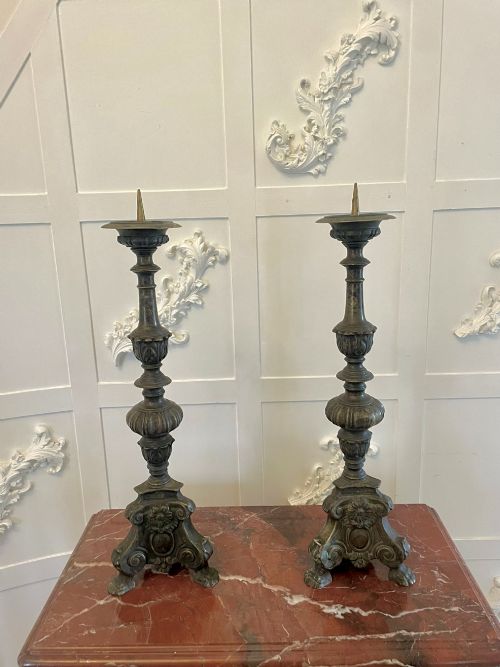
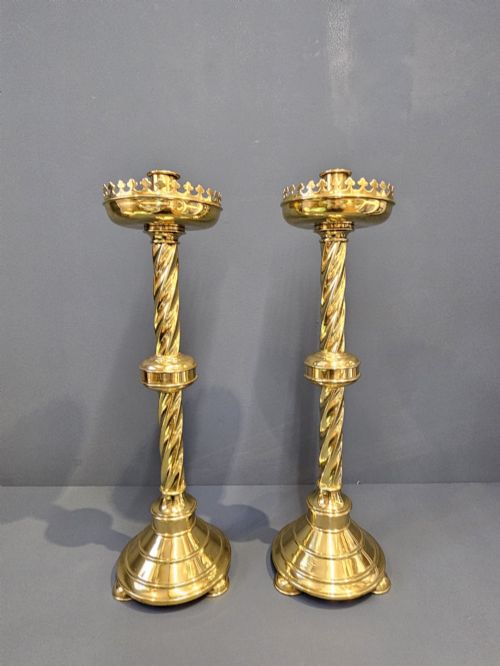
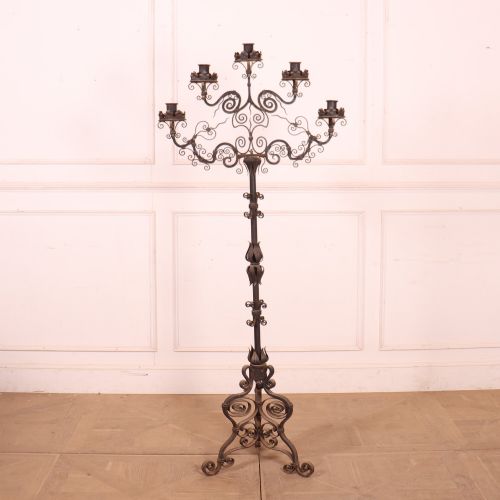
Church altar candle stands encompass towering prickets, floor-standing torcheres, and grand pairs designed for ecclesiastical settings. The pieces seen here span the eighteenth, nineteenth, and early twentieth centuries, drawing heavily on Gothic Revival and Baroque aesthetics.
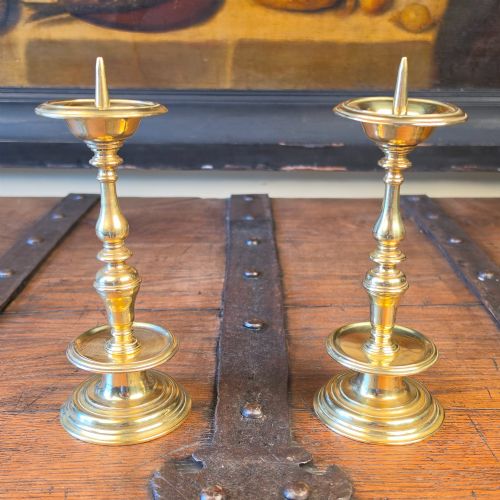
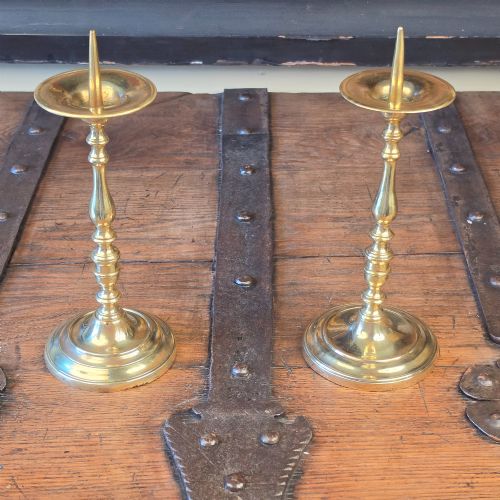
Brass examples dominate the selection, often taking the form of monumental candlesticks or corinthian column designs, whilst wooden versions frequently show traces of giltwood, silver leaf, or polychrome finishes. Collectors encounter everything from modest pairs to large sets originating from English, French, Italian, and Dutch workshops.
Floor-standing candle altars and heavy table prickets reflect centuries of liturgical use, adapting easily to domestic interiors that favour ecclesiastical grandeur. Amsterdam School pieces introduce distinctive early twentieth-century metalwork forms to the category.
Materials and construction
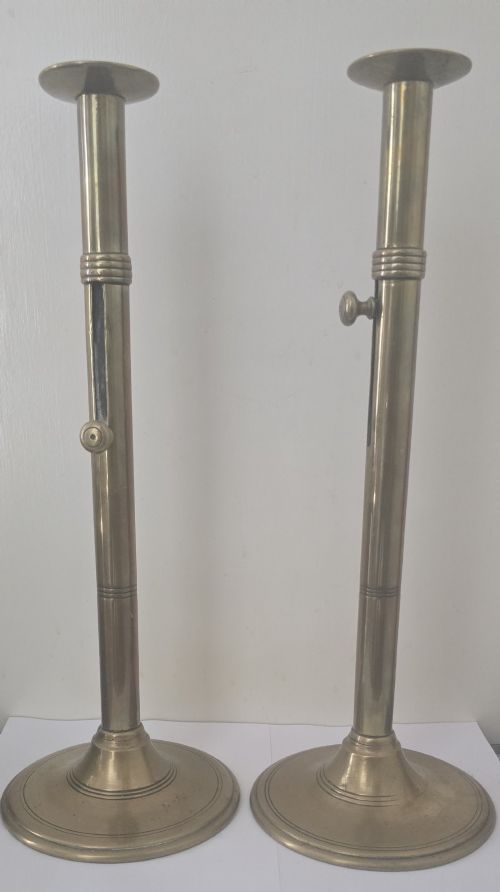
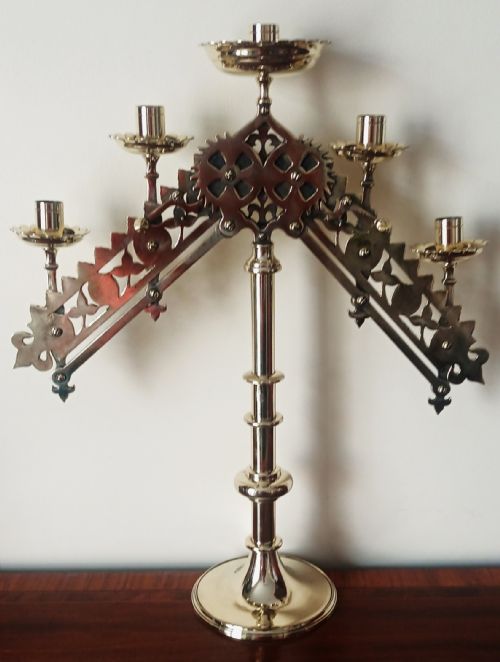
Metal stands rely on heavy cast and spun brass, bronze, copper, and wrought iron, frequently assembled in sections to support considerable height. Many nineteenth-century examples incorporate side ejectors, articulated arms, or threaded joints.
Wooden stands utilise carved pinewood, gesso, and timber frames finished with applied giltwood, silver leaf, or painted decoration. Artisans shaped these organic materials into elaborate baroque scrolls, fluted columns, and faceted candle cups.
Listings feature heavy brass, carved wood, giltwood, and wrought iron spanning the eighteenth to early twentieth centuries.
Judging the work
Quality rests in the weight of the metal casting and the crispness of the hand-carved wooden detail. Heavier gauge brass and deeply undercut wooden foliage denote superior workshop standards.
Surface preservation distinguishes exceptional examples, particularly where original giltwood, polychrome paint, or patinated bronze survives intact without excessive modern intervention.
T Thomason & Co
The Church Altar Candle Stands Glossary
- Pricket
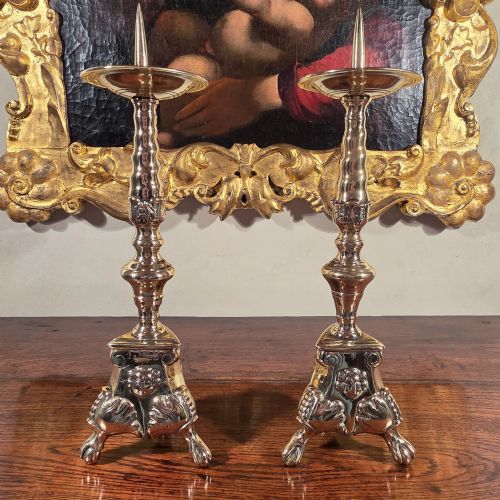
- A sharp metal spike on a candlestick designed to hold a large wax candle in place. This form appears frequently on ecclesiastical and altar pieces.
- Torchere
- A tall ornamental stand or candlestick designed to hold a light source high above the floor. Italian carved pinewood examples demonstrate this grand architectural form.
- Giltwood
- Wood that has been coated with a thin layer of gold leaf or powder. Baroque altar pieces often utilise this finish to catch candlelight.
- Gesso
- A plaster-like mixture applied to wood as a base for painting or gilding. It allows carvers to achieve sharp, smooth decorative details.
- Ecclesiastical
- Relating to the Christian Church or its clergy. Items from this tradition were made specifically for use in chapels, cathedrals, and abbeys.
Church Altar Candle Stands: Frequently Asked Questions
What is a church altar candle stand?
These pieces are large devotional lighting fixtures made for places of worship, featuring sturdy bases designed to support heavy candles safely during services.
They range from tall brass prickets to carved wooden torcheres, built to endure centuries of use while maintaining an imposing architectural presence.
How do you use them at home?
They work well placed directly on the floor or on large side tables, creating strong vertical accents in living spaces or hallways.
Many modern interiors use them unlit as sculptural elements, whilst others fit them with candles or adapt them carefully for electric lighting.
How do I spot a pricket candlestick?
Look at the top of the candle holder for a vertical metal spike rather than a standard socket or cup. This spike presses directly into the base of a wide candle.
This design is traditional for large altar lights and ensures thick candles remain steady during long ceremonies.
Are these pieces usually brass or wood?
Both materials are common, with heavy cast brass representing the majority of nineteenth-century pieces and carved wood appearing frequently in continental European examples.
Brass stands often feature turned columns and weighted bases, whilst wooden versions display carved baroque or Gothic Revival details coated in giltwood.