



Chippendale Walnut Mirror
A chippendale walnut mirror brings rich timber tones and scrollwork framing to a room, offering both history and utility.
Chippendale Walnut Mirror
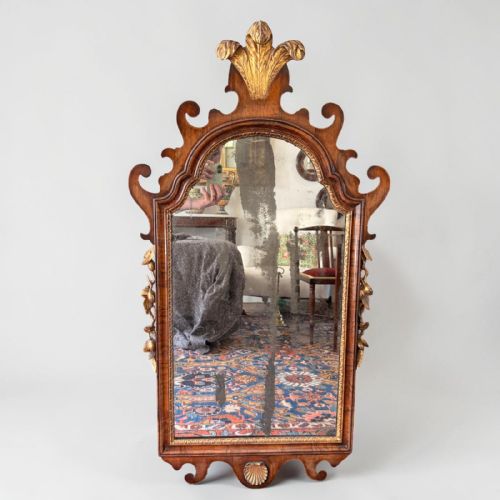
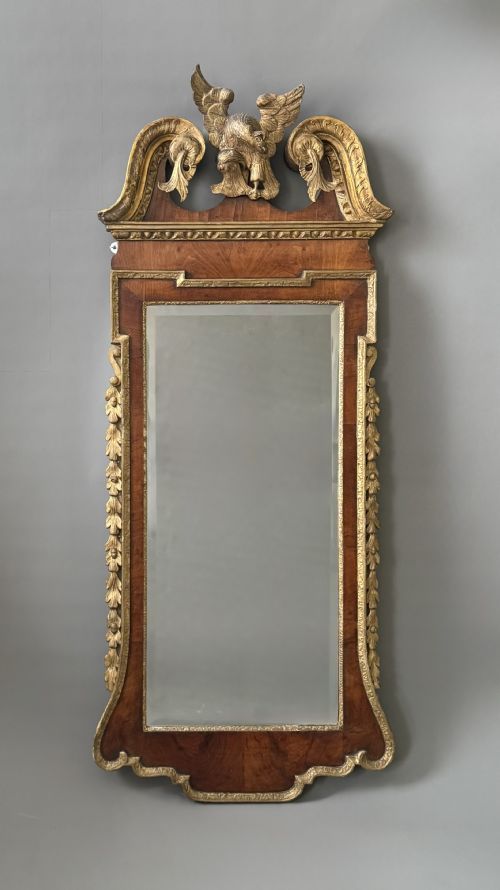
A chippendale walnut mirror typically takes the form of a wall hanging frame with fretwork detailing, designed to catch the light in a Georgian interior. These pieces combine rich walnut timber with parcel gilt accents, creating a decorative silhouette for a hallway or parlour.
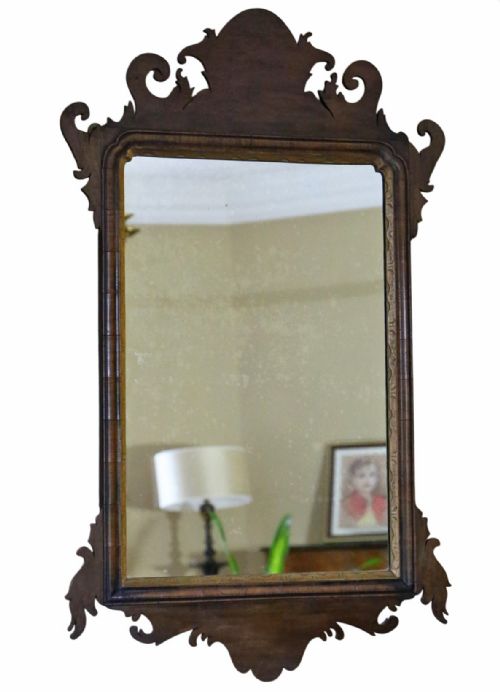
The examples found here range from authentic eighteenth century originals to later nineteenth century revivals and early twentieth century interpretations. Buyers are most likely to encounter fret cut wall mirrors featuring traditional scrolling outlines and scroll pediments.
Materials and construction
Cabinet makers constructed these frames using solid walnut and wood veneers applied to a secondary timber base. Many pieces incorporate parcel gilt details, adding metallic highlights to the carved ears and crests of the woodwork.
Fretwork sections were hand sawn using fine scroll saws to achieve intricate pierced patterns along the borders. Original mirrors often retain early glass plates, fitted into rebated frames behind the wooden sight edges.
Several designs feature carved wooden birds at the crest, traditionally known as Hoho birds, watching over the room.
Judging quality in walnut mirrors
The depth and crispness of the hand carving distinguish finer examples from simpler production pieces. Superior fretwork displays sharp interior corners and delicate proportions rather than thick, rounded edges.
The choice of timber grain significantly influences the visual presence of the frame. Figured walnut veneers or dense red walnut display varied natural figuring that enhances the overall decorative impact.
The Chippendale Walnut Mirror Glossary
- Parcel gilt
- Partially gilded with thin sheets of gold leaf to accentuate specific carved elements. This technique highlights the crests and ears against the dark walnut body.
- Fretwork
- Pierced decorative woodwork created by cutting patterns through thin boards. It defines the characteristic silhouette of these frames.
- Vauxhall mirror
- A type of mirror featuring bevelled plate glass produced in London during the seventeenth and eighteenth centuries. These plates show distinct optical characteristics from modern glass.
- Pier glass
- A tall mirror designed to hang on the wall between windows. These pieces reflect light into the centre of a room.
Chippendale Walnut Mirror: Frequently Asked Questions
How do I hang a heavy wall mirror safely?
These frames require sturdy wall fixings that match the weight of the timber and glass. Secure the hanging wire or brackets directly to wall studs or use appropriate masonry anchors.
Ensure the hanging cord is properly secured to the original frame structure rather than auxiliary backing boards.
Where should I place a walnut wall mirror?
Position the frame at eye level on a main wall where it can reflect natural light from nearby windows. Avoid areas exposed to direct sunlight or damp conditions to protect the timber and gilt surfaces.
Matching the proportions of the mirror to the furniture beneath it, such as a side table or console, creates visual balance.
How do I clean an antique mirror frame?
Dust the carved woodwork gently using a dry, soft bristle brush to remove debris from recessed areas. Avoid liquid polishes and chemical cleaners that can damage fragile gilt surfaces.
Clean the glass plate with a microfibre cloth and a neutral glass cleaner, applying the liquid to the cloth rather than spraying the mirror directly.
Are these mirrors suitable for modern rooms?
The warm tones of walnut timber and classic proportions allow these pieces to integrate into contemporary interior schemes. They provide a focal point that contrasts with minimalist furniture and neutral walls.
Their historical character adds texture and depth to modern living spaces.