
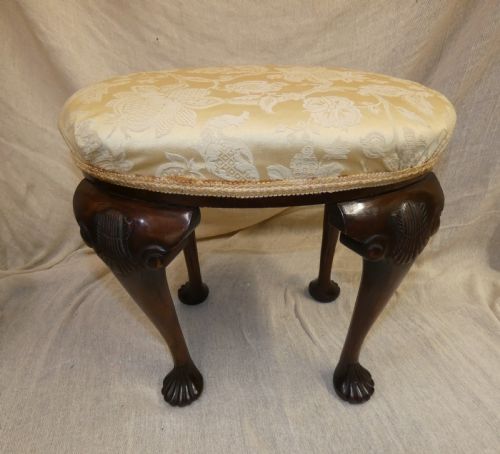


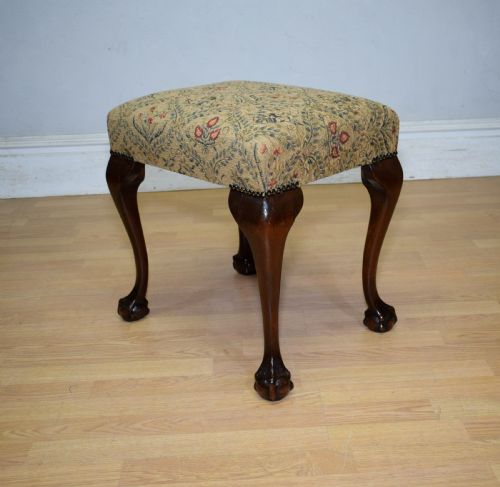


Chippendale Vanity Stool
A Chippendale vanity stool brings genuine period character to a dressing room, combining solid mahogany frames with classic carved detail.
Chippendale Vanity Stool
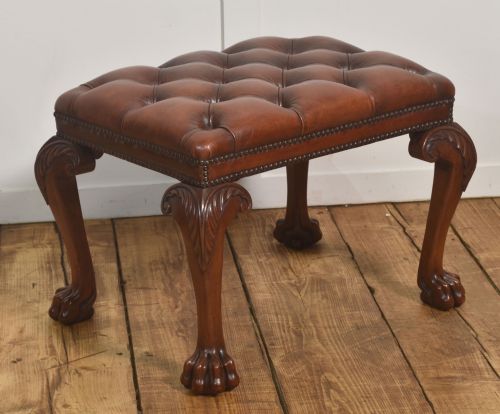
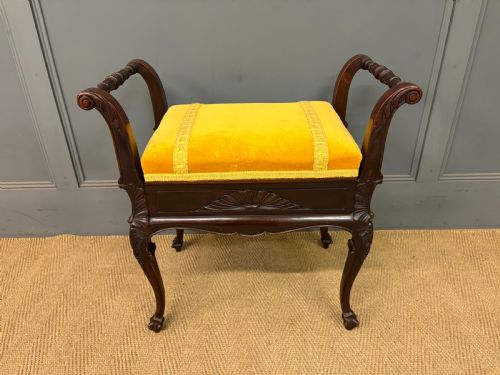
A chippendale vanity stool is a low seating piece typically used at a dressing table or in a bedroom setting. These pieces take various forms including footstools, dressing stools, and piano stools.
The pieces on this page span several distinct periods, reaching back to the 18th century alongside later revivals from the Victorian, Edwardian, and early 20th century eras. You will frequently encounter items attributed to the Chippendale Revival and Georgian Revival styles.
Materials and construction methods
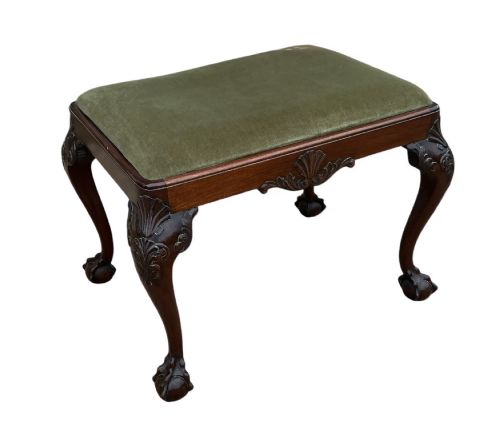
Makers relied heavily on solid mahogany and walnut for the structural frames, often working the timber to achieve serpentine shapes and robust cabriole legs. These dense hardwoods provided the necessary strength for intricate hand-carving along the rails and knees.
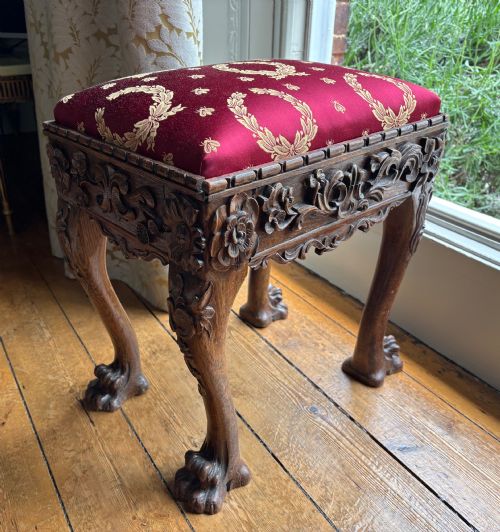
Upholstered elements utilised traditional textiles such as damask, velvet, leather, fabric, and textile coverings. Fixings frequently incorporated brass details to secure the upholstery and accent the wooden framework.
Early makers occasionally hid their chalk tally marks deep beneath the upholstery webbing, leaving secret tallies for future restorers to puzzle over.
Assessing craftsmanship and finish
The distinction between standard examples and superior pieces rests in the depth and crispness of the wood carving. Fine versions display sharp, deliberate chisel work on the knees and frame edges rather than soft or cast imitation details.
The choice of covering material and the tightness of the upholstery execution also set individual pieces apart. Higher quality iterations feature substantial hardwood frames joined securely without movement, paired with durable traditional textiles.
The Chippendale Vanity Stool Glossary
- Chippendale style
- A furniture design vocabulary originating in the 18th century, characterised by carved mahogany, cabriole legs, and elaborate detailing. Later revival periods replicated these distinctive motifs.
- Serpentine shape
- A line that curves inward and outward in a continuous wave, frequently seen along the frame edges of better quality seating. This contour requires skilled woodworking to execute cleanly.
- Cabriole leg
- A furniture leg that curves out and then narrows inward, typically ending in a pad or claw foot. It forms a primary structural and aesthetic feature on traditional seating.
- Damask
- A reversible figured fabric traditionally woven on a jacquard loom, utilised for upholstery on period stools. The pattern relies on the contrast between warp-faced and weft-faced sateen weaves.
- Dressing stool
- A low, armless seat designed specifically for use at a dressing table or vanity. These pieces combine compact dimensions with upholstered tops for daily utility.
Chippendale Vanity Stool: Frequently Asked Questions
What is a chippendale vanity stool?
A chippendale vanity stool is a low, upholstered seat designed for use at a dressing table, drawing on 18th-century design motifs. These pieces typically feature carved mahogany frames and traditional textile covers.
Such items served a practical domestic purpose in bedrooms and dressing rooms. Today they function as flexible accent seating or dressing area furniture.
How do I date a mahogany stool?
Dating a stool requires examining the timber characteristics, construction joints, and tool marks visible on the underside. 18th-century examples display hand-cut joinery and period-specific wear patterns.
Revival pieces from the Victorian and Edwardian eras often use machine-sawn timber and different secondary woods. Comparing the carving style against known period pieces helps clarify the timeline.
Where should I place a dressing stool?
A dressing stool fits naturally in a bedroom before a vanity desk or dressing table. Its compact height allows it to slide neatly beneath most table surfaces when not in use.
These pieces also work well as occasional seats in hallways or as footstools in living spaces. Their decorative carved frames ensure they add visual interest wherever positioned.
Are these stools comfortable for daily use?
Most vanity stools feature padded upholstered tops designed for short-term seating while grooming or dressing. The underlying frame construction provides sturdy support for everyday household tasks.
While not built for lounging like an armchair, their padded surfaces offer adequate comfort for their intended purpose. Modern users often retain the original padding style or refresh the textile covering.