




Chippendale Serpentine Bureau
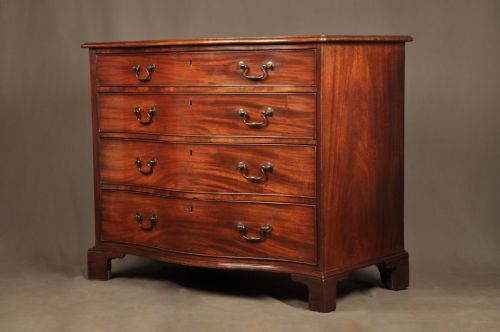
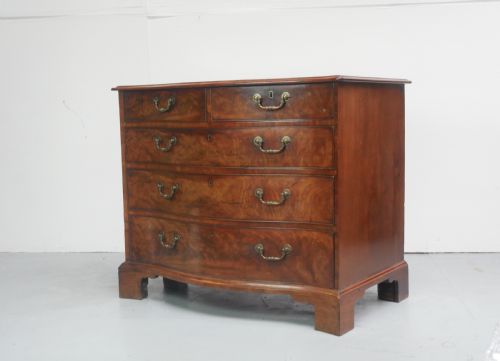
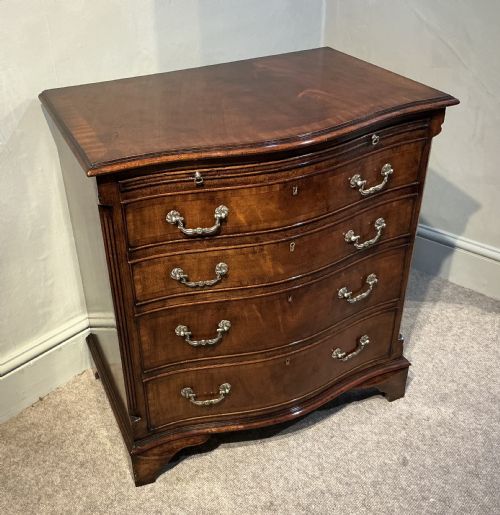
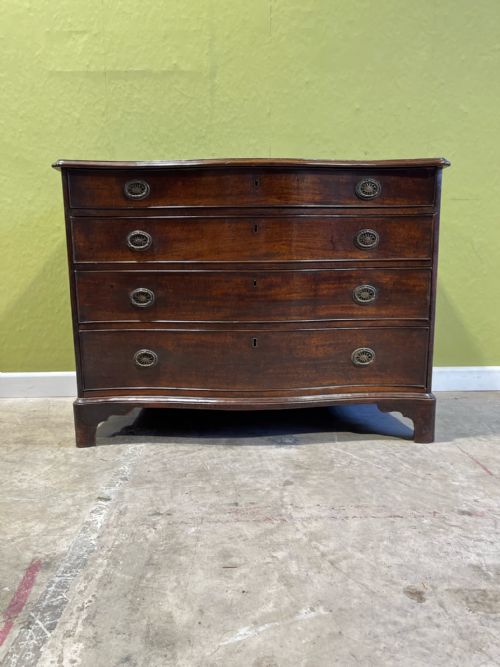
A chippendale serpentine bureau offers a distinctive undulating front and fitted desk interior that brings eighteenth-century elegance into a modern room.
Chippendale Serpentine Bureau
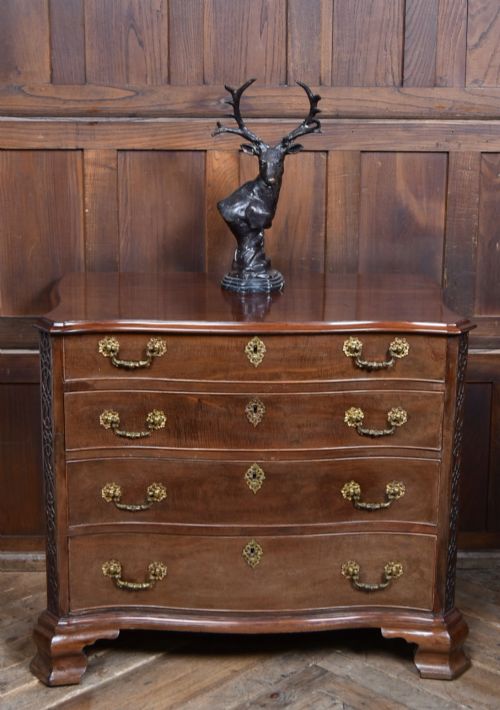
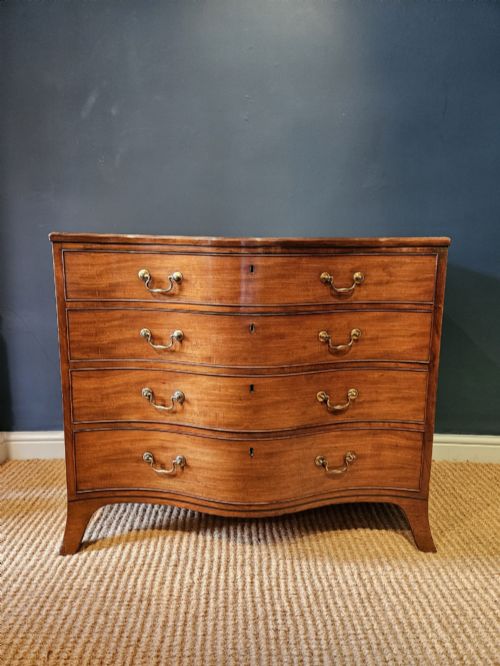
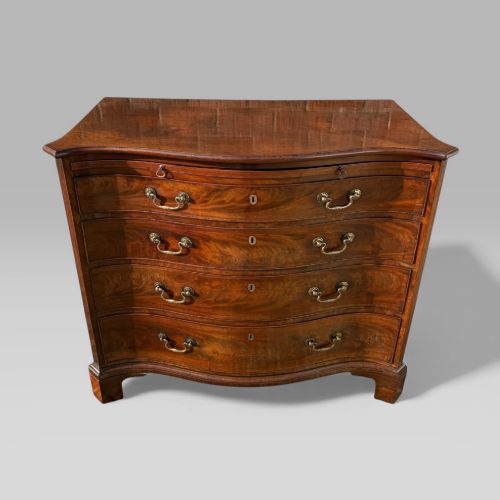
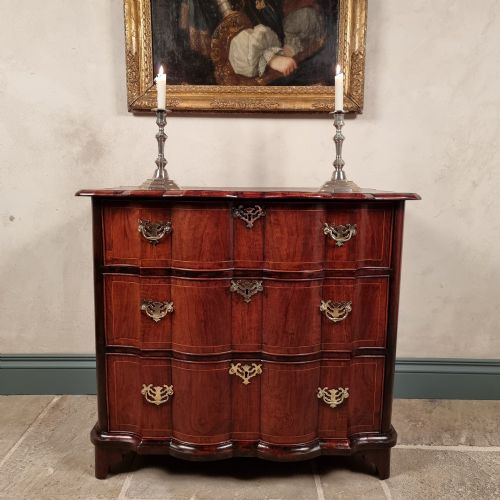
A chippendale serpentine bureau combines the curving, undulating drawer fronts of the mid-eighteenth century with practical writing compartments. These pieces emerge primarily from the Georgian era, alongside later Georgian Revival interpretations from around nineteen hundred to nineteen twenty.
The most common formats on this page are chests of drawers and desks, including kneehole desks and dressing chests. Formats range from standard eighteenth-century mahogany chests to specific writing variations featuring slides and fitted compartments.
How they were made
Cabinet makers of the period constructed these serpentine forms predominantly from solid and veneered mahogany, often incorporating secondary timbers such as oak. Details such as boxwood stringing and brass hardware complete the primary construction.
Makers shaped the drawer fronts in a gentle undulating curve, requiring precise woodworking techniques to ensure the wood maintained its structural integrity over time. Interiors frequently included fitted writing slides, small drawers, and compartments lined with leather.
The listings span the Georgian period, the eighteenth century, and revival dates including nineteen hundred, nineteen twenty, and eighteen ninety.
What varies in quality
Quality in a serpentine bureau rests on the precision of the curved drawer fronts and the depth of figure in the mahogany timber. Finer examples display harmonious proportions and seamless integration of writing slides or kneehole compartments.
The distinction between eighteenth-century originals and later revival pieces from nineteen hundred or nineteen twenty lies in the crispness of the carving and the patination of the wood surfaces. Original Georgian pieces show greater depth in the timber grain and handling of internal fittings.
The Chippendale Serpentine Bureau Glossary
- Serpentine front
- A furniture front characterised by a central convex curve flanked by two concave curves. This design requires advanced woodworking skill to execute properly.
- Writing slide
- A pull-out shelf positioned above the top drawer to provide an extended surface for writing. It tucks away flush when not in use.
- Kneehole desk
- A compact desk featuring a central recessed space for the legs, flanked by pedestals of small drawers. This form became popular during the eighteenth century.
- Boxwood stringing
- Thin inlaid lines of light-coloured boxwood used to outline panels and drawer fronts. It provides a sharp visual contrast against darker mahogany.
- Georgian Revival
- A design movement spanning the late nineteenth and early twentieth centuries that reinterpreted eighteenth-century furniture forms. These pieces emulate earlier proportions and materials.
Chippendale Serpentine Bureau: Frequently Asked Questions
What is a serpentine front?
A serpentine front curves outward in the middle and inward at the sides, creating a graceful undulating shape. This sophisticated profile defines the silhouette of the piece.
Cabinet makers used this technique to catch the light and add visual movement to heavy timber furniture, making it a hallmark of mid-eighteenth-century design.
How do I date an 18th-century piece?
Dating relies on examining the timber grain, secondary woods, and construction methods used inside the drawers. Hand-cut dovetails and genuine age patination provide reliable clues.
Comparing the specific hardware, such as brass pulls, and stylistic quirks helps distinguish original Georgian examples from later revival pieces.
Are these desks suitable for daily use?
These desks and chests function well for modern use provided they are treated with care. Leather writing surfaces and fitted drawers accommodate contemporary stationery.
Placing them away from direct heat sources and sunlight protects the polished mahogany finish and prevents the wood from drying out.
What is the difference between revival and original?
Original pieces date from the eighteenth century and display the natural wear, patination, and construction methods of that era. Revival pieces date from around nineteen hundred to nineteen twenty.
While revival furniture utilises similar mahogany and brass materials, the interior construction and surface ageing reveal its later date of manufacture.