


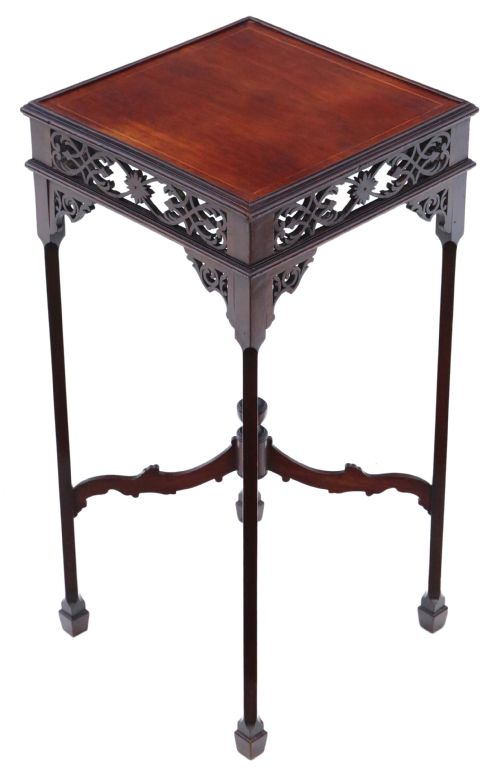

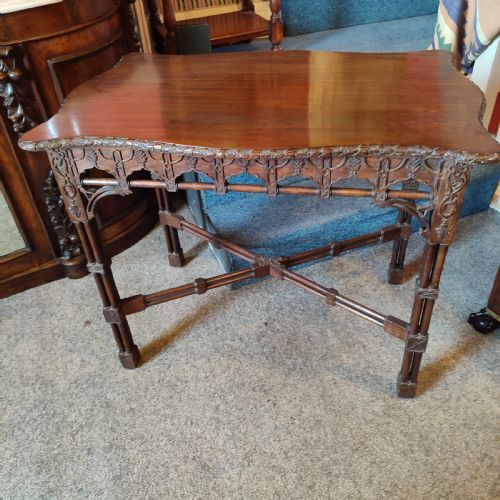


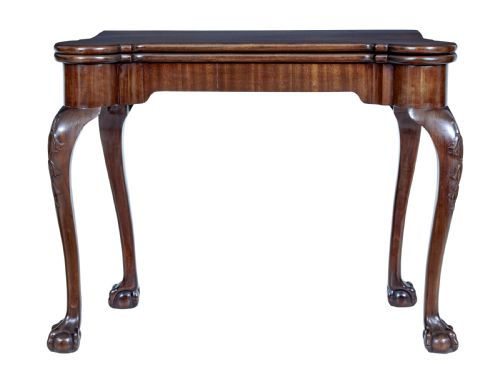
Chippendale Revival Tea Table
A chippendale revival tea table brings eighteenth-century elegance into a modern room through rich carved mahogany and refined proportions.
Chippendale Revival Tea Table
A chippendale revival tea table draws on Georgian design principles, reinterpreted by makers across the nineteenth and early twentieth centuries. These tables appear in forms ranging from side and coffee tables to games, card, and occasional tables.
The pieces on this page span several decades, including Victorian examples, Edwardian editions, and pieces dated precisely to nineteen hundred and nineteen twenty. They show how cabinetmakers adapted earlier aesthetics for later domestic use.
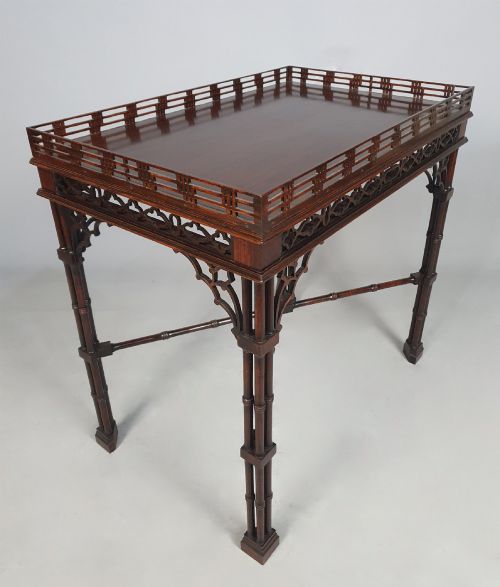
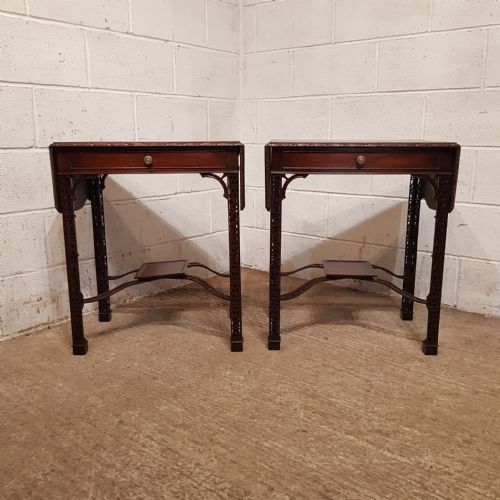
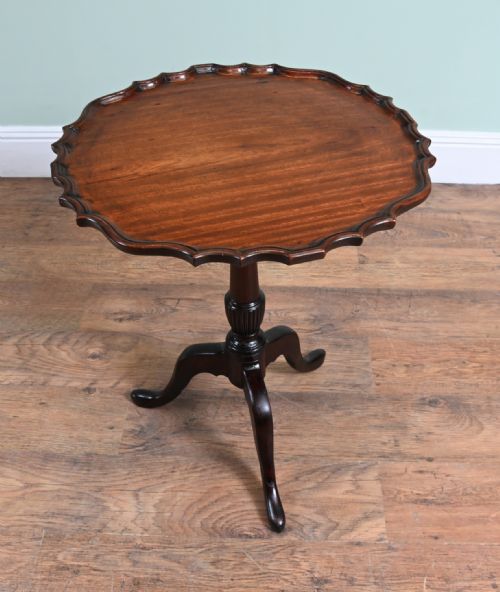
Buyers encounter variations such as drop leaf side tables, pie crust tops, and silver tables. Each form serves a specific function while displaying the characteristic carved ornamentation associated with the revival style.
Materials and Construction
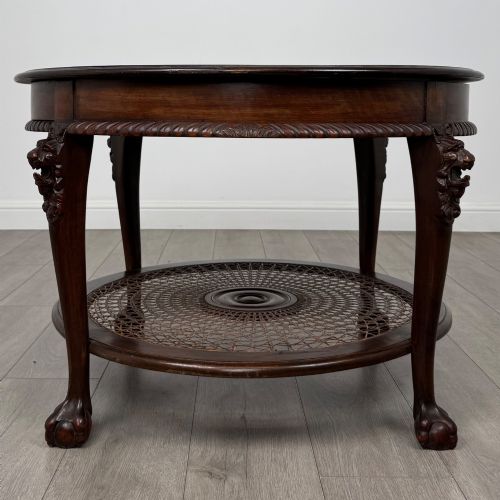
Mahogany serves as the primary timber across the selection, prized for its durability and suitability for intricate carving. Selected pieces incorporate brass hardware and cane elements to provide textural contrast.
Makers utilised traditional joinery alongside period carving techniques to execute details such as pie crust edges and shaped table tops. Padauk also appears among the listings, offering an alternative dense wood option for specific tables.
Listings feature mahogany, brass, padauk, cane, and metal across multiple decades from the nineteenth century to nineteen twenty.
Evaluating Quality
Quality in a chippendale revival tea table rests primarily on the depth and crispness of the carving upon the timber. Tables featuring hand-carved details show a superior level of craftsmanship compared to simpler moulded versions.
The choice of materials and the stability of the construction further distinguish pieces within the range. Dense mahogany and well-fitted joints indicate a higher standard of workshop production.
The Chippendale Revival Tea Table Glossary
- Chippendale Revival
- A nineteenth and twentieth-century design movement recreating the distinct furniture styles associated with Thomas Chippendale. It reinterprets eighteenth-century motifs for later homes.
- Pie Crust Table
- A small occasional table featuring a raised, carved edge shaped in undulations resembling a pastry crust. This decorative rim is typically carved from the solid wood of the top.
- Silver Table
- A raised tray-topped occasional table originally designed for displaying and serving silver tea services. These tables often feature elaborate pierced galleries and carved legs.
- Tip Top Table
- A table with a hinged top that tilts into a vertical position when not in use. This mechanism allowed tables to be stored against walls to save space.
- Occasional Table
- A small, versatile stand used for various transient purposes around a room. They appear frequently in revival periods to suit changing interior layouts.
Chippendale Revival Tea Table: Frequently Asked Questions
What is a chippendale revival tea table?
A chippendale revival tea table is a decorative piece of furniture produced in the nineteenth or twentieth century in the style of eighteenth-century models. These tables reflect historical cabinetmaking traditions adapted for later Victorian and Edwardian interiors.
They function as versatile surfaces in modern rooms, combining practical utility with traditional carved detailing.
How do I date a revival tea table?
Dating relies on examining the timber, construction methods, and stylistic cues recorded in the listing details. Pieces span the nineteenth century through to nineteen twenty, reflecting the specific manufacturing traits of their era.
Secondary woods, finish types, and hardware help narrow down the period of production.
Where should I place a tea table?
These tables suit sitting rooms, studies, or reception spaces as accent pieces beside seating. Their compact footprints allow them to function effectively as side, coffee, or occasional surfaces.
Drop leaf and tip top versions offer flexibility for rooms requiring adaptable furniture arrangements.
What woods are used in these tables?
Mahogany constitutes the principal timber seen across the available listings, selected for its strength and rich grain. Padauk also appears alongside cane and brass components.
These materials contribute to the structural integrity and aesthetic variety of the tables.