





Chippendale Period Furniture
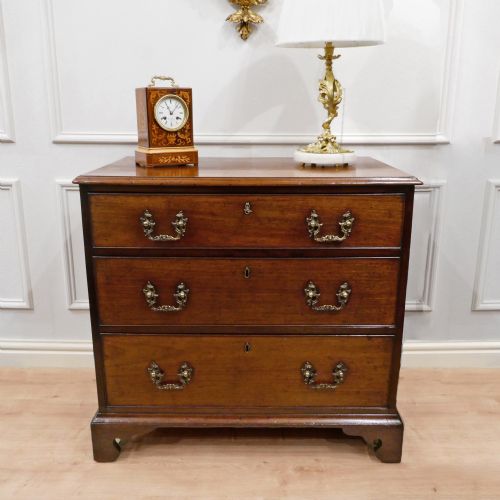
Chippendale period furniture brings solid mahogany chairs, chests on chest and writing desks into rooms that need proper eighteenth-century proportion and weight.

Chippendale Period Furniture
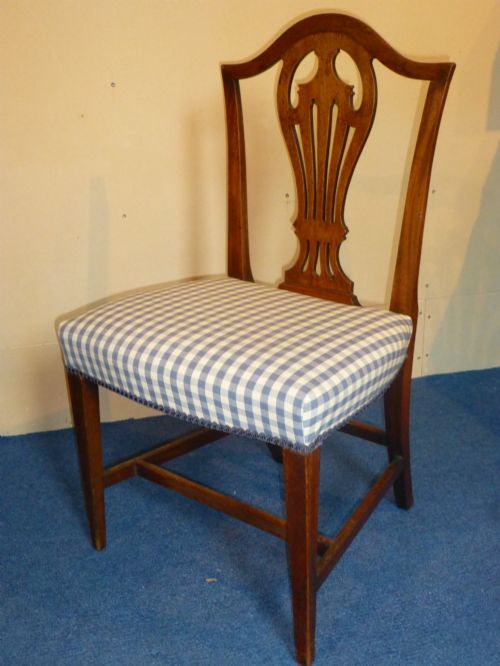
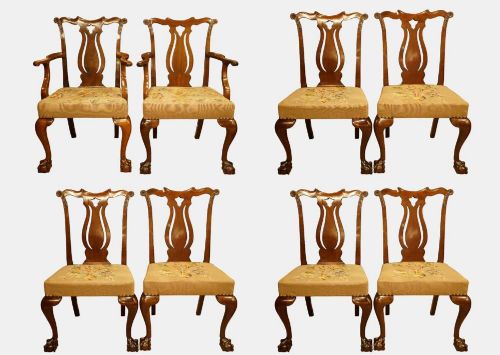
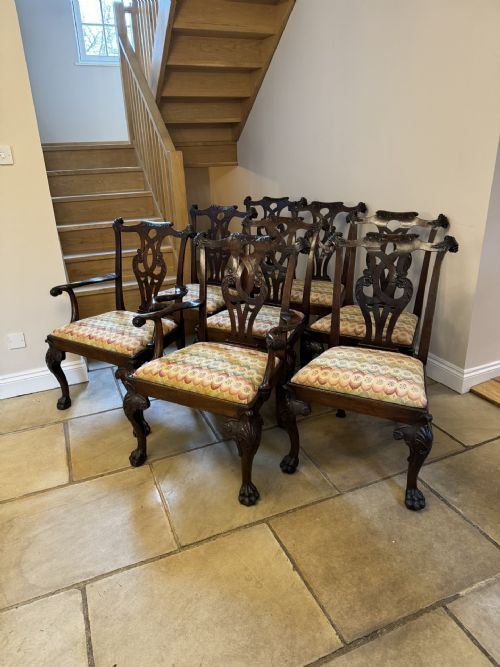
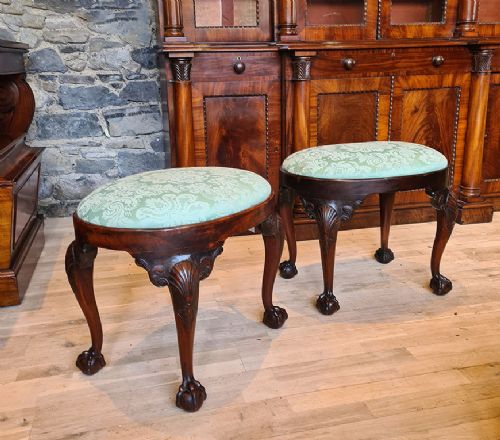
When you search for chippendale period furniture, you encounter items built primarily during the Georgian era, alongside later revival pieces from the Victorian period and the early twentieth century. The selection spans dining chairs, side chairs, chests of drawers, chests on chest, cabinets, and occasional tables.
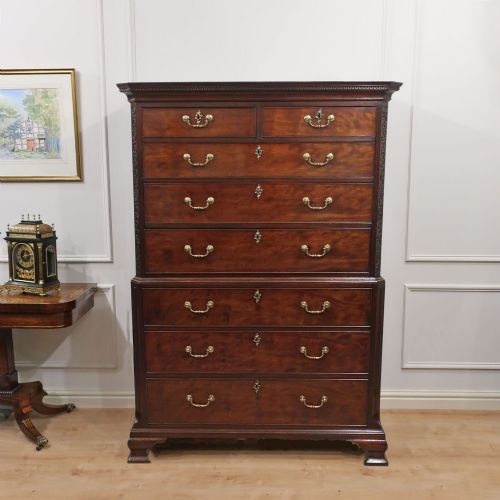
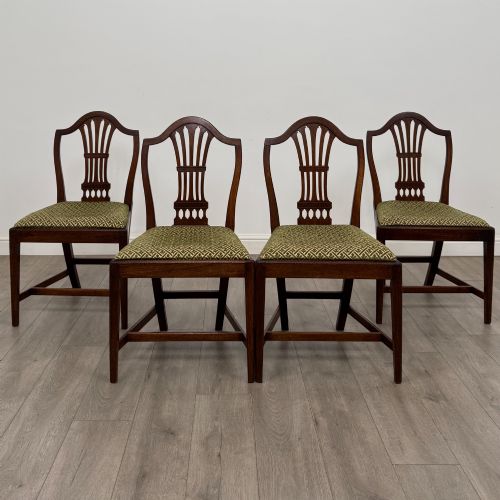
The most common forms on this page are dining chairs and practical case furniture such as chests of drawers and tallboys. Pieces date from the mid-eighteenth century through to later stylistic revivals, reflecting both original Georgian craftsmanship and subsequent interpretations.
Woods vary from standard mahogany and fruitwood to sycamore, oak, and walnut, often paired with brass hardware, leather, or tapestry seats. Cabinets, desks, and mirrors complete the range, providing functional storage and display items for domestic interiors.
How they were made
Joinery relies heavily on solid mahogany, oak, and fruitwood, shaped into sturdy frames for chairs, desks, and case pieces. Cabinetmakers utilised dovetail joints for drawer construction and pegged tenons for structural stability in seating.
Carving provides surface detail on chair splats, legs, and cornices, executed directly into the timber rather than applied in composition. Secondary woods such as oak appear in drawer linings and internal framing behind primary mahogany facades.
Listings feature items from the eighteenth century, the Victorian period, and the early twentieth century, constructed from mahogany, oak, walnut, and fruitwood.
What varies in quality
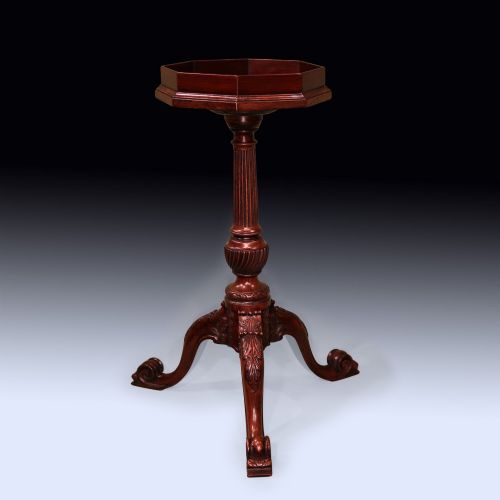
The degree of crispness in carved details separates standard workshop production from finer cabinet work. Sharp, well-defined foliage, ball-and-claw feet, and pierced splats indicate higher skill levels among makers.
The choice of timber grain and the integrity of original drawer linings influence the overall standard of case furniture. Selection of figured mahogany veneers and retention of original brass handles contribute to a more cohesive piece.
The Chippendale Period Furniture Glossary
- Chippendale
- A style of eighteenth-century English furniture design influenced by Thomas Chippendale's published patterns. It incorporates Rococo, Gothic, and Chinese motifs into chair backs, cabinetry, and tables.
- Tallboy
- A tall chest of drawers consisting of one chest stacked on top of another deeper chest, sometimes referred to as a chest on chest. This form maximises vertical storage space.
- Fretwork
- Openwork ornamentation carved or pierced from a thin board, frequently seen on mirrors and table aprons in the mid-eighteenth century. It adds decorative lightness to heavy timber forms.
- Kettlestand
- A small occasional table designed to hold a tea kettle, typically featuring a raised circular top and slender legs. These stands were used in formal eighteenth-century tea service.
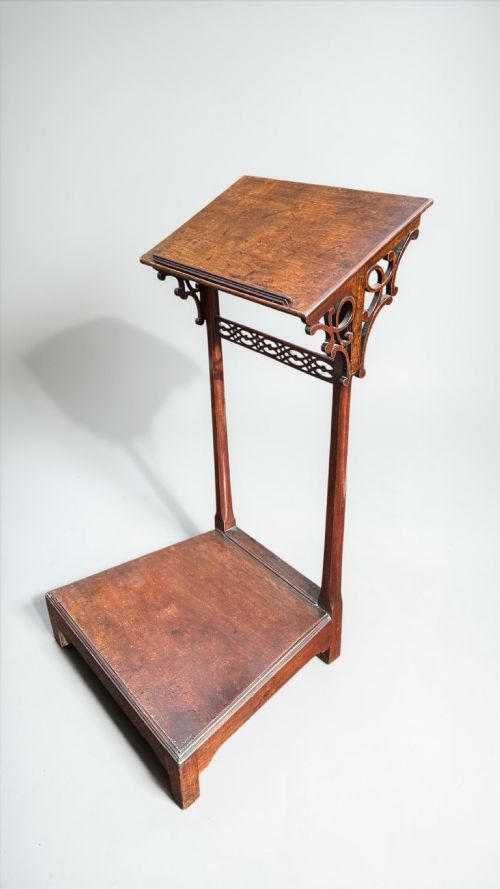
- Prie Dieu
- A small devotional chair designed for kneeling, featuring a low seat and an elevated padded upper rail. Examples from the Georgian period appear infrequently in domestic settings.
Chippendale Period Furniture: Frequently Asked Questions
How do I spot a revival piece?
Revival pieces from the Victorian era or the twentieth century often display machine-sawn timber marks and uniform secondary woods that differ from eighteenth-century practice.
Examining the internal drawer construction and the style of the timber ageing helps distinguish original Georgian work from later copies.
What rooms suit a tallboy?
Tallboys provide substantial vertical storage, making them suitable for bedrooms or dressing rooms where floor space is limited.
Their height also allows them to anchor large wall spaces in traditional hallways or studies.
How should I care for mahogany?
Mahogany responds best to stable room temperatures away from direct heat sources and strong sunlight, which can fade the timber.
Applying a traditional beeswax polish maintains the surface sheen without building up synthetic residues.
Were these chairs for everyday dining?
Georgian dining chairs were built for formal dining rooms and substantial households, utilising robust timbers like mahogany and oak.
Over the centuries, many have survived through careful domestic use and occasional structural conservation.